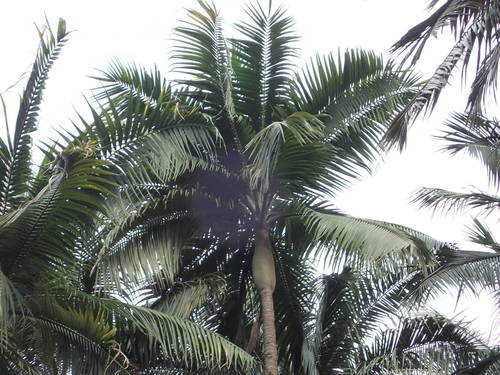
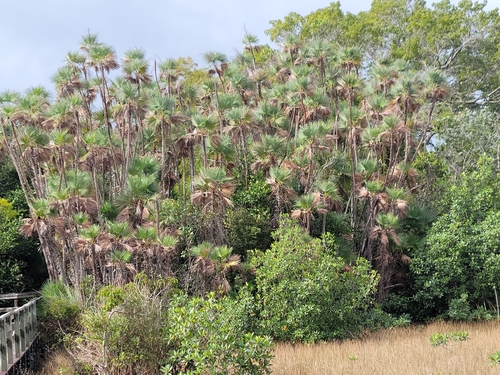
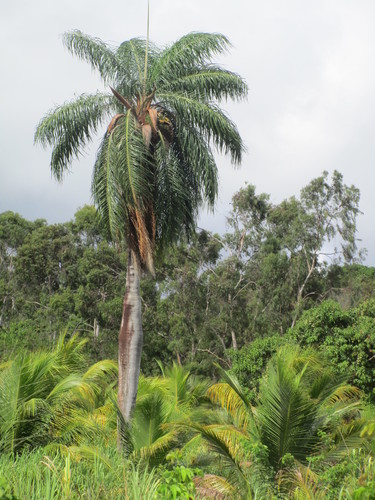
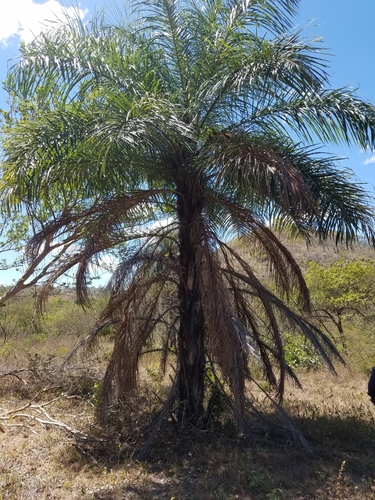
Ravenea dransfieldii
Beentje
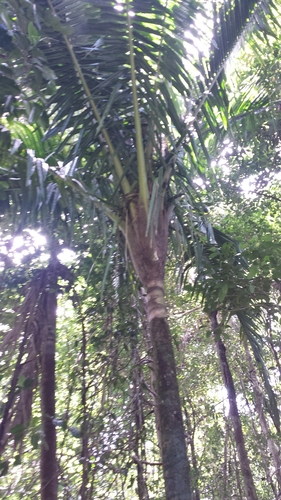
no rights reserved, uploaded by Romer N. Rabarijaona
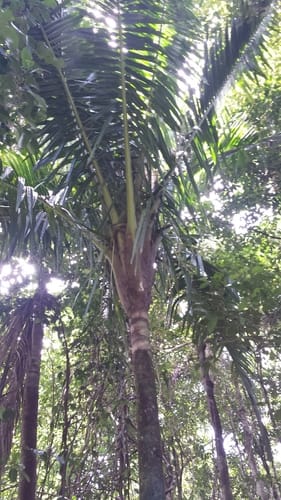
no rights reserved
What to Eat
Edible parts: Palm heart, Vegetable
The apical bud, often known as a 'palm heart', is eaten as a vegetable. This species has a bitter palm heart, but it is eaten, although some believe it to be poisonous. Eating this bud leads to the death of the tree because it is unable to make side shoots.
Known Hazards
Where to Find It
A tropical plant. It grows between 425-1700 m altitude in Madagascar.
Africa, East Africa, Madagascar,
How to Identify
A palm native to Madagascar, growing at 425–1,700 m altitude in tropical regions.
How to Grow
Shady, sheltered, and moist. A dioecious species, both male and female forms need to be grown if fruit and seed are required.
Other Uses
The leaf fibres are used in hat making. The young leaves are used for making high quality hats. Leaves which are used for thatching and weaving.
Wikipedia
Source ↗Ravenea dransfieldii is a species of flowering plant in the family Arecaceae. It is found only in Madagascar. It is threatened by habitat loss.
Names & Synonyms
Anivo, Lakabolavo, Lakatra, Ovotsarorana
References (5)
- Dransfield, J. & Beentje, H., 1995, The Palms of Madagascar. Royal Botanical Gardens, Kew and The International Palm Society. p 103
- Haynes, J., & McLaughlin, J., 2000, Edible palms and Their Uses. University of Florida Fact sheet MCDE-00-50-1 p 12
- Johnson, D.V., 1998, Tropical palms. Non-wood Forest products 10. FAO Rome. p 115
- van der Burg, W.J., 2004. Ravenea robustior Jum. & H.Perrier. [Internet] Record from Protabase. Grubben, G.J.H. & Denton, O.A. (Editors). PROTA (Plant Resources of Tropical Africa), Wageningen, Netherlands. < http://database.prota.org/search.htm>. Accessed 22 October 2009
- World Checklist of Useful Plant Species 2020. Royal Botanic Gardens, Kew