Marsilea polycarpa
Hooker et Greville
Pepperwort
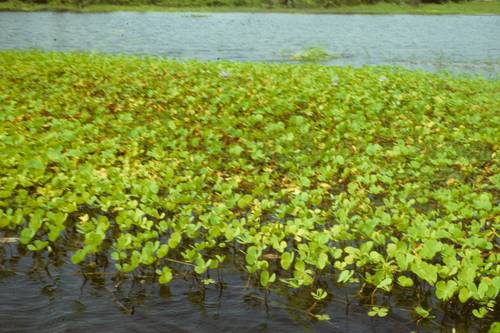
(c) Smithsonian Institution, National Museum of Natural History, Department of Botany, some rights reserved (CC BY-NC-SA)

(c) Reinaldo Aguilar, some rights reserved (CC BY-NC-SA)
What to Eat
Edible parts: Stem, Leaves, Fronds
Where to Find It
A tropical plant. It grows in rice fields.
Africa, Asia, Burkina Faso, Guyana, Indonesia, SE Asia, South America, West Africa,
How to Identify
A tropical fern that grows in water, commonly found in rice fields.
Nutrition Score: 14/100
| Part | Moisture | kJ | kcal | Protein | Vit A | Vit C | Iron | Zinc |
|---|---|---|---|---|---|---|---|---|
| Shoots | 90 | — | — | 2.7 | — | — | — | — |
Medicinal Uses
It is eaten in India, Sri Lanka, and in Bangladesh. In China it is used as forage. It has a raw protein content of 3.3%. The plant is used traditionally in China for edema, skin injuries, snakebite, and inflammation. In Mymensingh District it is traditionally used to treat cough, headache, hypertension, sleep disorders, and respiratory diseases. It is combined with Nardostachys jatamansi and after development by Asima Chatterjee sold as an ayurvedic treatment for epilepsy called Ayush-56. However, Ayush-56 does not show encouraging results in treating the disease. It is also used as a phytoremediator of arsenic while growing with rice plants.
Notes
There are about 50-60 Marsilea species.
Names & Synonyms
Lepido, Mastuerzo, Sabeleccion, Simmangah, Simmange
References (3)
- Kermath, B. M., et al, 2014, Food Plants in the Americas: A survey of the domesticated, cultivated and wild plants used for Human food in North, Central and South America and the Caribbean. On line draft. p 525
- Omawale, 1973, Guyana's edible plants. Guyana University, Georgetown p 99
- Pawera, L., et al, 2020, Wild Food Plants and Trends in Their Use: From Knowledge and Perceptions to Drivers of Change in West Sumatra, Indonesia, Foods. 2020, 9, 1240


