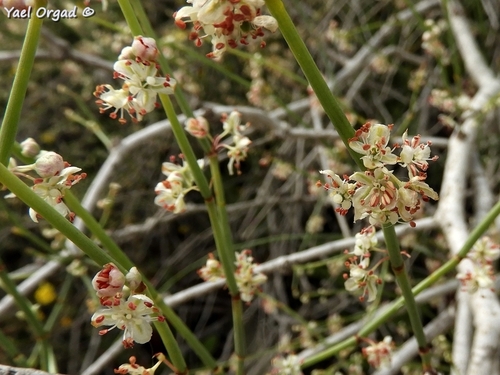
Polygonum limbatum
Meissn.
Mangalleta, Marang, Sukuripota
PolygonaceaeLeaves
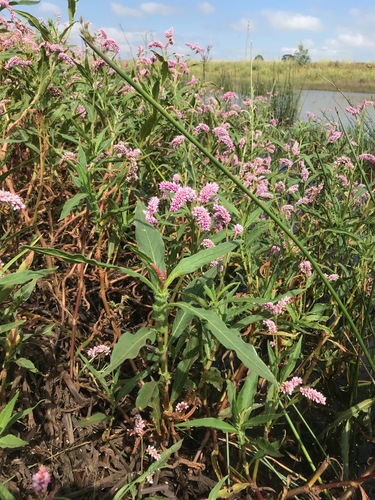
iNaturalist · cc-by-nc-sa
(c) David Hoare, some rights reserved (CC BY-NC-SA)
(c) David Hoare, some rights reserved (CC BY-NC-SA)
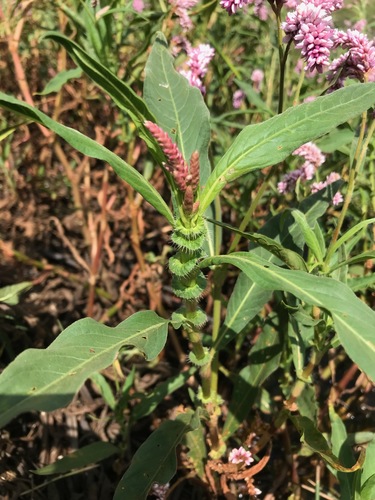
iNaturalist · cc-by-nc-sa
(c) David Hoare, some rights reserved (CC BY-NC-SA)
(c) David Hoare, some rights reserved (CC BY-NC-SA)
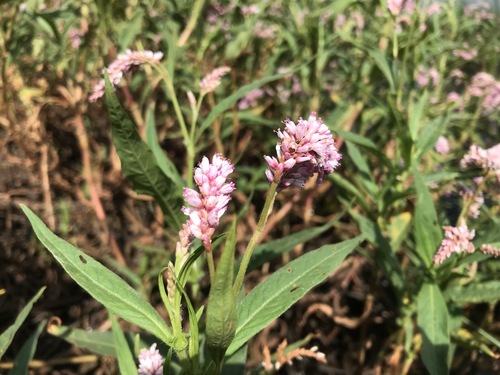
iNaturalist · cc-by-nc-sa
(c) David Hoare, some rights reserved (CC BY-NC-SA)
(c) David Hoare, some rights reserved (CC BY-NC-SA)
What to Eat
Edible parts: Leaves
The leaves are eaten as a vegetable.
Where to Find It
A tropical plant. It grows in wet wooded places.
Angola, Asia, Central Africa, Egypt, Gambia, India, Nigeria, North Africa, Senegal, West Africa,
Countries: United Arab Emirates, Afghanistan, Armenia, Angola, Azerbaijan, Bangladesh, Burkina Faso, Bahrain, Benin, Brunei, Bhutan, Congo (DRC), Central African Republic, Congo (Republic), Cote d'Ivoire, Cameroon, China, Cape Verde, Algeria, Egypt, Gabon, Georgia, Ghana, Gambia, Guinea, Equatorial Guinea, Guinea-Bissau, Indonesia, Israel, India, Iraq, Iran, Jordan, Japan, Kyrgyzstan, Cambodia, North Korea, South Korea, Kuwait, Kazakhstan, Laos, Lebanon, Sri Lanka, Liberia, Libya, Morocco, Mali, Myanmar, Mongolia, Mauritania, Maldives, Malaysia, Niger, Nigeria, Nepal, Oman, Philippines, Pakistan, Qatar, Saudi Arabia, Sudan, Singapore, Sierra Leone, Senegal, Sao Tome & Principe, Syria, Chad, Togo, Thailand, Tajikistan, Timor-Leste, Turkmenistan, Tunisia, Turkey, Taiwan, Uzbekistan, Vietnam, Yemen
How to Identify
A plant which keeps growing from year to year. The stems are hairy at first. They are 80-120 cm long. The leaves are sword shaped and 8-10 cm long. They have short hairs on both sides.
Notes
There are about 50 Polygonum species.
References (3)
- Ambasta, S.P. (Ed.), 2000, The Useful Plants of India. CSIR India. p 479
- Singh, H.B., Arora R.K.,1978, Wild edible Plants of India. Indian Council of Agricultural Research, New Delhi. p 33
- Thiselton-Dywer, W.T., (Ed.), 1913, Flora of Tropical Africa. Vol VI-section 1. Reeve, p 108