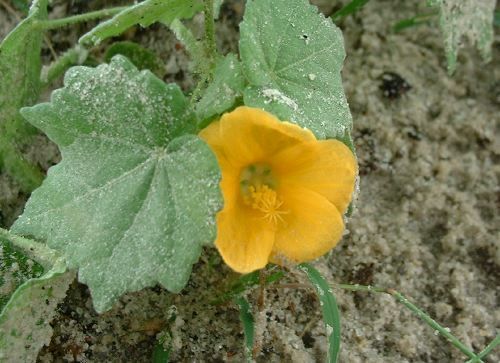
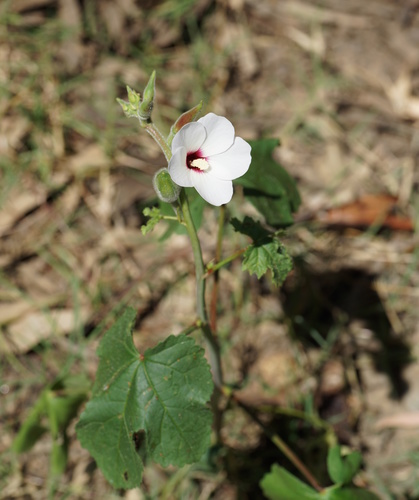
Sida cordata
(Burm.f.) Borss.Waalk.
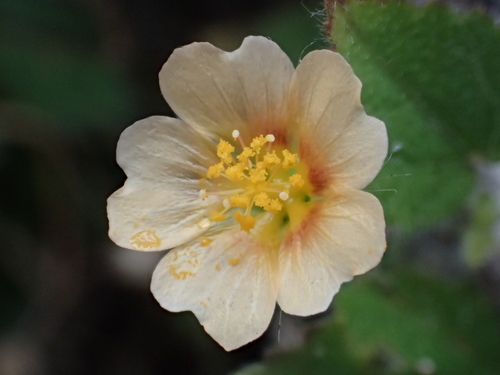
no rights reserved, uploaded by 葉子
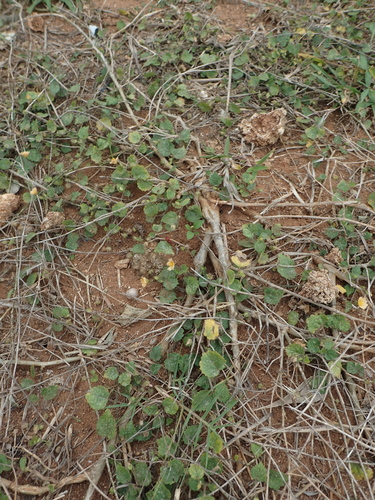
no rights reserved, uploaded by 葉子

(c) Sunnetchan, some rights reserved (CC BY-NC-ND), uploaded by Sunnetchan
What to Eat
Edible parts: Leaves
Leaves and young shoots. They are cut into small pieces and cooked with salt and chilli, and garnished with mustard seeds, curry leaves and onions in oil.
Where to Find It
A tropical plant. It is common throughout India. In Nepal it grows between 400-1,800 m above sea level. In Yunnan.
Africa, Asia, China, Dominican Republic, East Africa, Himalayas, India*, Indochina, Mozambique, Myanmar, Nepal, Pakistan, Philippines, SE Asia, Sri Lanka, Taiwan, Thailand, Vietnam, West Indies,
How to Identify
A tall herb or small shrub. It grows 1 m tall. The stems are slender and have small hairs. The leaf stalk is 1-3 cm long. The leaf blade is broadly oval and 2-5 cm long by 2-4 cm wide. There are hairs on both sides. The base is wedge shaped and there are teeth along the edge. The flowers usually occur singly in the axils of leaves.
Medicinal Uses
The juice of the plant is applied to boils and pimples. The root is tonic. The juice of the root is used to treat indigestion. A paste of the root is applied as a poultice to remove pus from boils and wounds. It is also used in the treatment of gonorrhoea and other venereal diseases. The juice of the leaves is used to treat cuts and wounds.
Other Uses
The bark is a source of fibre that is used to make cords, ropes and twine.
Notes
There are about 100 Sida species.
Names & Synonyms
Bai bo, Bananiyar, Barial, Bariar, Bekkenatalegida, Bhiunli, Bhoybal, Bhuichikna, Bir, Gayapaaku, Jokha sakam, Jongki, Junka, Katasi-ne-gale, Mindilat, Mindilatnari, Palampasi, Rengta, Tandi
References (5)
- Ambasta, S.P. (Ed.), 2000, The Useful Plants of India. CSIR India. p 574 (As Sida veronicifolia)
- Dey, A. & Mukhererjee, A., 2015, Living and Survival Amidst Hunger: Wild Edible Botanicals as a Prime Forest Productivity in the Rural Purulia District, West Bengal, India from Colonial to Present. Research Journal of Forestry 9(3): 71-86
- Dhyani, S.K., & Sharma, R.V., 1987, Exploration of Socio-economic plant resources of Vyasi Valley in Tehri Garwhal. J. Econ. Tax. Bot. Vol. 9 No. 2 pp 299-310 (As Sida veronicifolia)
- Singh, H.B., Arora R.K.,1978, Wild edible Plants of India. Indian Council of Agricultural Research, New Delhi. p 37 (As Sida veronicifolia)
- Vartak, V.D. and Kulkarni, D.K., 1987, Monsoon wild leafy vegetables from hilly regions of Pune and neighbouring districts, Maharashtra state. J. Econ. Tax. Bot. Vol. 11 No. 2 pp 331-335 (As Sida veronicifolia)