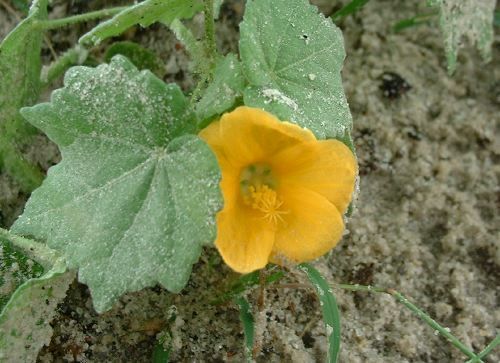
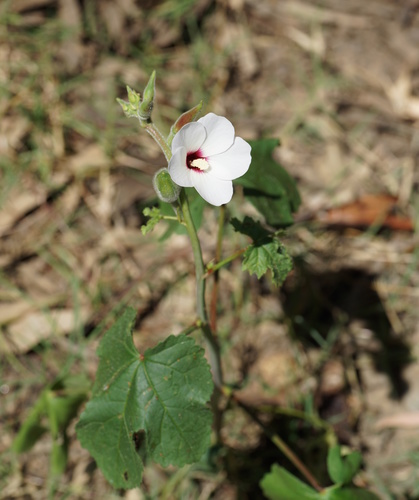
Grewia damine
Gaertn.
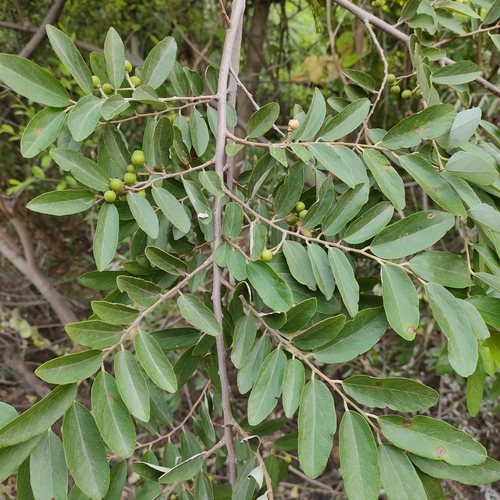
(c) SONU KUMAR, some rights reserved (CC BY-NC)

(c) Marco Grandis, some rights reserved (CC BY-NC)

(c) Marco Grandis, some rights reserved (CC BY-NC)
What to Eat
Edible parts: Fruit
Fruit - raw or dried for later use. The fully ripe fruit has a sweet flavour but is sharp on the tongue. A subacid flavour with a slightly succulent flesh. Only the pulp is eaten, the seeds are discarded. The ripe fruits can be lightly pounded in a grain mortar, soaked in water, squeezed, the juice is filtered and then drunk as it is or added to porridge. The juice can also be fermented and made into an intoxicating drink. The round, orange then black fruit is about 5mm in diameter. The mucilaginous leaves and fibres from the leaf are used as a binding agent in sauces. The fresh leaves are made into a kind of tea. The bark or leaf fibres are used in the preparation of sorghum beer to make it clean and to remove bitterness.
Where to Find It
It is a tropical plant. In Pakistan it grows in the dry arid plains between 500-1,500 m altitude.
Africa, Asia, Botswana, East Africa, Ethiopia, Himalayas, India, Myanmar, Nepal, Pakistan, SE Asia, Sri Lanka,
How to Identify
A shrub or small tree. It grows 2-4 m high. The stems and branches have a wrinkled surface. The bark is ash-grey. The young shoots have pale hairs. The leaves are narrowly sword shaped and 2-5 cm long by 1-2 cm wide. They have 3 ribs. The leaves have unequal sides. The flowers are in groups of 2-3 in the axils of leaves. The flower are yellow and 1.5 cm across. The fruit is fleshy and round. It can have 2 lobes. The fruit are 6-8 mm across.
How to Grow
Grewia damine is a plant of the semi-arid tropics, where it is found at elevations from 800 - 2,000 metres. It grows best in areas where annual daytime temperatures are within the range 20 - 28°c, but can tolerate 15 - 35°c. It prefers a mean annual rainfall in the range 400 - 900mm, but tolerates 200 - 1,100mm. The plant is often found on sandy and rocky soils and red clay soils in the wild. Prefers a pH in the range .5 - 7, tolerating 5 - 7.5. Established plants are drought tolerant. A slow growing plant. In some areas, such as Kenya, the plant can flower virtually all year round. An extremely variable plant, it hybridizes freely with Grewia monticola in the wild. The plant coppices well and also produces suckers.
Propagation: Seed - best sown as soon as it is ripe. Stored seed has a hard seedcoat and may benefit from scarification before sowing in order to speed up and improve germination. This can usually be done by pouring a small amount of nearly boiling water on the seeds (being careful not to cook them!), allowing the mix to cool somewhat and then leaving it in a warm place to soak for 12 - 24 hours. Sow the seeds in situ or in a nursery seedbed or trays - do not allow the compost to become dry. Germination and early growth are usually quite quick. Cuttings. Those taken with a heel root more easily, with a success rate of up to 60%. Root suckers.
Medicinal Uses
The plant has a wide range of applications in African traditional medicine. Modern research has shown the presence of a range of medically active compounds including the triterpenes lupeol and betulin, and triterpene esters; alkaloids including harman. The harman alkaloids may be linked to the plants use as a tranquillizer. The bark and other plant parts contain farnesol, which has sedative activity and is antagonistic to the stimulant effect of caffeine; farnesol also enhances the effects of barbiturates. A methanol extract of the root has shown antibacterial activity against Staphylococcus aureus, Bacillus subtilis , Escherichia coli and Pseudomonas seruginosa. The root is used as a tranquilizer. A cold infusion of the root is drunk to treat anaemia, chest complaints, cold, diarrhoea, snakebites, mental illness, hernia and female infertility. A poultice of the root is applied on pustulent skin lesions. A decoction of the root is given in case of a delayed afterbirth. The powdered root bark is applied on burns. The juice, or a decoction of the inner bark of the roots is applied on wounds. A syrup prepared from the roots is rubbed onto swollen legs. The roots are pounded, soaked in cold water and the infusion drunk to treat anaemia, chest pains, snakebite, colds, diarrhoea and infertility in women. The bark is chewed and put on wounds as a bandage. The bark is used as a vermifuge, diuretic and laxative, and to treat boils and sores, intestinal inflammation and syphilis. A macerate or decoction of the bark is credited with both inebriating and tranquillizing effects, and is also taken to counter fatigue. The bark is applied in case of itching. The wood is credited with anthelmintic activity. A decoction of the leaves is drunk and put into baths against pain in the chest, after which sap from pounded roots is rubbed on the patient.
Other Uses
The bark is used to clarify muddy water. The leaves and ash from burnt leaves are sometimes used as soap and for cleaning garments. The bark fibre is made into cordage and is also used for weaving and basketry. The sticks are woven into baskets. The wood is hard, strong and elastic. It is used for building poles, withies, walking sticks, clubs, pegs, bows, carrying beams, tool handles and rakes. It is used for carving, is hollowed out to make bowls and boards, and the stems are made into picture frames. Twigs from the tree are used by water diviners to locate underground water. The wood is used for firesticks, fuel and is made into charcoal.
Notes
There are about 200 Grewia species. They are mostly tropical. The fruit of most may be edible. These were in the Sparrmanniaceae and the Tiliaceae. Grewia salvifolia B. Heyne ex Roth is a synonym of Grewia damine Gaertn.; There are other authorities for Grewia salvifolia with others synonyms.
Names & Synonyms
Adivipagari, Bather, Beriaa, Bihul, Cavattalunnu, Chadachchi, Damina, Daminiya, Dhatoke, Gargas, Garges, Mogwana, Narabudama, Nikki bekhar, Sitanga, Udippe
References (13)
- Altschul, S.V.R., 1973, Drugs and Foods from Little-known Plants. Notes in Harvard University Herbaria. Harvard Univ. Press. Massachusetts. no. 2725 (As Grewia salvifolia)
- Ambasta, S.P. (Ed.), 2000, The Useful Plants of India. CSIR India. p 248
- Ashton, M. S., et al 1997, A Field Guide to the Common Trees and Shrubs of Sri Lanka. WHT Publications Ltd. pdf p 385
- Flora of Pakistan. www.eFloras.org
- Fruct. sem. pl. 2:113, t. 106, fig. 7. 1790
- Hedrick, U.P., 1919, (Ed.), Sturtevant's edible plants of the world. p 334 (As Grewia salvifolia)
- Khan, D. & Shaukat, S.S., 2006, The Fruits of Pakistan: Diversity, Distribution, Trends of Production and Use. Int. J. Biol. Biotech., 3(3):463-499
- Kidane, B., et al, 2014, Ethnobotany of Wild and Semi-wild Edible Fruit Species used by Maale and Ari Ethnic Communities in South Ethiopia. Ethnobotany Research and Applications. Vol. 12, 1546-3465-12-455
- Neelo, J., et al, 2015, Ethnobotanical Survey of Woody Plants in Shorobe and Xobe Villages, Northwest Region of Botswana. Ethnobotany Research & Applications 14:367-379
- Peduruhewa, P. S., et al, 2021, Potential of Underutilized Wild Edible Plants as the Food for the Future – A Review. Journal of Food Security, Vol. 9, No. 4, 136-147
- Singh, H.B., Arora R.K.,1978, Wild edible Plants of India. Indian Council of Agricultural Research, New Delhi. p 62
- Suppl. pl. 409. 1782 ("1781") (As Lf.) but also (B. Heyne ex Roth) - an illegitimate later homonym (ICBN Art. 53) that is unavailable for use (As Grewia salvifolia)
- World Checklist of Useful Plant Species 2020. Royal Botanic Gardens, Kew