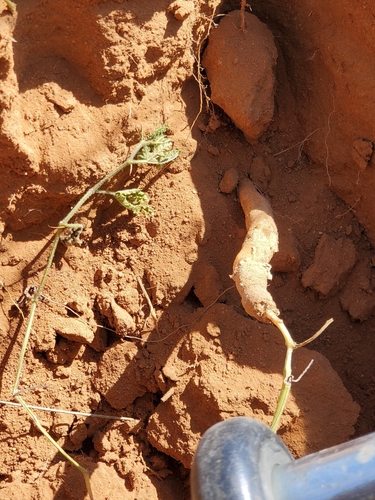
Fevillea passiflora
Vell.
Jobota chestnut

iNaturalist · cc-by-nc
(c) Guillaume Léotard, some rights reserved (CC BY-NC), uploaded by Guillaume Léotard
(c) Guillaume Léotard, some rights reserved (CC BY-NC), uploaded by Guillaume Léotard

iNaturalist · cc-by-nc
(c) Guillaume Léotard, some rights reserved (CC BY-NC)
(c) Guillaume Léotard, some rights reserved (CC BY-NC)
What to Eat
Edible parts: Seeds - oil, Caution - medicine
The seeds are processed for oil.
Known Hazards
Where to Find It
It is a tropical plant. It can grow in cool temperatures and is resistant to drought. It grows between 400-1,000 m above sea level.
Brazil, South America,
How to Identify
A pumpkin family creeper. It grows new stems each year and they are 5 m long. They are 5 cm across. The leaves are heart shaped. They are 8-14 cm long by 5-9 cm wide. The flowers are greenish yellow. The fruit are round. They are 7-12 cm wide. The seeds are disk shaped.
How to Grow
Plants can be grown from seeds.
Medicinal Uses
The seed oil is used for medicine.
Notes
The oil from the seeds is used for medicine.
Names & Synonyms
Guindiroba
Anisosperma passiflora (Vell.) Silva Manso
References (2)
- Ferns, Useful Tropical Plants
- www.colecionandofrutas.org