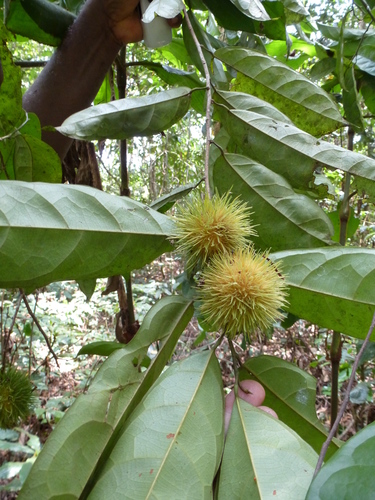
Hydnocarpus alcalae

C. DC.

AchariaceaeSeeds/NutsPotential hazards — see below
Caution — Parts of this plant may be toxic or require specific preparation. Verify with multiple sources before consuming.
Hydnocarpus alcalae
gbif · cc-by-nc
Field Museum of Natural History - Botany Department | NSF/Mellon - GPI

What to Eat

Edible parts: Probably medicine, Seeds - oil

Seeds are processed for their oil.

Known Hazards

Although we have seen no specific information for this species, the seeds of many members of this genus contain cyanogenic glycosides. In very small quantities this has been used medicinally, having been shown to stimulate respiration and improve digestion, it is also claimed to be of benefit in the treatment of cancer. In excess, however, it can cause respiratory failure and even death.

Where to Find It

It is a tropical plant.

Asia, Philippines, SE Asia,

Countries: United Arab Emirates, Afghanistan, Armenia, Azerbaijan, Bangladesh, Bahrain, Brunei, Bhutan, China, Georgia, Indonesia, Israel, India, Iraq, Iran, Jordan, Japan, Kyrgyzstan, Cambodia, North Korea, South Korea, Kuwait, Kazakhstan, Laos, Lebanon, Sri Lanka, Myanmar, Mongolia, Maldives, Malaysia, Nepal, Oman, Philippines, Pakistan, Qatar, Saudi Arabia, Singapore, Syria, Thailand, Tajikistan, Timor-Leste, Turkmenistan, Turkey, Taiwan, Uzbekistan, Vietnam, Yemen

How to Identify

A small tropical tree in the Achariaceae family that grows 4-10 m tall, native to the Indian subcontinent and cultivated for its seeds.

How to Grow

Plants are grown from seed.

Propagation: Seed - best sown as soon as it is ripe, when it will usually germinate quickly. Germination of stored seed can be slow, with some species in the genus taking up to 2 years. Sow the seed in a shaded position in a nursery seedbed and keep moist. Grow on the seedlings in shade until large enough to plant out.

Medicinal Uses

The seeds have been traditionally used to treat leprosy.

Other Information

It is cultivated.

Notes

There are 35 Hydnocarpus species. They are trees in the Indian subcontinent. Also put in the Flacourtiaceae family. The seeds are used to cure leprosy.

More from Achariaceae