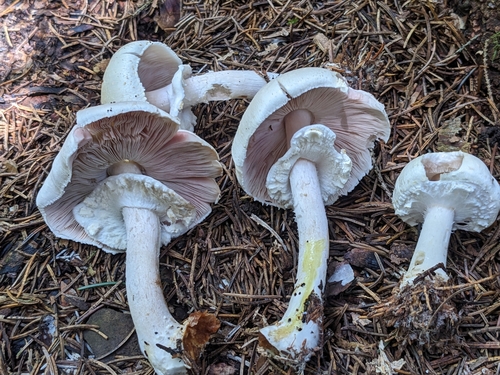
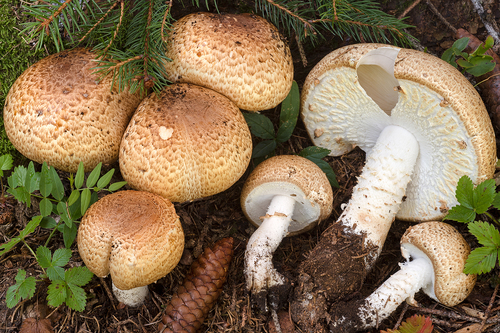
Agaricus silvicola
(Vitt.) Peck.
Wood mushroom
AgaricaceaeMushrooms

Wikipedia · cc-by-sa
Wikimedia Commons - Agaricus_silvicola_father_and_son.jpg
Wikimedia Commons - Agaricus_silvicola_father_and_son.jpg
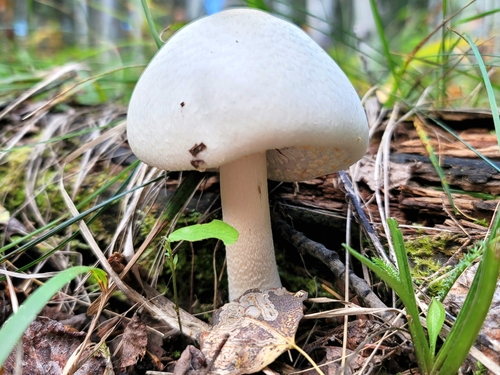
iNaturalist · cc-by-nc
(c) Taylor Routledge, some rights reserved (CC BY-NC)
(c) Taylor Routledge, some rights reserved (CC BY-NC)
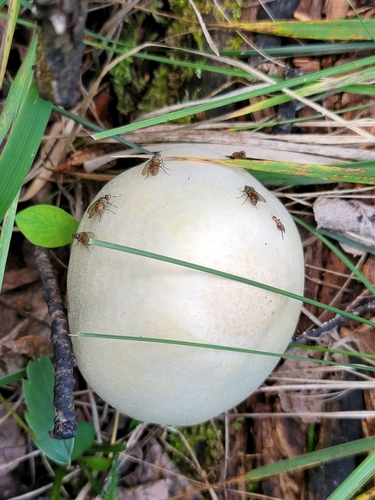
iNaturalist · cc-by-nc
(c) Taylor Routledge, some rights reserved (CC BY-NC)
(c) Taylor Routledge, some rights reserved (CC BY-NC)
What to Eat
Edible parts: Mushroom, Fungus
Where to Find It
It grows in temperate places and at higher altitudes in the tropics. California. It grows in forests.
Africa, Asia, Britain, China, Czech Republic, East Africa, Europe, Himalayas, Hong Kong, Hungary, Italy, Japan, Kosovo, Madagascar, Mediterranean, Mexico, Nepal, North America, Pakistan, Russia, Rwanda, Turkey, Türkiye, USA,
Countries: Andorra, United Arab Emirates, Afghanistan, Antigua & Barbuda, Albania, Armenia, Angola, Austria, Azerbaijan, Bosnia & Herzegovina, Barbados, Bangladesh, Belgium, Burkina Faso, Bulgaria, Bahrain, Burundi, Benin, Brunei, Bahamas, Bhutan, Botswana, Belarus, Belize, Canada, Congo (DRC), Central African Republic, Congo (Republic), Switzerland, Cote d'Ivoire, Cameroon, China, Costa Rica, Cuba, Cape Verde, Cyprus, Czechia, Germany, Djibouti, Denmark, Dominica, Dominican Republic, Algeria, Estonia, Egypt, Eritrea, Spain, Ethiopia, Finland, France, Gabon, United Kingdom, Grenada, Georgia, Ghana, Gambia, Guinea, Equatorial Guinea, Greece, Guatemala, Guinea-Bissau, Honduras, Croatia, Haiti, Hungary, Indonesia, Ireland, Israel, India, Iraq, Iran, Iceland, Italy, Jamaica, Jordan, Japan, Kenya, Kyrgyzstan, Cambodia, Comoros, St Kitts & Nevis, North Korea, South Korea, Kuwait, Kazakhstan, Laos, Lebanon, St Lucia, Liechtenstein, Sri Lanka, Liberia, Lesotho, Lithuania, Luxembourg, Latvia, Libya, Morocco, Monaco, Moldova, Montenegro, Madagascar, North Macedonia, Mali, Myanmar, Mongolia, Mauritania, Malta, Mauritius, Maldives, Malawi, Mexico, Malaysia, Mozambique, Namibia, Niger, Nigeria, Nicaragua, Netherlands, Norway, Nepal, Oman, Panama, Philippines, Pakistan, Poland, Puerto Rico, Portugal, Qatar, Romania, Serbia, Russia, Rwanda, Saudi Arabia, Seychelles, Sudan, Sweden, Singapore, Slovenia, Slovakia, Sierra Leone, San Marino, Senegal, Somalia, South Sudan, Sao Tome & Principe, El Salvador, Syria, Eswatini, Chad, Togo, Thailand, Tajikistan, Timor-Leste, Turkmenistan, Tunisia, Turkey, Trinidad & Tobago, Taiwan, Tanzania, Ukraine, Uganda, United States, Uzbekistan, St Vincent, Vietnam, Yemen, South Africa, Zambia, Zimbabwe
How to Identify
A mushroom in the family Agaricaceae that grows in temperate forests and at higher altitudes in tropical regions, including California.
Wikipedia
Source ↗Agaricus silvicola, also known as the wood mushroom or woodland agaricus, is a species of Agaricus mushroom related to the button mushroom.
Notes
There are about 300 Agaricus species.
Names & Synonyms
San juer
Agaricus silvicola Fr.Psalliota silvicola (Vittad.) Richon & Roze
References (16)
- Boa, E. R., 2004, Wild edible fungi and their importance to people. FAO Non Wood Forest Products Booklet 17
- Cocchi, L. et al, 2006, Heavy metals in edible mushrooms in Italy. Food Chemistry 98: 277-284
- Degreef, J., et al, 2016, Wild edible mushrooms, a valuable resource for food security and rural development in Burundi and Rwanda. Biotechnol. Agron. Soc. Environ. 2016 20(4), 441-452
- Demirbas, A., 2000, Accumulation of heavy metals in some edible mushrooms from Turkey. Food Chemistry 68: 415-419
- Dongol, et al, 1995, Edible Mushrooms in Nepal
- http://www.mykoweb.com/CAF/edible.html
- Imai, S., 1938, Studies on the Agaricaceae of Hokkaido. 2. Jour. Facul. Agr., Hokkaido Imp. Univ., Sapporo, Vol. XLIII, Pt. 2, August, 1938
- Jordan, P., 2000, The Mushroom Guide and Identifier, Hermes House, p 34
- Kalac, P. and Svoboda, L., 1999, A review of trace element concentrations in edible mushrooms. Food Chemistry 69: 273-281
- Kaufmann, B. et al, 1999, The Great Encyclopedia of Mushrooms. Konemann. p 161
- Kiple, K.F. & Ornelas, K.C., (eds), 2000, The Cambridge World History of Food. CUP p 318
- Li, H., et al, 2020, Reviewing the world’s edible mushroom species: A new evidence-based classification system. Compr Rev Food Sci Food Saf. 2021;20:1982–2014.
- Liu, D., et al, 2018, An ethnobotanical survey of edible fungi in Chuxiong City, Yunnan, China. Journal of Ethnobiology and Ethnomedicine (2018) 14:42
- Pace, G., 1998, Mushrooms of the world. Firefly books. p 48 (As Psalliota silvicola)
- Vetner, J., 2004, Arsenic content of some edible mushroom species. Eur. Food Res. Technol. 219: 71-74
- www.plantnames.unimelb.edu.au