Astilbe chinensis
(Maxim.) Franch. & Sav.
False Goat's Beard

(c) Kiwi Shen, some rights reserved (CC BY)

(c) Kiwi Shen, some rights reserved (CC BY)

(c) Kiwi Shen, some rights reserved (CC BY)
What to Eat
Edible parts: Leaves
Edible Parts: Leaves Shoots Edible Uses: Young shoots. No more details are given.
Where to Find It
It is a temperate plant. In China it grows between 400-3,600 m above sea level. It suits hardiness zones 5-9. Hobart Botanical Gardens. In Sichuan and Yunnan.
Asia, Australia, China, Japan, Korea, Russia, Slovenia, Tasmania,
How to Identify
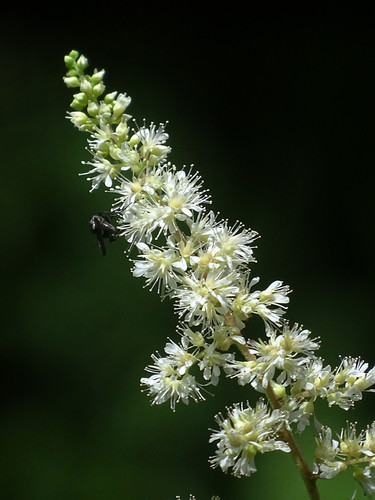
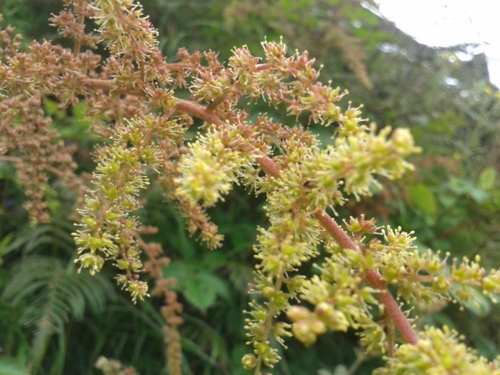
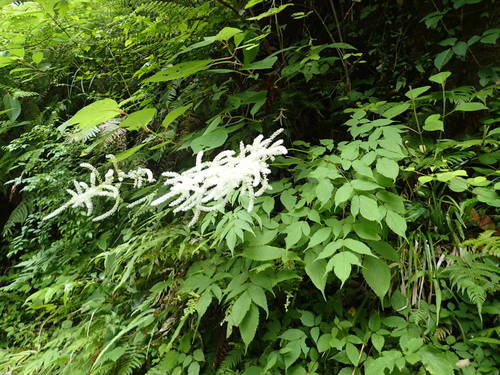
A herb or small shrub. It grows 50-70 cm high. It spreads 30-50 cm wide. The leaves have leaflets with coarse teeth. The flower-heads have short stems. There are several upright plumes.
How to Grow
Propagation: Seed - we have no details for this species but suggest sowing the seed in a greenhouse in early spring. Only just cover the seed. When large enough to handle, prick the seedlings out into individual pots and grow them on in a cold frame until they are at least 20cm tall. Plant them out in the summer, or late in the following autumn. Division in spring. This is best done every 3 - 4 years in order to maintain the vigour of the plant. Larger divisions can be planted straight into their permanent positions whist smaller clumps are best potted up and kept in a cold frame until they are growing away well.
Medicinal Uses
None known
Other Uses
Landscape Uses: Border, Container, Massing, Rock garden, Woodland garden. There are some named varieties, selected for their ornamental value. A first class ground cover plant, the lower-growing cultivar 'Pumila' is particularly recommended. Special Features:Attractive foliage, Suitable for dried flowers. Dynamic accumulator. Special Uses Dynamic accumulator
Wikipedia
Source ↗Astilbe chinensis, commonly known as false goat's beard, tall false-buck's-beard or Chinese astilbe, is a plant in the saxifrage family, Saxifragaceae. It is a perennial herb that grows near shaded streams and rivers. It is also commonly grown in shade gardens.
Notes
There are about 22 Astilbe species. They are temperate plants.
Names & Synonyms
Ch'Ang Shan, Kitajska vrtna kresnica
References (6)
- Cundall, P., (ed.), 2004, Gardening Australia: flora: the gardener's bible. ABC Books. p 201
- Enum. pl. Jap. 1:144. 1873
- Flora of China @ efloras.org Volume 8
- Hibbert, M., 2002, The Aussie Plant Finder 2002, Florilegium. p 35
- Plants for a Future database, The Field, Penpol, Lostwithiel, Cornwall, PL22 0NG, UK. http://www.scs.leeds.ac.uk/pfaf/
- Slocum, P.D. & Robinson, P., 1999, Water Gardening. Water Lilies and Lotuses. Timber Press. p 109