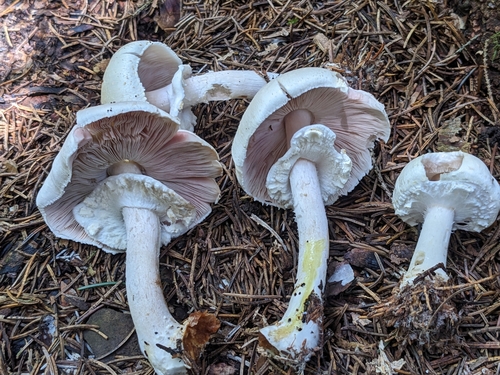
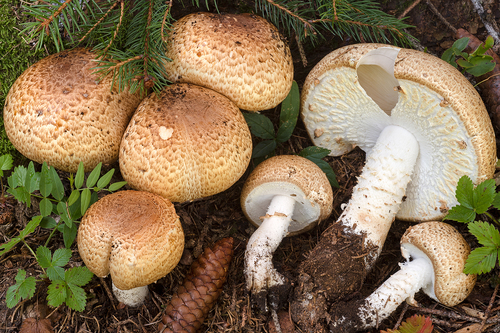
Macrolepiota rhacodes
(C.Vittadini) R. Singer
Shaggy Parasol
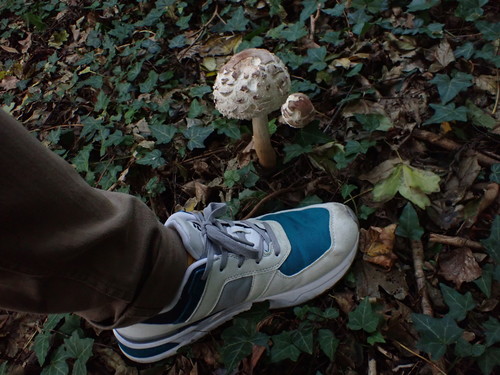
iNaturalist · cc-by-nc
(c) dr. Werner de Gier, some rights reserved (CC BY-NC)
(c) dr. Werner de Gier, some rights reserved (CC BY-NC)

iNaturalist · cc0
no rights reserved
no rights reserved
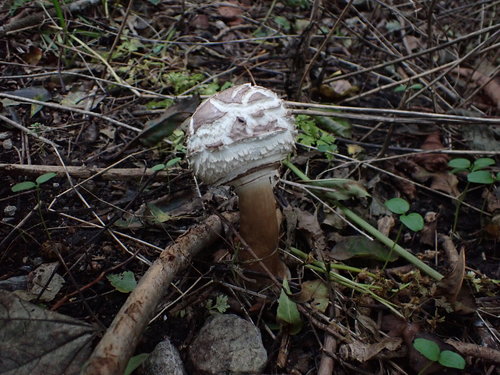
iNaturalist · cc-by-nc
(c) dr. Werner de Gier, some rights reserved (CC BY-NC)
(c) dr. Werner de Gier, some rights reserved (CC BY-NC)
What to Eat
Edible parts: Fungus, Mushroom
The fruiting bodies are eaten, with young mushrooms typically fried.
Known Hazards
Where to Find It
It is a temperate plant.
Asia, Australia, Balkans, Britain, Bulgaria, Canada, China, Europe, Hong Kong, Hungary, India, Italy, Mediterranean, New Zealand, North America, Slovenia, Spain, USA,
Countries: Andorra, United Arab Emirates, Afghanistan, Antigua & Barbuda, Albania, Armenia, Austria, Australia, Azerbaijan, Bosnia & Herzegovina, Barbados, Bangladesh, Belgium, Bulgaria, Bahrain, Brunei, Bahamas, Bhutan, Belarus, Belize, Canada, Switzerland, China, Costa Rica, Cuba, Cyprus, Czechia, Germany, Denmark, Dominica, Dominican Republic, Algeria, Estonia, Egypt, Spain, Finland, France, United Kingdom, Grenada, Georgia, Greece, Guatemala, Honduras, Croatia, Haiti, Hungary, Indonesia, Ireland, Israel, India, Iraq, Iran, Iceland, Italy, Jamaica, Jordan, Japan, Kyrgyzstan, Cambodia, St Kitts & Nevis, North Korea, South Korea, Kuwait, Kazakhstan, Laos, Lebanon, St Lucia, Liechtenstein, Sri Lanka, Lithuania, Luxembourg, Latvia, Libya, Morocco, Monaco, Moldova, Montenegro, North Macedonia, Myanmar, Mongolia, Malta, Maldives, Mexico, Malaysia, Nicaragua, Netherlands, Norway, Nepal, Oman, Panama, Philippines, Pakistan, Poland, Puerto Rico, Portugal, Qatar, Romania, Serbia, Russia, Saudi Arabia, Sweden, Singapore, Slovenia, Slovakia, San Marino, El Salvador, Syria, Thailand, Tajikistan, Timor-Leste, Turkmenistan, Tunisia, Turkey, Trinidad & Tobago, Taiwan, Ukraine, United States, Uzbekistan, St Vincent, Vietnam, Yemen
How to Identify
A large mushroom in the family Agaricaceae found in temperate regions, with shaggy caps.
Names & Synonyms
Culin dahuanbinggu
Lepiota rachodes (C. Vittadini) L.QueletLeucoagaricus rachodes (C. Vittadini) N.T. Pataouillard
References (17)
- Boa, E. R., 2004, Wild edible fungi and their importance to people. FAO Non Wood Forest Products Booklet 17
- Bougher, N.L. & Syme, K., 1998, Fungi of Southern Australia. UWA Press p 188
- Cocchi, L. et al, 2006, Heavy metals in edible mushrooms in Italy. Food Chemistry 98: 277-284
- Crowe, A., 1997, A Field Guide to the Native Edible Plants of New Zealand. Penguin. p 137
- Facciola, S., 1998, Cornucopia 2: a Source Book of Edible Plants. Kampong Publications, p 249 (As Lepiota rhacodes)
- Hall, I. R., et al, 2003, Edible and Poisonous Mushrooms of the World. Timber Press. p 156
- Jordan, P., 2000, The Mushroom Guide and Identifier, Hermes House, p 77
- Kiple, K.F. & Ornelas, K.C., (eds), 2000, The Cambridge World History of Food. CUP p 318
- Mabey, R., 1973, Food for Free. A Guide to the edible wild plants of Britain, Collins. p 44 (As Lepiota rhacodes)
- Michael, P., 2007, Edible Wild Plants and Herbs. Grub Street. London. p 168 (As Lepiota rhacodes)
- Pace, G., 1998, Mushrooms of the world. Firefly books. p 36 (As Lepiota rhacodes)
- Purkayastha, 1978,
- Schneider, E., 2001, Vegetables from Amaranth to Zucchini: The essential reference. HarperCollins. p 467 (As Lepiota rhacodes)
- Tanaka, (As Lepiota rhacodes)
- Vetner, J., 2004, Arsenic content of some edible mushroom species. Eur. Food Res. Technol. 219: 71-74
- Vetner, J., 2005, Lithium content of some common edible wild-growing mushrooms. Food Chemistry 90:31-37
- www.plantnames.unimelb.edu.au