Helicteres isora
L.
East-Indian Screw Tree, Red isora

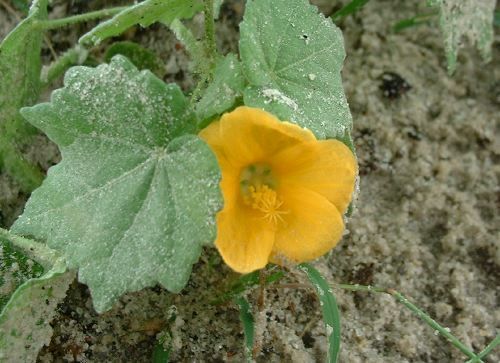
(c) Dinesh Valke, some rights reserved (CC BY-NC-ND)

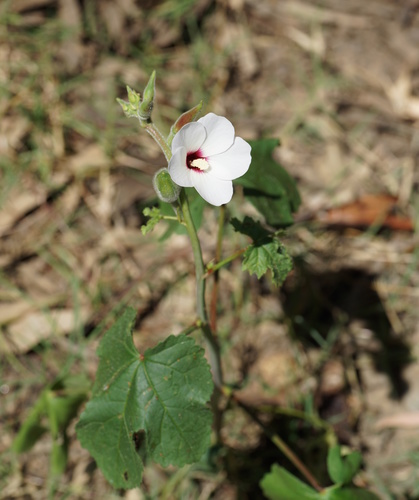
(c) Anil Kumar Verma, some rights reserved (CC BY-NC)
What to Eat
Edible parts: Leaves, Flowers
The flowers are eaten after the calyx is removed. The leaves are also eaten.
Where to Find It
A tropical plant. It grows naturally in deciduous forest and scrub areas.
Asia, Australia, Cambodia, China, East Timor, Fiji, India, Indochina, Indonesia, Laos, Malaysia, Myanmar, Pacific, Philippines, SE Asia, Sri Lanka, Thailand, Timor-Leste, Vietnam,
How to Identify
A shrub or small tree. It grows 2-3 m high. The branches are cylindrical and long and straggly. The young are densely hairy. They are alternate. The leaves are oval and end abruptly by narrowing to a point. They can be heart shaped at the base. There are irregular teeth. Leaves are hairy. They are 10-20 cm long and 7-9 cm wide. The leaf stalk is hairy. The flower group is like a round ball and grows in the axils of leaves. They are 2 cm long and 1 cm wide. The flowers have 5 unequal petals. They are red. The fruit is a capsule which is oval shaped, twisted and hairy. They are 5 cm long by 7-9 mm wide. They are brown. The seeds have stripes along them. They are 2 mm long.
How to Grow
Plants can be grown from seed or cuttings.
Medicinal Uses
H. isora is a rich source of antioxidants, carbohydrates, proteins, fibre, calcium, phosphorus, and iron. Active phytoconstituents include gallic acid, caffeic acid, vanillin, and p-coumaric acid. Cucurbitacin b and isocucurbitacin b have been isolated from the roots. Additionally, Satake et al. (1999) isolated rosmarinic acid and their derivatives; isoscutellarein and their derivatives; D-glucopyranosyl isorinic acid with rosmarinic acid; helisterculins A and B; and helisorin. The fruits and roots of H. isora are used in traditional medicine systems of Asia, Iraq and South Africa, where they are credited with having value in treatment of a wide variety of conditions, including gastrointestinal disorders, diabetes, cancer, and infections. There appear to have been no scientific investigations of these beliefs. However, laboratory studies have confirmed that both bacteria and cancer cells may survive less well in the presence of extracts of the fruits. Animal studies have shown that extracts of the roots can improve glucose tolerance in diabetic rats.
Other Uses
The bark is the source of a strong fibre. It is used as cordage for making cots, tying cattle and ploughs. The bark fibre is good for making ropes and clothing.
Wikipedia
Source ↗Helicteres isora, sometimes called the Indian screw tree, is a small tree or large shrub found in southern Asia and northern Oceania. It is usually assigned to the family Malvaceae, but it is sometimes assigned to the family Sterculiaceae. The red flowers are pollinated mainly by sunbirds, butterflies, and Hymenoptera. In the 19th century fibers from the bark were used to make rope and sacks, although nowadays the tree is harvested for the fruits and roots which are used in folk medicine.
Notes
Probably medicinal. Leaves used in medicine. The fruit are used in medicine. There are about 60 Helicteres species. There are 38 in tropical America. Also put the the family Helicteraceae.
Names & Synonyms
Ainthi, Atmora, Avartani, Bhendu, Buah puteran, Chabai tali, Dlumpang, Do tron, Folokuatuatua, Gubadarra, Isvarmuri, Jelumpang, Jonkaphal, Kaiva, Kaivum, Kavanchi, Kavargi, Kayyuna, Kekusin handak, Kevani, Kewan, Ki on, Kuchingan abang, Letet, Maradphali, Marorphali, Mriga-shinga, Murdasing, Murimuri, Murmuria, Nargoti, Nuliti, Paw-bit, Po pit, Screw tree, Spiral Bush, Syamali, Thunge-che, Tingkyut, Valampiri, Valampri, Varkati, Yedamuri
References (13)
- Ambasta, S.P. (Ed.), 2000, The Useful Plants of India. CSIR India. p 260
- Bole, P.V., & Yaghani, Y., 1985, Field Guide to the Common Trees of India. OUP p 41
- Burkill, I.H., 1966, A Dictionary of the Economic Products of the Malay Peninsula. Ministry of Agriculture and Cooperatives, Kuala Lumpur, Malaysia. Vol 1 (A-H) p 1153
- Cooper, W. and Cooper, W., 2004, Fruits of the Australian Tropical Rainforest. Nokomis Editions, Victoria, Australia. p 532
- Heywood, V.H., Brummitt, R.K., Culham, A., and Seberg, O. 2007, Flowering Plant Families of the World. Royal Botanical Gardens, Kew. p 165 (Family)
- Jacquat, C., 1990, Plants from the Markets of Thailand. D.K. Book House p 71
- McMakin, P.D., 2000, Flowering Plants of Thailand. A Field Guide. White Lotus. p 61
- Pandy, R. K. & Saini, S. K., 2007, Edible plants of tropical forests among tribal communities of Madhya Pradesh. Indian Journal of Traditional Knowledge. 6(1), pp 185-190
- Smith, A.C., 1981, Flora Vitiensis Nova, Lawaii, Kuai, Hawaii, Volume 2 p 399
- Sp. pl. 2:963. 1753
- Sukarya, D. G., (Ed.) 2013, 3,500 Plant Species of the Botanic Gardens of Indonesia. LIPI p 640
- Thai Forestry Bulletin 23:62-108, 1995
- Townsend, K., 1994, Across the Top. Gardening with Australian Plants in the tropics. Society for Growing Australian Plants, Townsville Branch Inc. p 250