Triumfetta procumbens
Forst. f.
Bingil Burr, Beach burr

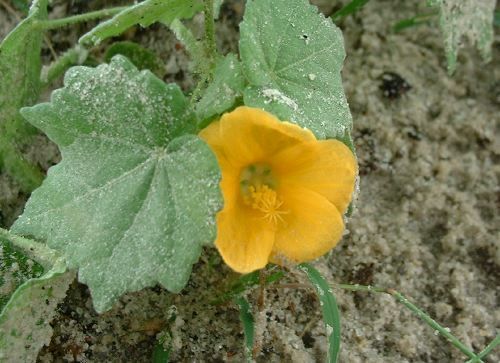
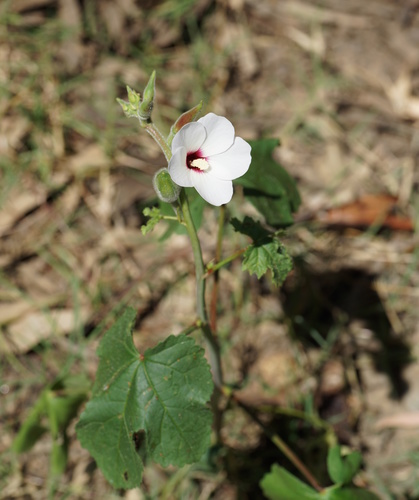
(c) juju98, some rights reserved (CC BY-NC), uploaded by juju98
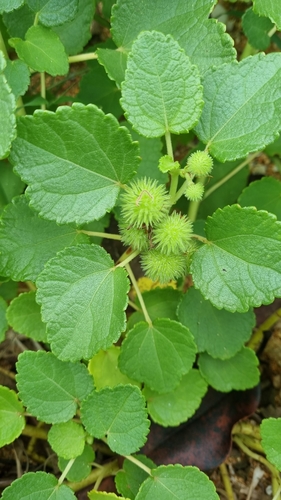
(c) David Louis Ugolini, some rights reserved (CC BY-NC-SA), uploaded by David Louis Ugolini
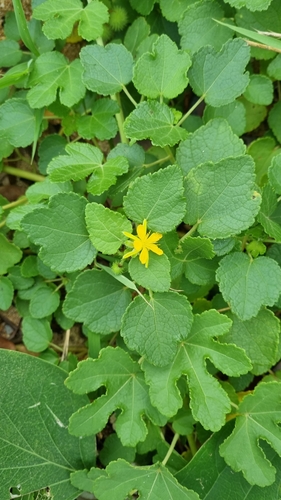
(c) David Louis Ugolini, some rights reserved (CC BY-NC-SA), uploaded by David Louis Ugolini
What to Eat
Edible parts: Fruit
The fruit are eaten.
Known Hazards
Where to Find It
A tropical plant. It grows at sea levels on beaches and on sandy soils. It grows on atolls.
American Samoa, Australia, British Indian Ocean Terr., BIOT, Caroline Islands, China, Chuuk, Fiji, FSM, Japan, Kiribati, Malaysia, Malesia, Marshall Islands, Micronesia, Nauru, Niue, Pacific, Palau, Rotuma, Samoa, SE Asia, Seychelles, Tokelau, Tonga, Tuvalu, Wallis and Futuna, Yap,
How to Identify
A low shrub. It is spreading and can have stems lying along the ground. They are 2-3 m long. The leaves are broad and oval. The flowers are yellow. The fruit are round with 4 locules. They are 2 cm across. There are 1 or 2 seeds per cell.
Notes
There are about 150 Triumfetta species. They are mostly in the tropics and subtropics. It has also been put in the family Sparmanniaceae. It may eventually be put in the family Malvaceae. These have also been in the family Tiliaceae.
Names & Synonyms
Atat, Konup, Mautofu tai, Te kiaou, Totolo, Totoro, Wa loa
References (9)
- Altschul, S.V.R., 1973, Drugs and Foods from Little-known Plants. Notes in Harvard University Herbaria. Harvard Univ. Press. Massachusetts. no. 2733
- Franklin, J., Keppel, G., & Whistler, W., 2008, The vegetation and flora of Lakeba, Nayau and Aiwa Islands, Central Lau Group, Fiji. Micronesica 40(1/2): 169–225, 2008
- Parham, B. E. V., 1971, The Vegetation of the Tokelau Islands with special reference to the Plants of Nukunonu Atoll. New Zealand Journal of Botany. 9:4, 576-609
- Parham, B. E. V., 1972, Plants of Samoa. New Zealand Department of Scientific and Industrial Research. Information Series. No. 85 p 65
- Smith, A.C., 1981, Flora Vitiensis Nova, Lawaii, Kuai, Hawaii, Volume 2 p 379
- Thaman, R. R., 1987, Plants of Kiribati: A listing and analysis of vernacular names. Atoll Research Bulletin No. 296
- Thaman, R. R, 2016, The flora of Tuvalu. Atoll Research Bulletin No. 611. Smithsonian Institute p 116
- Topp, J. M. W., 1988, An Annotated Check List of the Flora of Diego Garcia, British Ocean Territory. Atoll Research Bulletin No. 313
- Williams, K.A.W., 1999, Native Plants of Queensland Volume 4. Keith A.W. Williams North Ipswich, Australia. p 374