Bakeridesia esculenta
(A. St. Hil.) Monteiro
Brazilian mallow
What to Eat
Edible parts: Flowers, Fruit
The flower corolla is cooked as a vegetable, especially with meat, and is also used raw in salads. The fruit are eaten before complete maturity.
Where to Find It
It is a warm temperate plant. It needs well drained soil but can grow in a range of soils. It can grow in light shade. The can only tolerate a light frost. It suits hardiness zone 9.
Brazil, South America,
How to Identify
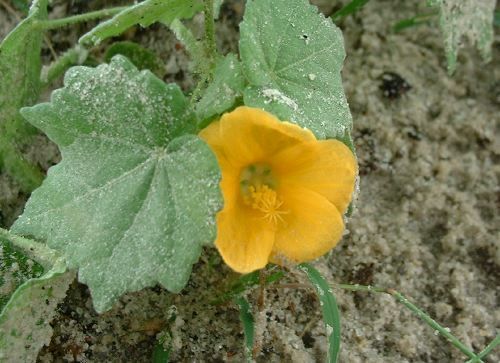
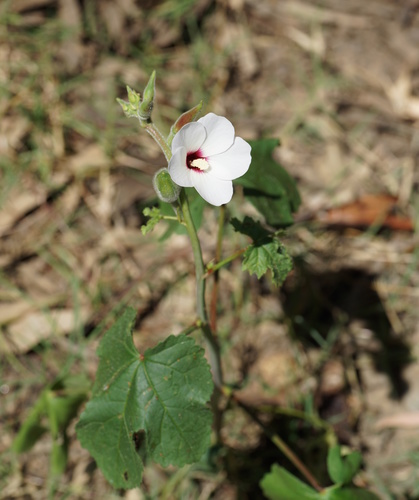
An evergreen shrub. It grows 2.4 m high The leaves are oval or oblong. They have short leaf stalks. There are teeth along the edge. The leaves have a dense grey covering underneath. The flowers are large and red. The fruit are a capsule with a grey covering.
How to Grow
Plants can be grown from seeds. Seeds germinate in 3-4 weeks. They can also be grown from cuttings.
Propagation: Seed - germinates in 3 - 4 weeks at 15°c. When large enough to handle, prick the seedlings out into individual pots and grow them on until large enough to plant out. Cuttings of young shoots. Very easy, they root quickly. Cuttings of half-ripe wood. Very easy, they root quickly. Cuttings of mature wood.
Other Information
The flowers are only occasionally eaten locally.
Notes
There are about 100-160 Abutilon species.
Names & Synonyms
Night-flowering maple
References (8)
- Biocyclopedia Edible Plant Species (As Abutilon esculentum)
- Bircher, A. G. & Bircher, W. H., 2000, Encyclopedia of Fruit Trees and Edible Flowering Plants in Egypt and the Subtropics. AUC Press. p 4 (As Abutilon purpurascens)
- Fern, K., 2012, Tropical Species Database http://theferns,info/tropical/ (As Abutilon purpurascens)
- Hedrick, U.P., 1919, (Ed.), Sturtevant's edible plants of the world. p 17 (As Abutilon purpurascens)
- Kermath, B. M., et al, 2014, Food Plants in the Americas: A survey of the domesticated, cultivated and wild plants used for Human food in North, Central and South America and the Caribbean. On line draft. p 119
- Macmillan, H.F. (Revised Barlow, H.S., et al), 1991, Tropical Planting and Gardening. Sixth edition. Malayan Nature Society. Kuala Lumpur. p 355 (As Abutilon purpurascens)
- Oliviera V. B., et al, 2012, Native foods from Brazilian biodiversity as a source of bioactive compounds. Food Research International 48 (2012) 170-179 (As Abutilon esculentum)
- Plants for a Future database, The Field, Penpol, Lostwithiel, Cornwall, PL22 0NG, UK. http://www.pfaf.org (As Abutilon purpurascens)