Ceroxylon amazonicum
Galeano
Paik', Ramo

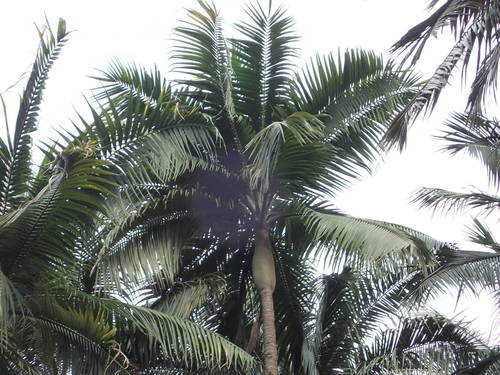
(c) Tobias Spanner, some rights reserved (CC BY-NC), uploaded by Tobias Spanner

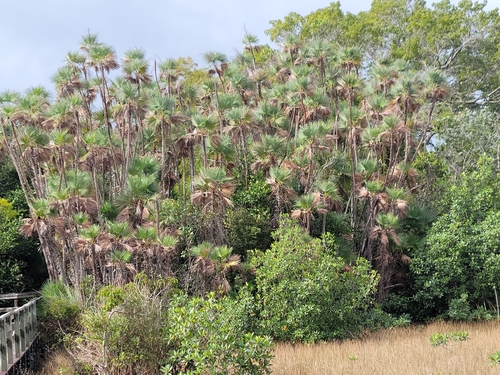
(c) Tobias Spanner, some rights reserved (CC BY-NC), uploaded by Tobias Spanner

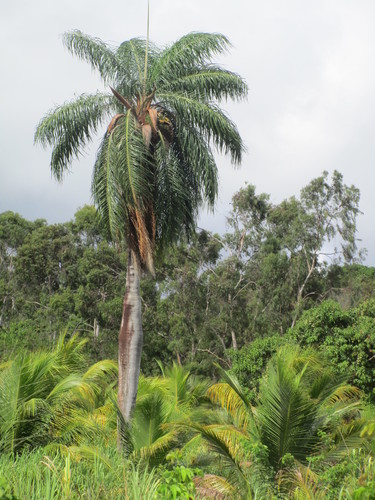
(c) Tobias Spanner, some rights reserved (CC BY-NC), uploaded by Tobias Spanner
What to Eat
Edible parts: Palm heart, Cabbage
Leaves - cooked. The apical bud, often called a 'palm heart', is eaten as a vegetable. Eating this bud leads to the death of the plant because it is unable to make side shoots.
Where to Find It
A tropical plant. The grow on the eastern slopes of the Andes in Ecuador. They are in lower mountain rainforest. They grow between 820-1200 m altitude.
Ecuador, South America,
How to Identify
A palm. The stems are 8-12 m tall. The trunk is 20-25 cm across. The trunk is greyish white with a thin layer of wax. There are 14-22 leaves. The crown is almost round. There are 99-106 leaflets on each side of the leaf. They are arranged regularly and horizontally except the ones at the tip. The lower surface has a thin yellow covering. The fruit are round and 1.7-2 cm across. They are orange-red and smooth.
How to Grow
A dioecious species, both male and female forms need to be grown if fruit and seed are required.
Wikipedia
Source ↗Ceroxylon amazonicum is a species of palm tree. It is endemic to Ecuador. There are only four known populations. The species is threatened by deforestation.
Notes
There are about 20 Ceroxylon species.
References (7)
- Eynden, Van den, V., & Cueva E., Cabrera, O., 2004, Edible Palms of Southern Ecuador. Palms. Vol 48(3):141-147
- Henderson, A., Galeano, G and Bernal, R., 1995, Field Guide to the Palms of the Americas. Princeton. p 74
- Kermath, B. M., et al, 2014, Food Plants in the Americas: A survey of the domesticated, cultivated and wild plants used for Human food in North, Central and South America and the Caribbean. On line draft. p 206
- Marcia, M. J., et al, 2011, Palm Uses in Northwestern South America: A Quantitative Review. Bot. Rev. (2011) 77:462-570
- Van den Eynden, V., et al, 2003, Wild Foods from South Ecuador. Economic Botany 57(4): 576-603
- Van den Eynden, V. et al, 2004, Edible Palms of Southern Ecuador. Palms Volume 48(3):142-148
- World Checklist of Useful Plant Species 2020. Royal Botanic Gardens, Kew