Pholidocarpus ihur
(Giseke)Blume
Woka hutan, Ihur, Ibul

President and Fellows of Harvard College

President and Fellows of Harvard College
What to Eat
Edible parts: Starch, Sago
Starch and sago are extracted from the trunk.
Where to Find It
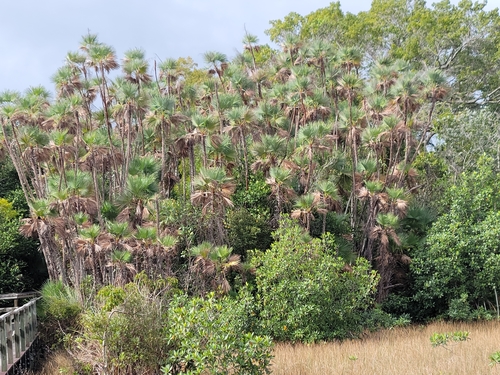
A tropical plant. It grows in Sulawesi, Maluku, and Ambon in Indonesia. It grows in the lowlands often in waterlogged soils.
Asia, Indonesia, SE Asia,
How to Identify
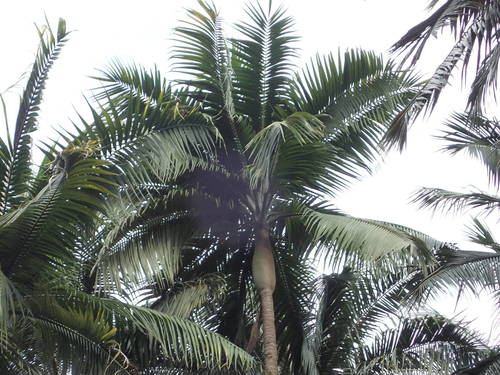
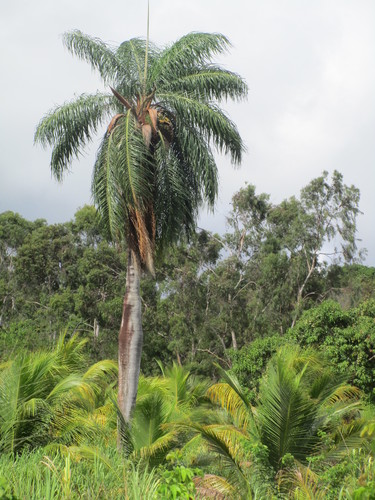
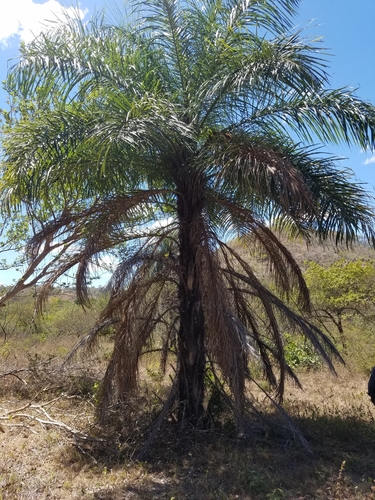
A robust palm. It has a single trunk. It has spines. The stem is erect and has close leaf scars. The leaves are fan like and the leaf stalk is 1-3 m long. It has a fattened base and spines. The blade is divided by shallower splits into 3-4 fold segments. These are divided further. The flowering stalk comes out amongst the leaves. It arches out from the crown. It is branched and about 1.5 m long. The flowers are yellow and without stalks. The fruit are about 6 cm across. They are brown. The fruit are corky and warty.
References (4)
- Burkill, I.H., 1966, A Dictionary of the Economic Products of the Malay Peninsula. Ministry of Agriculture and Cooperatives, Kuala Lumpur, Malaysia. Vol 2 (I-Z) p 1744
- Heyne, K., 1927, p 324
- PROSEA handbook Volume 9 Plants yielding non-seed carbohydrates. p 176
- World Checklist of Useful Plant Species 2020. Royal Botanic Gardens, Kew