Basella alba
L.
Indian spinach
no rights reserved, uploaded by 葉子
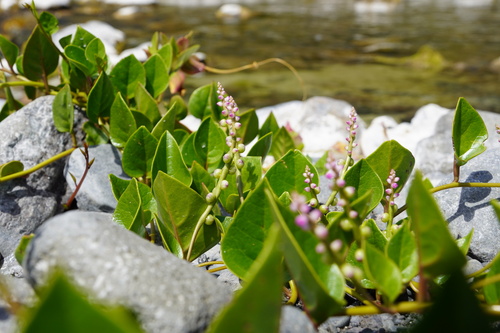
(c) Pierre-Louis Stenger, some rights reserved (CC BY-NC), uploaded by Pierre-Louis Stenger
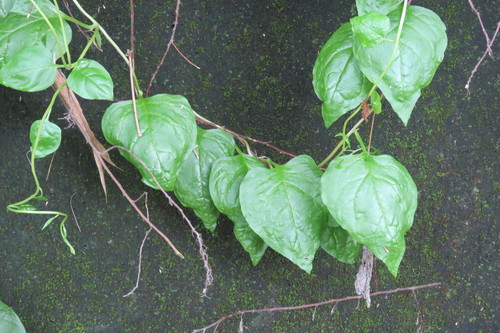
(c) 避暑山莊, some rights reserved (CC BY-NC), uploaded by 避暑山莊
What to Eat
Edible parts: Leaves, Tender stems, Vegetable
Edible Parts: Leaves Shoots Edible Uses: Colouring Tea Leaves and stem tips - raw or cooked. A pleasant mild spinach flavour, the leaves can be used as a spinach or added to salads. Do not overcook the leaves or they will become slimy. The mucilaginous qualities of the plant make it an excellent thickening agent in soups, stews etc where it can be used as a substitute for okra, Abelmoschatus esculentus. A nutritional analysis of the leaves is available. An infusion of the leaves is a tea substitute. The purplish sap from the fruit is used as a food colouring in pastries and sweets. The colour is enhanced by adding some lemon juice. References More on Edible Uses Composition Figures in grams (g) or miligrams (mg) per 100g of food. Leaves (Dry weight) 275 Calories per 100g Water : 0% Protein: 20g; Fat: 3.5g; Carbohydrate: 54g; Fibre: 9g; Ash: 19g; Minerals - Calcium: 3000mg; Phosphorus: 0mg; Iron: 0mg; Magnesium: 0mg; Sodium: 0mg; Potassium: 0mg; Zinc: 0mg; Vitamins - A: 50mg; Thiamine (B1): 0.7mg; Riboflavin (B2): 1.8mg; Niacin: 7.5mg; B6: 0mg; C: 1200mg; Reference: Notes:
Where to Find It
A tropical plant. It occurs mostly in the tropical lowlands and is best below 500 m but will grow up to about 1600 m. in the equatorial tropics. It will grow quite well in the temperature range 15-35°C. It does not like water-logging but can survive 4-12 weeks drought once well established. It requires adequate water during the growing season. It grows well in a variety of soils. The best pH is 5.5-7.0. It cannot tolerate salty conditions. Flowering does not occur when day lengths are over 13 hours. It is found throughout the Philippines in waste places. It can grow in arid places. In XTBG Yunnan.
Africa, Algeria, Amazon, Andamans, Angola, Asia, Australia, Bahamas, Bangladesh, Benin, Bhutan, Brazil, Burkina Faso, Burundi, Cambodia, Cameroon, Canary Islands, Central Africa, Central African Republic, CAR, China, Congo DR, Cook Islands, Côte d'Ivoire, Cuba, Dominican Republic, East Africa, East Timor, Ecuador, Ethiopia, Europe, Fiji, France, Ghana, Guiana, Guianas, Guinea-Bissau, Guyana, Haiti, Hawaii, Himalayas, India, Indochina, Indonesia, Ivory Coast, Jamaica, Japan, Kenya, Kiribati, Laos, Lesser Antilles, Liberia, Madagascar, Malawi, Malaysia, Maldives, Mauritius, Mexico, Mozambique, Myanmar, Namibia, Nepal, Niger, Nigeria, North Africa, North America, Northeastern India, Pacific, Pakistan, Papua New Guinea, PNG, Philippines, Puerto Rico, Rwanda, Sahel, Sao Tome and Principe, SE Asia, Senegal, Sierra Leone, Singapore, Slovenia, Solomon Islands, South Africa, Southern Africa, South America, Sri Lanka, Sudan, South Sudan, Suriname, Sweden, Taiwan, Tanzania, Tasmania, Thailand, Timor-Leste, Togo, Tuvalu, Uganda, USA, Vanuatu, Vietnam, West Africa, West Indies, Zambia,
How to Identify
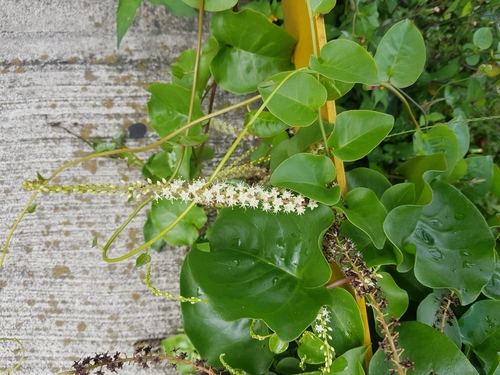
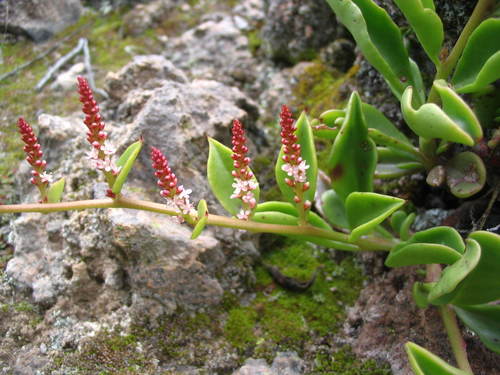
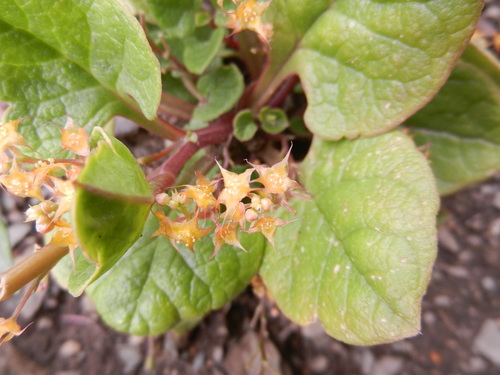
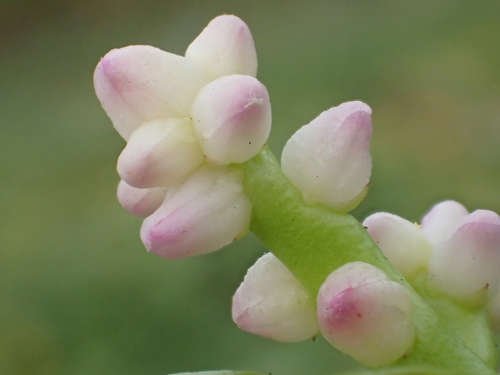
An annual or perennial climbing herb with thick fleshy leaves. The vine is smooth and juicy and can be 10 m long. It branches freely. The vine and leaves can be red or green. The leaves are fleshy and pointed at the tip. They can be 8-18 cm long and 8-10 cm across. They are carried alternately along the vine. Leaves can be heart shaped or oval. It has white, pink or red flowers in short spikes which are in the axils of the leaves. Flowers have both sexes. The fruit are round and soft. They can be red, white or black and are 6-8 mm across. The seeds are round and black. They are 3 mm across. (Often the ones with heart shaped leaves are called Basella cordifolia, the ones with a red stem Basella rubra and the short day flowering dark green kind called Basella alba.)
How to Grow
It can be sown from seeds or cuttings. Seeds germinate in a few days. Normally sticks are provided for support or it is allowed to grow over fences and stumps. If seeds are used, 3 kg of seed will sow one hectare and they are best sown in a nursery and transplanted. A spacing of 1 m is suitable. Plants grown from seed are more productive than from cuttings. When cuttings are used, 20-25 cm long cuttings are suitable. Where the plant grows over light soil it can root at the nodes and continue growing continually. Partial shade, rich fertile soil and adequate moisture favour abundant leaf production. It is responsive to nitrogen fertiliser. Light shade gives bigger leaves. It requires a trellis to climb over. Frequently picking off the bud encourages branching.
Propagation: Easy from seed or cuttings.
Medicinal Uses
Antidote Aperient Astringent Demulcent Diuretic Dysentery Febrifuge Laxative Rubefacient The roots are astringent. They are cooked and used in the treatment of diarrhoea. A paste of the root is applied to swellings and is also used as a rubefacient. The leaves and stems are cooked and eaten for their laxative properties. The leaf juice is a demulcent, used in cases of dysentery. It is also diuretic, febrifuge and laxative. The leaf juice is used in Nepal to treat catarrh. A paste of the leaves is applied externally to treat boils and sores. The flowers are used as an antidote to poisons. The plant is febrifuge, its juice is a safe aperient for pregnant women and a decoction has been used to alleviate labour. The red juice of the fruit is used as eye drops to treat conjunctivitis.
Other Uses
Dye A red dye is obtained from the juice of the fruits. It has been used as a rouge and also as a dye for official seals. Agroforestry Uses: The plant can be grown on living stakes, usually on a fence or on a hedge. Ceylon spinach can be used as a ground cover to prevent soil erosion and as a climbing plant to shade other crops. It also enhances biodiversity by attracting beneficial insects. Other Uses The juice of the fruits yields a red dye . The dye has been used as a rouge, an ink, for colouring foods and also as a dye for official seals. 1. Nectary - Flowers rich in nectar and pollen: Yes – The flowers of Basella alba attract pollinators, making them beneficial for local ecosystems. 2. Wildlife - Food (Fruit, Seeds, Leaf litter, Shelter, Nesting, Roosting): Yes, the leaves and stems are edible for humans and various wildlife. The plant’s dense growth can provide some cover for small creatures, but it is not primarily a nesting or roosting site. 3. Invertebrate Shelter (Overwintering sites, Leaf litter, Groundcover): Yes – Basella alba’s foliage can provide some shelter for invertebrates, although it is not specifically known for overwintering sites. 4. Pest Confuser (Smell): No – While it may have some aromatic properties, Basella alba is not primarily recognized for repelling pests or confusing them with its smell. Special Uses
Wikipedia
Source ↗Basella alba is a perennial vine in the family Basellaceae. It is also known by common names including Malabar spinach, vine spinach, Ceylon spinach, alugbati and Indian spinach. The plant is native to Indian subcontinent, Southeast Asia, and New Guinea and naturalized elsewhere. It has a number of culinary uses.
Production
It is 4-6 weeks until the first harvest. It grows reasonably well on poor soils and is fairly resistant to pest and disease. Leaves will only store for one day at 20-30°C. Yields of 40 kg of leaves from a 10 metre square bed is possible over 75 days. Leaves are plucked from the vine.
Other Information
It is a commercially cultivated vegetable. It has been encouraged and accepted in some coastal areas of Papua New Guinea. Leaves are sold in local markets. It is popular in East Tanzania.
Notes
Chemical composition (after Hooper): Water = 92.00% (fresh). Fat = 6.87% (dry). Albumenoids = 20.42% (dry). Carbohydrates = 32.90% (dry). Fibre = 11.55% (dry). Ash = 28.27% (dry). Nitrogen = 3.27% (dry). Phosphoric acid = 1.32% (dry). Silicates = 6.70% (dry). The nutritive value of the leaves and young shoot is very high in terms of minerals and vitamins. It is gently laxative and slightly medicinal.
Names & Synonyms
Adwera, Akan, Alogbati, Alugbati, Ama, Amut, Aworoke, Bacchalikoora, Bambee, Ban-poi, Basle soppu, Bayam malabar, Boamassaagu, Boroboro, Busum-muru, Caruru, Cejlonska špinača, Ceylon spinach, Chakai, Chan Cai, Chan-Choi, Chra-long, Chunlueng, Chinese callalloo, Delega, Dundula, Enderema, Enderenta, Epinard pays, Espinaca de Malabar, Gandola, Gendola, Genjerot, Ghogboloki, Ginbeik, Inderema, Inika, Inki, Kattupasali, Kurakura, Kurekure, Libato, Luo kui, Maghi, Maifrai, Malabar nightshade, Mayal, Mndele, Mong toi, Mong toi, Mwifrai, Myal-ki-bhaji, Ndelama, Ndelema, Ndera, Nderama, Ndoge, Niviti, Pabang, Pak pang, Pak plang, Pang, Pasalai, Pasali-Kirai, Phakpang, Phak plang, Pichko, Po deng chaai, Poaya, Poi sag, Poi, Poikivel, Poinwel, Poro, Puin, Pui-shak, Rachan, Rat-nivithi, Remayong, Ronga pui sak, Ronga puroi sak, Saan choi, Shan ts'oi, She eje, Shivappluvaslakkira, Shoro, Sufed-bachla-ki-bhaji, Suped-bachla, Taka ngola, Tembayung, Tsuru-murasaki, Vasalachapu, Vasala dagu, Vine spinach
References (176)
- Indian spinach references
- Abbiw, D.K., 1990, Useful Plants of Ghana. West African uses of wild and cultivated plants. Intermediate Technology Publications and the Royal Botanic Gardens, Kew. p 40
- Abukutsa-Onyango, M.O., 2004. Basella alba L. [Internet] Record from Protabase. Grubben, G.J.H. & Denton, O.A. (Editors). PROTA (Plant Resources of Tropical Africa / Ressources végétales de l’Afrique tropicale), Wageningen, Netherlands. < http://database.prota.org/search.htm>. Accessed 14 October 2009.
- Achigan-Dako, E, et al (Eds), 2009, Catalogue of Traditional Vegetables in Benin. International Foundation for Science.
- Ali, A. M. S., 2005, Homegardens in Smallholder Farming Systems: Examples from Bangladesh. Human Ecology, Vol. 33, No. 2 pp. 245-270
- Altschul, S.V.R., 1973, Drugs and Foods from Little-known Plants. Notes in Harvard University Herbaria. Harvard Univ. Press. Massachusetts. no. 938
- Ambasta S.P. (Ed.), 2000, The Useful Plants of India. CSIR India. p 68
- Anderson, E. F., 1993, Plants and people of the Golden Triangle. Dioscorides Press. p 203
- Ara, R. I. T., 2015, Leafy Vegetables in Bangladesh. Photon eBooks. p 17
- Arinathan, V., et al, 2007, Wild edibles used by Palliyars of the western Ghats, Tamil Nadu. Indian Journal of Traditional Knowledge. 6(1) pp 163-168
- Backer & Bakh. f. 1963-1968. Flora of Java.
- Balkrishna, A., et al, 2022, Indigenous Uses of Plants among Forest-dependent Communities of Seijosa, Arunachal Pradesh. International Journal of Economic Plants 2022, 9(1):064-080
- Bandyopadhyay, S., et al, 2012, A Census of Wild Edible Plants from Howrah District, West Bengal, India. Proceedings of UGC sponsored National Seminar 2012
- Baro, D., Baruah, S. and Borthukar, S. K. 2015, Documentation on wild vegetables of Baksa district, BTAD (Assam). Scholars Research Library. Archives of Applied Science Research, 2015, 7 (9):19-27
- Bernholt, H. et al, 2009, Plant species richness and diversity in urban and peri-urban gardens of Niamey, Niger. Agroforestry Systems 77:159-179 (As rubra)
- Bircher, A. G. & Bircher, W. H., 2000, Encyclopedia of Fruit Trees and Edible Flowering Plants in Egypt and the Subtropics. AUC Press. p 54 (Also as Basella cordifolia)
- Borrell, O.W., 1989, An Annotated Checklist of the Flora of Kairiru Island, New Guinea. Marcellin College, Victoria Australia. p 58
- Brouk, B., 1975, Plants Consumed by Man. Academic Press, London. p 139
- Brown, W.H., 1941, Useful plants of the Philippines. Department of Agriculture and Natural Resources. Vol 1 Manila.
- Brown, W.H., 1920, Wild Food Plants of the Philippines. Bureau of Forestry Bulletin No. 21 Manila. p 56 (As Basella rubra)
- Burkill, H. M., 1985, The useful plants of west tropical Africa, Vol. 1. Kew.
- Burkill, I.H., 1935, A Dictionary of the Economic Products of the Malay Peninsula. p 251-253
- Call, C. A., et al, 2004, Participatory Rural Appraisal in the Upland Ecosystem of Mt Malindang, Misamis Occidental, Philippines. Biodiversity Research Programme for Development in Mindanao.
- Chao, Pi-Yu, et al, 2014, Antioxidant Activity in Extracts of 27 Indigenous Taiwanese Vegetables. Nutrients 2014, 6, 2115-2130
- Chin, H. F., 1999, Malaysian Vegetables in Colour. Tropical Press. p 13 (As Basella rubra)
- Creasy, R., 2000, The Edible Asian Garden. Periplus p 54
- Cruz-Garcia, G. S., & Price, L. L., 2011, Ethnobotanical investigation of 'wild' food plants used by rice farmers in Kalasin, Northeast Thailand. Journal of Ethnobiology and Ethnomedicine 7:33 (As Basella rubra)
- Dangol, D. R. et al, 2017, Wild Edible Plants in Nepal. Proceedings of 2nd National Workshop on CUAOGR, 2017.
- Dansi, A., et al, 2008, Traditional leafy vegetables and their use in the Benin Republic. Genet Resour Crop Evol (2008) 55:1239–1256
- Dobriyal, M. J. R. & Dobriyal, R., 2014, Non Wood Forest Produce an Option for Ethnic Food and Nutritional Security in India. Int. J. of Usuf. Mngt. 15(1):17-37
- Dutta, U., 2012, Wild Vegetables collected by the local communities from the Churang reserve of BTD, Assam. International Journal of Science and Advanced Technology. Vol. 2(4) p 119
- Eilu, G. & Bukenya-Ziraba, R., 2004, Local Use of Climbing Plants of Budongo Forest Reserve, Western Uganda. Journal of Ethnobiology 24(2): 307-327
- Encke, F., et al. 1984. Zander: Handworterbuch der Pflanzennamen, ed. 13.
- Epenhuijsen C.W. van., 1974, Growing Native vegetables in Nigeria. FAO Rome, p 36
- Facciola, S., 1998, Cornucopia 2: a Source Book of Edible Plants. Kampong Publications, p 47
- FAO, 1988, Traditional Food Plants, FAO Food and Nutrition Paper 42. FAO Rome p 100
- Flora of China. www.eFloras.org
- Flora of the Guianas.
- Foo, J.T.S.(ed), 1996, A Guide to Common Vegetables. Singapore Science Foundation. p 20 (As Basella rubra)
- Fowler, D. G., 2007, Zambian Plants: Their Vernacular Names and Uses. Kew. p 77
- French, B.R., 1986, Food Plants of Papua New Guinea, A Compendium. Asia Pacific Science Foundation p 76
- French, B.R., 2010, Food Plants of Solomon Islands. A Compendium. Food Plants International Inc. p 102
- Gautam, R. S., et al, 2022, Ethnobotanical Review of Wild Edible Plants of Nepal. Journal of Natural History Museum Volume 32, 2021-22 p 107
- Global Plants JSTOR
- Godfrey, J. et al, 2013, Harvesting, preparationand preservation of commonly consumed wild and semi-wild food plants in Bunyoro-Kitara Kingdom, Uganda. Int. J. Med. Arom. Plants. Vol.3 No.2 pp 262-282
- Goode, P., 1989, Edible Plants of Uganda. FAO p 26
- Goode, P., 1989, Edible Plants of Uganda. FAO p 39
- Gouldstone, S., 1983, Growing your own Food-bearing Plants in Australia. Macmillan p 179 (As Basella rubra)
- Grubben, G. J. H. and Denton, O. A. (eds), 2004, Plant Resources of Tropical Africa 2. Vegetables. PROTA, Wageningen, Netherlands. p 103
- Hadfield, J., 2001, The A-Z of Vegetable Gardening in South Africa. Struik p 123
- Hani Medicine of Xishuangbanna, 1999, p 627 (As Basella rubra)
- Hara, H., et al. 1978-1982. An enumeration of the flowering plants of Nepal.
- Hara, H., Flora of eastern Himalaya. v. 1:1966, v. 2:1971, v. 3:1975
- Harkonen, M. & Vainio-Mattila, K., 1998, Some examples of Natural Products in the Eastern Arc Mountains. Journal of East African Natural History 87:265-278
- Hedrick, U.P., 1919, (Ed.), Sturtevant's edible plants of the world. p 93 (As Basella rubra)
- Herklots, G. A. C., 1972, Vegetables in South-East Asia. Allen & Unwin. p 152 (As Basella rubra)
- Heywood, V.H., Brummitt, R.K., Culham, A., and Seberg, O. 2007, Flowering Plant Families of the World. Royal Botanical Gardens, Kew. p 57 HOOPER,
- Hu, Shiu-ying, 2005, Food Plants of China. The Chinese University Press. p 384
- Huxley, ed. The new Royal Horticultural Society dictionary of gardening. 1992
- Jacquat, C., 1990, Plants from the Markets of Thailand. D.K. Book House p 60
- Japanese International Research Centre for Agricultural Science www.jircas.affrc.go.jp/project/value_addition/Vegetables
- Jardin, C., 1970, List of Foods Used In Africa, FAO Nutrition Information Document Series No 2.p 58
- Johns, T., Mhoro, E. B. and Sanaya, P., 1996, Food Plants and Masticants of the Batemi of Ngorongoro District, Tanzania. Economic Botany, Vol. 50, No. 1, pp. 115-121
- Joshi, N., et al, 2007, Traditional neglected vegetables of Nepal: Their sustainable utilization for meeting human needs. Tropentag 2007. Conference on International Agricultural Research for Development.
- Joshi, N. & Siwakoti, M., 2012, Wild Vegetables Used by Local Community of Makawanpur District and Their Contribution to Food Security and Income Generation. Nepal Journal of Science and Technology Vol. 13, No. 1 (2012) 59-66
- Katz, E., et al, 2012, No greens in the forest? Note on the limited consumption of greens in the Amazon. Acta Soc Bot Pol 81(4):283–293
- Kays, S. J., and Dias, J. C. S., 1995, Common Names of Commercially Cultivated Vegetables of the World in 15 languages. Economic Botany, Vol. 49, No. 2, pp. 115-152
- Keay & Hepper. 1953-1972. Flora of west tropical Africa, ed. 2.
- Kiple, K.F. & Ornelas, K.C., (eds), 2000, The Cambridge World History of Food. CUP p 1807
- Kiran, K. C., et al, 2019, Diversity and Seasonal Availability of Potential Wild Edible Plants from Vidarbha Region of Maharashtra State, India. Int.J.Curr.Microbiol.App.Sci (2019) 8(2): 1434-1446 (As Basella rubra)
- Knott, J.E. & Deanon, J.R., Vegetable Production in South East Asia. University of the Philippines. 1967. p 273-276.
- Kumar, A., 2013, Ethnobotanical study of wild vegetables used by rural communities of Kannauj district, Uttar Pradesh, India. Emir. J. Food Agric. 2013. 25 (10): 760-766
- Kumar, S. A., Manus, D. & Mallika, M., 2018, Impact of non-timber forest products on Forest and in Livelihood Economy of the People of Adjoining Areas of Jalpaiguri Forest Division, West Bengal, India. Int. J. of Life Sciences, 2018; 6 (2):365-385
- Kunkel, G., Plants for human consumption
- Kuo, W. H. J., (Ed.) Taiwan's Ethnobotanical Database (1900-2000), http://tk.agron.ntu.edu.tw/ethnobot/DB1.htm
- Latham, P., 2004, Useful Plants of Bas-Congo province. Latham & DFID p 48
- Latham, P. & Mbuta, A. K., 2014, Useful Plants of Bas-Congo Province, Democratic Republic of Congo. Volume 1. Salvation Army. p 71
- Lautenschläger, T., et al, 2018, First large-scale ethnobotanical survey in the province of Uíge, northern Angola. Journal of Ethnobiology and Ethnomedicine (2018) 14:51
- Leon,J., 1968, Fundamentos Botanicos de Los Cultivos Tropicales p 389
- Liberty Hyde Bailey Hortorium. 1976. Hortus third.
- Lu De-quan, BASELLACEAE [Draft], Flora of China
- Lugod, G.C. and de Padua L.S., 1979, Wild Food Plants in the Philippines. Vol. 1. Univ. of Philippines Los Banos. p 21
- Lugod, G.C. and de Padua L.S., 1979, Wild Food Plants in the Philippines. Vol. 1. Univ. of Philippines Los Banos. p 21 (As Basella rubra)
- Lyimo, M., et al, 2003, Identification and nutrient composition of indigenous vegetables of Tanzania. Plant Foods for Human Nutrition. 58: 85-92
- Macbr., J. F., et al., eds. 1936-1971; new ser. 1980-. Flora of Peru.
- Macmillan, H.F. (Revised Barlow, H.S., et al) 1991, Tropical Planting and Gardening. Sixth edition. Malayan Nature Society. Kuala Lumpur. p 343
- Malaisse, F., 2010, How to live and survive in Zambezian open forest (Miombo Ecoregion). Les Presses Agronomiques de Gembloux.
- Manandhar, N.P., 2002, Plants and People of Nepal. Timber Press. Portland, Oregon. p 105
- Marandi, R. R. & Britto, S. J., 2015, Medicinal Properties of Edible Weeds of Crop Fields and Wild plants Eaten by Oraon Tribals of Latehar District, Jharkhand. International Journal of Life Science and Pharma Research. Vo. 5. (2) April 2015
- Marshall, F., Agriculture and Use of Wild and Weedy Greens by the Piik ap Oom Okiek of Kenya. Economic Botany, Vo. 55, No. 1, pp. 32-47
- Martin, F.W., & Ruberte, R.M., 1975, Edible Leaves of the Tropics. Antillian College Press, Mayaguez, Puerto Rico. p 25
- Maundu, P. et al, 1999, Traditional Food Plants of Kenya. National Museum of Kenya. p 73
- Medhi, P. & Borthakur, S. K., 2012, Phytoresources from North Cachur Hills of Assam -3: Edible plants sold at Hflong market. Indian Journal or Natural Products and Resources. 3(1) pp 84-109
- Miguel, E., et al, 1989, A checklist of the cultivated plants of Cuba. Kulturpflanze 37. 1989, 211-357
- Monsalud, M.R., Tongacan, A.L., Lopez, F.R., & Lagrimas, M.Q., 1966, Edible Wild Plants in Philippine Forests. Philippine Journal of Science. p 445
- Mot So Rau Dai an Duoc O Vietnam. Wild edible Vegetables. Ha Noi 1994, p 124 (As Basella rubra)
- Msuya, T. S., et al, 2010, Availability, Preference and Consumption of Indigenous Foods in the Eastern Arc Mountains, Tanzania, Ecology of Food and Nutrition, 49:3, 208-227
- Mutie, F. M., et al, 2023, Important Medicinal and Food Taxa (Orders and Families) in Kenya, Based on Three Quantitative Approaches. Plants 2023, 12, 1145
- Narayanan Ratheesh, M. K. et al, 2011, Wild edible plants used by the Kattunaikka, Paniya and Kuruma tribes of Wayanad District, Kerala, India. Journal of Medicinal Plants Research Vol. 5(15), pp. 3520-3529
- Narzary, H., et al, 2013, Wild Edible Vegetables Consumed by Bodo tribe of Kokrajhar District (Assam), North-East India. Archives of Applied Science Research, 5(5): 182-190
- Ngugi, G., 2000, Case Study from Kenya on Indigenous Wild Vegetables. Paper 4 Workshop in Kenya 1999. p 32
- Norrington, L., & Campbell, C., 2001, Tropical Food Gardens. Bloomings Books. p 51
- Neal, C.M.,1965, In Gardens of Hawaii. p343 Bishop Museum Press.
- Nyadanu, D., et al, 2015, Agro-biodiversity and challenges of on-farm conservation: the case of plant genetic resources of neglected and underutilized crop species in Ghana. Genet. Resourc. Crop Evol. 62(7):
- Nzigidahera, B., 2006, Assessment of Socio-cultural, Economic Characteristics and Livelihood of Riparian Population of the Kibira National Park. (Rukoma-Mutana locality). UNDP p 30
- Ochse, J.J. et al, 1931, Vegetables of the Dutch East Indies. Asher reprint. p 75 (As Basella rubra)
- Ojelel, S., et al, 2019, Wild edible plants used by communities in and around selected forest reserves of Teso-Karamoja region, Uganda. Journal of Ethnobiology and Ethnomedicine (2019) 15:3
- Ogle, B. M., et al, 2003, Food, Feed or Medicine: The Multiple Functions of Edible Wild Plants in Vietnam. Economic Botany 57(1): 103-117 (As Basella rubra)
- Omawale, 1973, Guyana's edible plants. Guyana University, Georgetown p 101
- Omawale, 1973, Guyana's edible plants. Guyana University, Georgetown p 101 (As Basella rubra)
- Oomen, H.A.P.C., & Grubben, G.J.H., 1978, Tropical Leaf Vegetables in Human Nutrition, Communication 69, Department of Agricultural research, RTI Amsterdam, p 26, 36, 66, 81
- Patiri, B. & Borah, A., 2007, Wild Edible Plants of Assam. Geethaki Publishers. p 112
- Pham-Hoang Ho, 1999, An Illustrated Flora of Vietnam. Nha Xuat Ban Tre. p 735 (As Basella rubra)
- Phon, P., 2000, Plants used in Cambodia. © Pauline Dy Phon, Phnom Penh, Cambodia. p 89
- Plants of Haiti Smithsonian Institute http://botany.si.edu
- Pradhan, R., et al, 2020, Potential Wild Edible Plants and its Significance in Livelihood of Indigenous People of Male Mahadeshwara Hills, Karnataka. Economic Affairs Vol. 64, No. 4 pp. 01-14
- Prafulla, S., 2017, Wild Food Diversity of Nawegaon-Nagzira Tiger Reserve in Gondia-Bhandara district of Maharashtra, India. Int. J. of Life Sciences, 2017, Vol. 5 (4): 620-626
- Purseglove, J.W., 1968, Tropical Crops Dicotyledons, Longmans. p 628
- Royal Botanic Gardens, Kew (1999). Survey of Economic Plants for Arid and Semi-Arid Lands (SEPASAL) database. Published on the Internet; http://www.rbgkew.org.uk/ceb/sepasal/internet [Accessed 4th April 2011]
- Sarvalingam, A., et al, 2014, Wild edible plant resources used by the Irulas of the Maruthamalai Hills, Southern Western Ghats, Coimbatore, Tamil Nadu. Indian Journal of Natural Products and Resources 5(2):198-201
- Schneider, E., 2001, Vegetables from Amaranth to Zucchini: The essential reference. HarperCollins. p 26
- Rajapaksha, U., 1998, Traditional Food Plants in Sri Lanka. HARTI, Sri Lanka. p 94
- Rajasab, A. H. & Isaq, M., 2004, Documentation of folk knowledge on edible wild plants of North Karnataka. Indian Journal of Traditional Knowledge 3(4) pp 419-429
- Rashid, H. E., 1977, Geography of Bangladesh. Westview. p 281 (As Basella rubra)
- Rasingam, L., 2012, Ethnobotanical studies on the wild edible plants of Irula tribes of Pillur Valley, Coimbatore district, Tamil Nadu, India. Asian Pacific Journal of Tropical Biomedicine. (2012) S1493-S1497
- Recher, P, 2001, Fruit Spirit Botanical Gardens Plant Index. www.nrg.com.au/~recher/ seedlist.html p 1
- Rehm, S., & G. Espig. 1991. The cultivated plants of the tropics and subtropics.
- Rubaihayo, E. B., Conservation and use of traditional vegetables in Uganda. Bioversity International.
- Segnon, A. C. & Achigan-Dako, E. G., 2014, Comparative analysis of diversity and utilization of edible plants in arid and semi-arid areas in Benin. Journal of Ethnobiology and Ethnomedicine 2014, 10:80
- Seidemann J., 2005, World Spice Plants. Economic Usage, Botany, Taxonomy. Springer. p 63
- Shah, G.L., 1984, Some economically important plant of Salsette Island near Bombay. J. Econ. Tax. Bot. Vol. 5 No. 4 pp 753-765 (As Basella rubra)
- Shah, S. K., 2014, Dietary contribution of underutilized minor crops and indigenous plants collected from uncultivated lands and forests in Nepal. in Promotion of Underutilized Indigenous Food Resources for Food Security and Nutrition in Asia and Pacific. FAO. Bangkok p 64 (As Basella rubra)
- Sharma, B.B., 2005, Growing fruits and vegetables. Publications Division. Ministry of Information and broadcasting. India. p 195 (As Basella rubra)
- Siemonsma, J. S. and Piluek, K. (Eds), 1994, Plant Resources of South-East Asia No. 8 Vegetables. Prosea Foundation, Bogor, Indonesia, p 93
- Singh, A. G., et al, 2012, Wild Plants Used as Vegetable in Rupandehi District of Nepal and Their Ethnomedicinal Importance. J. Nat. Hist. Mus. Vol. 26, 2012, 111-125
- Smith, A.C., 1981, Flora Vitiensis Nova, Lawaii, Kuai, Hawaii, Volume 2 p 280
- Smith, K., 1998. Growing Uncommon Fruits and Vegetables. New Holland. p 47
- Sp. pl. 1:272. 1753
- Srichaiwong, P., et al, 2014, A Study of the Biodiversity of Natural Food Production to Support Community Upstream of Chi Basin, Thailand. Asian Social Science 10 (2):
- Staples, G.W. and Herbst, D.R., 2005, A tropical Garden Flora. Bishop Museum Press, Honolulu, Hawaii. p 173 (Drawing)
- Steenis, C.G.G.J., van, ed. 1948-. Flora malesiana. p 300-302
- Sujanapal, P., & Sankaran, K. V., 2016, Common Plants of Maldives. FAO & Kerala FRI, p 53
- Sukarya, D. G., (Ed.) 2013, 3,500 Plant Species of the Botanic Gardens of Indonesia. LIPI p 1067
- Tanaka, Y. & Van Ke, N., 2007, Edible Wild Plants of Vietnam: The bountiful garden. Orchid books. p 51
- Terashima, H., et al, 1991, Ethnobotany of the Lega in the tropical rainforest of eastern Zaire: part 1, Zone de Mwenga. African Study Monographs. Suppl. 15:1-61
- Termote, C., et al, 2014, Assessing the potential of wild foods to reduce the cost of a nutritionally adequate diet: An example from eastern Baringo District, Kenya. Food and Nutrition Bulletin, vol. 35, no. 4
- Terra, G.J.A., 1973, Tropical Vegetables. Communication 54e Royal Tropical Institute, Amsterdam, p 27
- Terra, G.J.A., 1973, Tropical Vegetables. Communication 54e Royal Tropical Institute, Amsterdam, p 27, 28 (As Basella rubra)
- Terrell et al. 1986. Agric. Handb. no. 505.
- Thaman, R. R, 2016, The flora of Tuvalu. Atoll Research Bulletin No. 611. Smithsonian Institute p 71
- Thitiprasert, W., et al, 2007, Country report on the State of Plant Genetic Resources for Food and Agriculture in Thailand (1997-2004). FAO p 95 (As Basella rubra)
- Tindall, H.D., & Williams, J.T., 1977, Tropical Vegetables and their Genetic Resources, International Board for Plant Genetic Resources, Rome, p 97
- Tindall, H.D., 1968, Commercial Vegetable Growing. Oxford Tropical Handbooks p 224
- Tindall, H.D., 1983, Vegetables in the tropics. Macmillan p. 67
- Tugume, P. & Nyakoojo, C., 2020, Traditional use of wild edible plants in the communities adjacent to Mabira Central Forest Reserve, Uganda. Ethnobotany Research & Applications 20:15 (2020)
- Turrill et al., eds. 1952-. Flora of tropical East Africa.
- Tutin et al., eds. 1964-1980. Flora europaea.
- UPHOF
- Uprety, Y., et al, 2016, Traditional use and management of NTFPs in Kangchenjunga Landscape: implications for conservation and livelihoods. Journal of Ethnobiology and Ethnomedicine (2016) 12:19
- USDA, ARS, National Genetic Resources Program. Germplasm Resources Information Network - (GRIN). [Online Database] National Germplasm Resources Laboratory, Beltsville, Maryland. Available: www.ars-grin.gov/cgi-bin/npgs/html/econ.pl (10 April 2000)
- Van Sam, H. et al, 2008, Uses and Conservation of Plant Species in a National Park. A case study of Ben En, Vietnam. Economic Botany 62:574-593
- van Wyk, B., 2005, Food Plants of the World. An illustrated guide. Timber press. p 84
- von Katja Rembold, 2011, Conservation status of the vascular plants in East African rain forests. Dissertation Universitat Koblenz-Landau p 159
- Walker, E., 1976. Flora of Okinawa and the southern Ryukyu Islands.
- Wiersema, J. H. & Leon, B., 2013, World Economic Plants. A Standard Reference CRC Press. 2nd Ed. p 94
- Williamson, J., 2005, Useful Plants of Malawi. 3rd. Edition. Mdadzi Book Trust. p 34
- Winters, H., F., Ceylon Spinach (Basella rubra ). Economic Botany
- Woodson & Schery, eds. 1943-1980. Flora of Panama.
- Woodward, P., 2000, Asian Herbs and Vegetables. Hyland House. p 28
- World Checklist of Useful Plant Species 2020. Royal Botanic Gardens, Kew
- www.eFloras.org Flora of China
- Xu, You-Kai, et al, 2004, Wild Vegetable Resources and Market Survey in Xishuangbanna, Southwest China. Economic Botany. 58(4): 647-667.
- Yamada, T., 1999, A report of the Ethnobotany of the Nyindu in the Eastern part of the former Zaire. African Study Monographs 20(1):1-72
- Yimer, A., et al, 2021, Ethnobotanical study of wild edible plants used by Meinit Ethnic Community at Bench-Maji Zone, Southwest Ethiopia. Research Square. p 5
- Zeven, A. C. & de West, J. M. J., 1982, Dictionary of cultivated plants and their regions of diversity. Wageningen. p 50
- Zon, A.P.M. van der, Grubben, G.J.H., 1976, Les legumes-feuilles spontanes et cultives du Sud-Dahomey, Communication 65, Royal Tropical Institute, Amsterdam, p 35, 36