Persicaria amplexicaulis
(D. Don) Ronse Decr.
Mountain-fleece

(c) Robert Levy, some rights reserved (CC BY-NC)

(c) Robert Levy, some rights reserved (CC BY-NC)
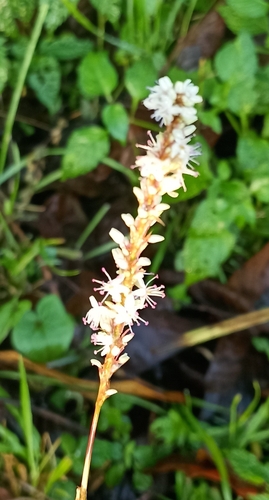
(c) Rajendra Koranga, some rights reserved (CC BY-NC)
What to Eat
Edible parts: Rhizomes - tea, Root, Leaves
The rhizomes and roots are made into soup or brewed as a tea substitute with milk and sugar added. The leaves are boiled and then fried as a vegetable.
Where to Find It
It grows in moist soil. It grows in shady places in forests. It grows between 1,000-3,300 m above sea level. It grows in Sichuan and Yunnan.
Asia, Bhutan, China, Himalayas, India, Nepal, NW India, Pakistan,
How to Identify
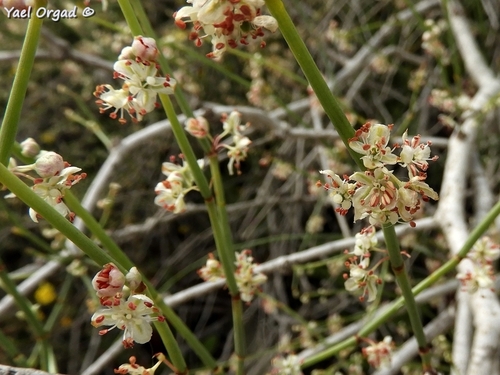
A herb. It can grow 1.2 m high. It has underground stems or rhizomes. They are 1.5 cm across. The leaves at the base have long leaf stalks and those on the stems have short leaf stalks. The leaves are 4-10 cm long by 2-5 cm wide. The flowers are in thin spikes and are bright red.
Medicinal Uses
It is used in medicine.
Notes
It is used in medicine.
Names & Synonyms
Aambla, Ban madua, Durpa tandar, Kukar makri, Rain, Roye
References (13)
- Ambasta, S.P. (Ed.), 2000, The Useful Plants of India. CSIR India. p 479 (As Polygonum amplexicaule)
- Amin, M., et al, 2023, Edible wild plant species used by different linguistic groups of Kohistan Upper Khyber Pakhtunkhwa (KP), Pakistan. Journal of Ethnobiology and Ethnomedicine 19:6 p 11
- Bhatia, H., et al, 2018, Traditionally used wild edible plants of district Udhampur, J&K, India. Journal of Ethnobiology and Ethnomedicine (2018) 14:73
- Flora of China @ efloras.org Volume 5 (As Polygonum amplexicaule)
- Gautam, R. S., et al, 2020, Wild Edible Fruits of Nepal. Int. J. Appl. Sci. Biotechnol. Vol 8(3): 289-304 (As Bistorta amplexicaulis)
- Heywood, V.H., Brummitt, R.K., Culham, A., and Seberg, O., 2007, Flowering Plant Families of the World. Royal Botanical Gardens, Kew. p 264 (As Polygonum amplexicaule)
- Khan, M. & Hussain, S., 2014, Diversity of wild edible plants and flowering phenology of district Poonch (J & K) in the northwest Himalaya. Indian Journal of Sci, Res. 9(1): 032-038 (As Polygonum amplexicaule)
- Khan, W., et al, 2013, Ethnomedicinal plants of Kakul Hills, District Abbottabad, KPK, Pakistan. (As Bistorta amplexicaule)
- Prodr. fl. nepal. 70. 1825 (As Polygonum amplexicaule)
- Rana, D., et al, 2019, Ethnobotanical knowledge among the semi-pastoral Gujjar tribe in the high altitude (Adhwari’s) of Churah subdivision, district Chamba, Western Himalaya. Journal of Ethnobiology and Ethnomedicine (2019) 15:10
- Rashid, A., Anand, V.K. & Serwar, J., 2008, Less Known Wild Plants Used by the Gujjar Tribe of District Rajouri, Jammu and Kashmir State. International Journal of Botany 4(2):219-244 (As Polygonum amplexicaule)
- Rawat, G.S., & Pangtey, Y.P.S., 1987, A Contribution to the Ethnobotany of Alpine Regions of Kumaon. J. Econ. Tax. Bot. Vol. 11 No. 1 pp 139-147 (As Polygonum amplexicaule)
- Slocum, P.D. & Robinson, P., 1999, Water Gardening. Water Lilies and Lotuses. Timber Press. p 130 (As Polygonum amplexicaule)