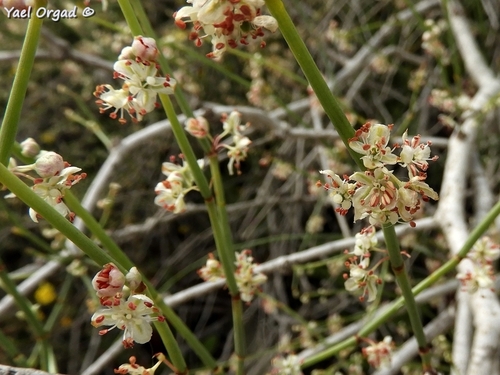
Rheum spiciforme
Royle
Taturi, Archu, Lachu
(c) Kulbhushansingh Suryawanshi, some rights reserved (CC BY-NC), uploaded by Kulbhushansingh Suryawanshi

(c) meiliang, some rights reserved (CC BY-NC)
(c) Aleksandr Naumenko, some rights reserved (CC BY-NC)
What to Eat
Edible parts: Leaf stalks, Flowers, Leaves, Root
The leaf stem can be eaten raw or cooked.
Known Hazards
Where to Find It
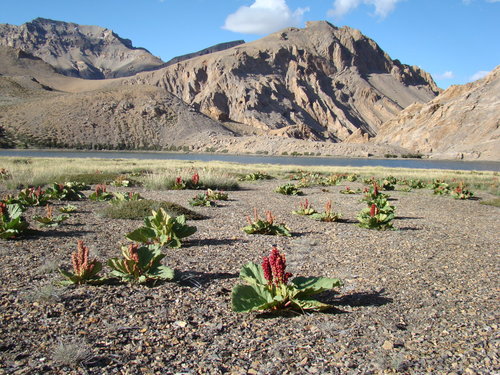
It is a subtropical plant. In west China it grows between 4,000-5,000 m above sea level.
Afghanistan, Asia, Bhutan, Central Asia, China, Himalayas, India, Northeastern India, Pakistan, Sikkim, Slovenia, Tajikistan, Tibet,
How to Identify
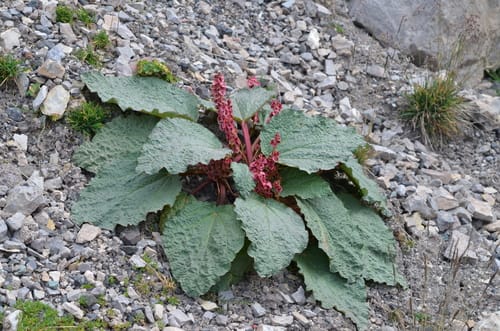
A herb. It does not have a stem and keeps growing from year to year. The leaves come from the base. The leaf stalks are 7-15 cm long. The leaf blade is very leathery and 15-30 cm long and wide.
How to Grow
Prefers a deep, fertile, moderately heavy, humus rich, moisture retentive, well-drained soil in sun or semi-shade. Grows well in heavy clay soils. Hardy to about -20°c. Plants in this genus seem to be immune to the predations of rabbits. Hybridizes freely with other members of this genus.
Propagation: Seed is best sown in autumn in a shaded cold frame, though spring sowing in a cold frame is also possible. Once seedlings are large enough to handle, prick them out into individual pots and grow them on in a greenhouse or cold frame through their first winter, then plant out in spring. For division, work in early spring or autumn, splitting the rootstock with a sharp spade or knife and ensuring at least one growth bud per division. Larger divisions can go directly into their permanent positions; smaller ones are better potted up and grown on in light shade in a cold frame until well established before planting out in late spring or early summer.
Medicinal Uses
The root is used as a purgative.
Other Uses
None known Special Uses Food Forest
Wikipedia
A small hardy perennial rhubarb reaching only 0.3 m tall. Hermaphroditic wind-pollinated flowers appear in June with seeds ripening in August. Grows in loamy or heavy clay soils with mildly acid to alkaline pH; prefers well-drained, moist conditions and tolerates semi-shade or full sun.
Other Information
It is sold in local markets.
References (11)
- Ambasta S.P. (Ed.), 2000, The Useful Plants of India. CSIR India. p 520
- Boesi, A., 2014, Traditional knowledge of wild food plants in a few Tibetan communities. Journal of Ethnobiology and Ethnomedicine 10:75
- Dorjey, K., et al, 2012, Ethnobotanical observations in Trans-Himalayan Region of Ladakh. Journal of Plant Development Sciences Vol. 4 (4): 459-464.
- Flora of China @ efloras.org Volume 5
- Flora of Pakistan. www.eFloras.org
- http://www.botanic-gardens-ljubljana.com/en/plants
- Ill. bot. Himal. Mts. 1:318. 1836; 2: t. 78. 1834
- Rawat, G.S., & Pangtey, Y.P.S., 1987, A Contribution to the Ethnobotany of Alpine Regions of Kumaon. J. Econ. Tax. Bot. Vol. 11 No. 1 pp 139-147
- Sharma, L. et al, 2018, Diversity, distribution pattern, endemism and indigenous uses of wild edible plants in Cold Desert Biosphere Reserve of Indian Trans Himalaya. Indian Journal of Traditional Knowledge. Vol 17(1) January 2018 pp 122-131
- Sulamain, N., et al, 2023, The Importance of Becoming Tamed: Wild Food Plants as Possible Novel Crops in Selected Food-Insecure Regions. Horticulturae 2023,9,171.
- Sundriyal, M., et al, 2004, Dietary Use of Wild Plant Resources in the Sikkim Himalaya, India. Economic Botany 58(4) pp 626-638