Polygonum tortuosum
D. Don
Eastern knotweed
iNaturalist · cc-by-nc
(c) Kulbhushansingh Suryawanshi, some rights reserved (CC BY-NC)
(c) Kulbhushansingh Suryawanshi, some rights reserved (CC BY-NC)
iNaturalist · cc-by-nc
(c) rinchenwangmo, some rights reserved (CC BY-NC)
(c) rinchenwangmo, some rights reserved (CC BY-NC)

iNaturalist · cc-by-nc
(c) lougarou, some rights reserved (CC BY-NC)
(c) lougarou, some rights reserved (CC BY-NC)
What to Eat
Edible parts: Leaves - tea, Stems, Shoots
The dried leaves are used as a tea substitute. The tender stems are eaten raw or pickled.
Where to Find It
It is a temperate plant. It grows on grassy slopes. It grows between 3,600-4,900 m above sea level.
Afghanistan, Asia, Bhutan, China, Himalayas*, India, Nepal, Pakistan, Tibet,
Countries: United Arab Emirates, Afghanistan, Armenia, Azerbaijan, Bangladesh, Bahrain, Brunei, Bhutan, China, Georgia, Indonesia, Israel, India, Iraq, Iran, Jordan, Japan, Kyrgyzstan, Cambodia, North Korea, South Korea, Kuwait, Kazakhstan, Laos, Lebanon, Sri Lanka, Myanmar, Mongolia, Maldives, Malaysia, Nepal, Oman, Philippines, Pakistan, Qatar, Saudi Arabia, Singapore, Syria, Thailand, Tajikistan, Timor-Leste, Turkmenistan, Turkey, Taiwan, Uzbekistan, Vietnam, Yemen
How to Identify
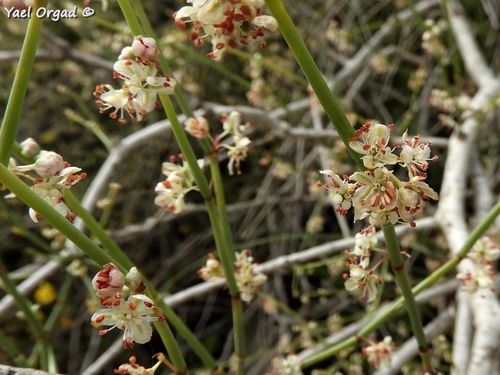
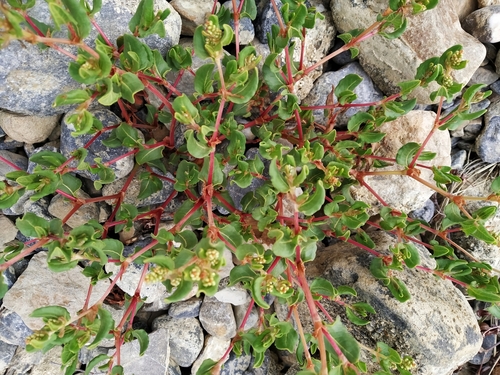
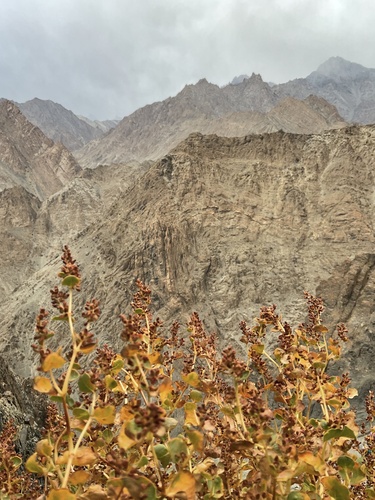
A small shrub. The roots are robust. It grows 30-50 cm tall. The branches are forked. The leaves are oval and 2-4 cm long by 1-2 cm wide. They can be hairy. The flowers are small and white or cream. The dry fruit is brown and oval and sharply 3 sided.
Medicinal Uses
The roots are used in medicine.
Notes
The roots are used in medicine.
Names & Synonyms
Bakranda, Bakrolya, Chaunle, Chawanle, Cha zhi shen xue ning, Niala, Nyalowa
Aconogonum tortuosum (D. Don) H. HaraPolygonum peregrinatoris Paulsenand others
References (6)
- Ambasta, S.P. (Ed.), 2000, The Useful Plants of India. CSIR India. p 482
- Flora of China @ efloras.org Volume 5
- Ghimire, S. K., et al, 2008, Non-Timber Forest Products of Nepal Himalaya. WWF Nepal p 111 (As Aconogonon tortuosum)
- Negi, K.S., 1988, Some little known wild edible plants of U.P. Hills. J. Econ. Tax. Bot. Vol. 12 No. 2 pp 345-360
- Prodr. fl. nepal. 71. 1825
- Yeshi, K. et al, 2017, Taxonomical Identification of Himalayan Edible Medicinal Plants in Bhutan and the Phenolic Contents and Antioxidant Activity of Selected Plants. TBAP 7 (2) 2017 pp 89 - 106 (As Aconogonon tortuosum)