Licuala kunstleri
Becc.
Palas, Pales
ArecaceaeShoots

wikimedia · cc-by-sa
Tobias Helfrich (Dionysos) (via Wikimedia Commons)
Tobias Helfrich (Dionysos) (via Wikimedia Commons)

wikimedia · cc-by-sa
Presse03 (via Wikimedia Commons)
Presse03 (via Wikimedia Commons)

wikimedia · cc0
Ingersoll (via Wikimedia Commons)
Ingersoll (via Wikimedia Commons)

gbif · cc0
President and Fellows of Harvard College
President and Fellows of Harvard College

gbif · cc0
President and Fellows of Harvard College
President and Fellows of Harvard College
What to Eat
Edible parts: Stem - pith
The pith of the stem is eaten.
Where to Find It
A tropical plant.
Asia, Malaysia, SE Asia,
Countries: United Arab Emirates, Afghanistan, Armenia, Azerbaijan, Bangladesh, Bahrain, Brunei, Bhutan, China, Georgia, Indonesia, Israel, India, Iraq, Iran, Jordan, Japan, Kyrgyzstan, Cambodia, North Korea, South Korea, Kuwait, Kazakhstan, Laos, Lebanon, Sri Lanka, Myanmar, Mongolia, Maldives, Malaysia, Nepal, Oman, Philippines, Pakistan, Qatar, Saudi Arabia, Singapore, Syria, Thailand, Tajikistan, Timor-Leste, Turkmenistan, Turkey, Taiwan, Uzbekistan, Vietnam, Yemen
How to Identify
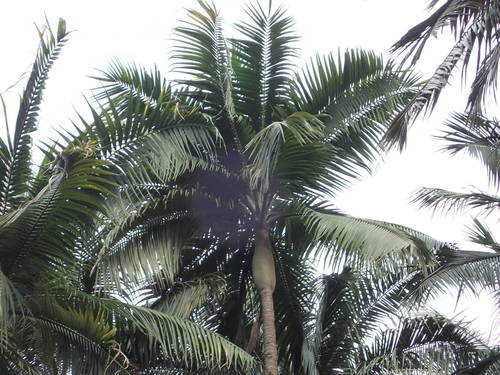
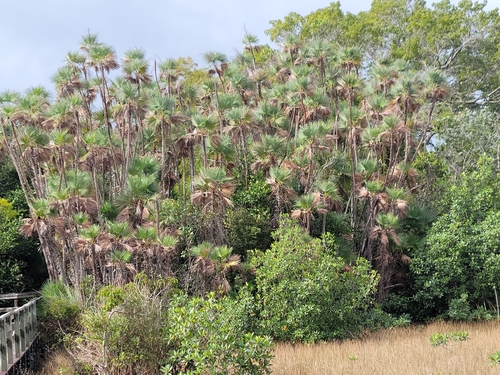
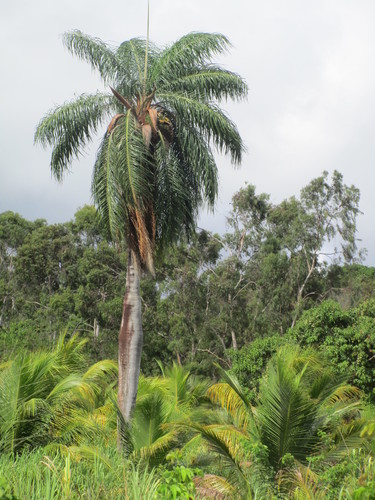
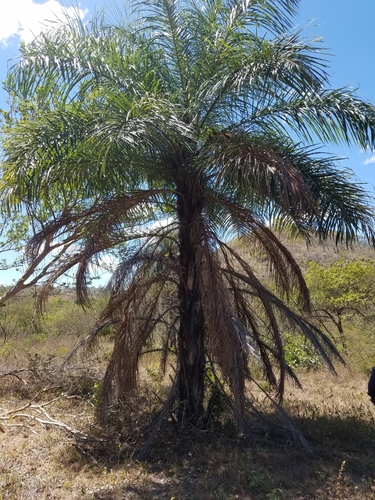
A small palm of the Arecaceae family growing to approximately 1.3 m high with a stem 10-15 cm across. It is found in tropical wet regions.
Notes
There are about 100-150 Licuala species. They grow in the wet tropics.
References (2)
- Burkill, I.H., 1966, A Dictionary of the Economic Products of the Malay Peninsula. Ministry of Agriculture and Cooperatives, Kuala Lumpur, Malaysia. Vol 2 (I-Z) p 1364
- World Checklist of Useful Plant Species 2020. Royal Botanic Gardens, Kew