Benincasa hispida
(Thunberg) Cogniaux
Wax gourd

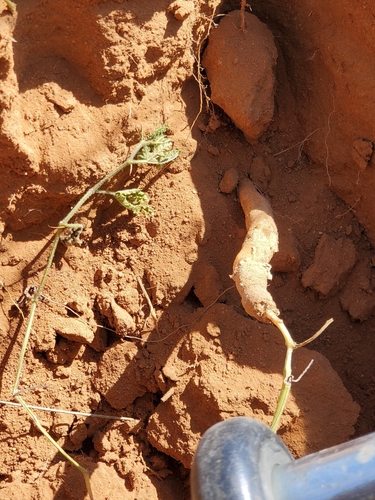
(c) Monal Peroth, some rights reserved (CC BY-NC), uploaded by Monal Peroth
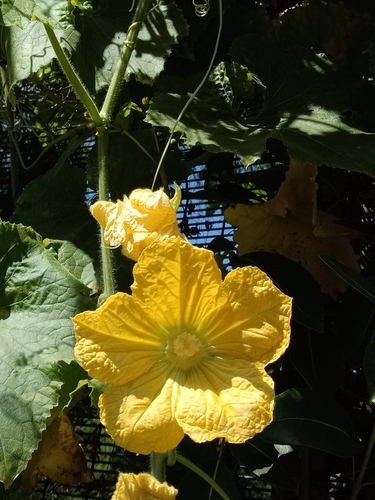
(c) Swarochi Tathagath, some rights reserved (CC BY), uploaded by Swarochi Tathagath
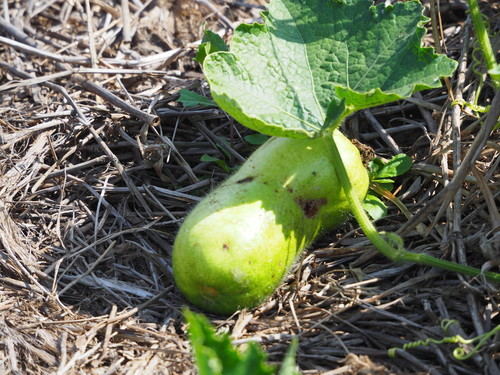
no rights reserved, uploaded by 葉子
What to Eat
Edible parts: Fruit, Seeds, Leaves, Flowers, Vegetable
Edible Parts: Flowers Fruit Leaves Seed Edible Uses: Fruit - raw or cooked. Used as a vegetable, and in pickles, curries and preserves. The fruit can be eaten when it is young or old, it can be picked as early as one week after fertilization. A juicy texture with a mild flavour, the flavour is somewhat stronger in younger fruits. Because of its waxy coating, it will store for several months, sometimes as long as a year. Mature fruits can vary in weight from 2 - 50 kg. A nutritional analysis is available. Young leaves and flower buds are steamed and eaten as a vegetable, or are added as a flavouring to soups. Seed - cooked. Rich in oil and protein. References More on Edible Uses Composition Figures in grams (g) or miligrams (mg) per 100g of food. Fruit (Fresh weight) 13 Calories per 100g Water : 96.1% Protein: 0.4g; Fat: 0.2g; Carbohydrate: 3g; Fibre: 0.5g; Ash: 0.3g; Minerals - Calcium: 19mg; Phosphorus: 19mg; Iron: 0.4mg; Magnesium: 0mg; Sodium: 6mg; Potassium: 111mg; Zinc: 0mg; Vitamins - A: 0mg; Thiamine (B1): 4mg; Riboflavin (B2): 0.11mg; Niacin: 0.4mg; B6: 0mg; C: 13mg; Reference: Notes:
Where to Find It
A tropical plant. It is suited to warm, lowland, tropical conditions. It does better in dry areas or drier seasons. They are reasonably drought tolerant. The best temperature for growing is 23-28°C. They need a well-drained soil. They do best with a pH of 6.5. It grows in Nepal up to 1400 m altitude. In Yunnan.
Not known in a truly wild situation.
How to Identify
A climbing, pumpkin family plant. The vine can be 3 m long. The plant re-grows from seed each year. The vines are thick, furrowed and hairy. The leaves are heart shaped with 5 to 7 lobes. They are rough to touch. Flowers are yellow. The immature fruit can have skin of various colours depending on variety. The fruit is up to 30 cm long and 20 cm across and green with a waxy covering when mature. This waxy layer enables the fruit to be stored for a long time. Fruit shape and size can vary with variety. The flesh is firm and white. The fruit are heavy - up to 8-45 kg.
Nutrition Score: 17/100
| Part | Moisture | kJ | kcal | Protein | Vit A | Vit C | Iron | Zinc |
|---|---|---|---|---|---|---|---|---|
| Fruit | 92 | 118 | 28 | 0.7 | 0 | 15 | 0.6 | 0.6 |
| Fruit - cooked | 96.6 | 54 | 13 | 0.4 | 0 | 10.5 | 0.4 | 0.6 |
| Leaves | — | — | — | — | — | — | — | — |
| Seeds | — | — | — | — | — | — | — | — |
| Flowers | — | — | — | — | — | — | — | — |
How to Grow
It is a commercially cultivated vegetable. These gourds are grown in most places where Chinese have moved and where the climate is warm enough. They are mainly grown near coastal towns in Papua New Guinea for sale to Chinese. They sell for a high price. Leaves are sold in local markets.
Propagation: Seed - sow March/April in a greenhouse. Germination should take place within 3 weeks. When they are large enough to handle, prick the seedlings out into individual pots and grow them on fast in a rich compost in the greenhouse. Try to maintain a minimum night temperature of at least 10°c for the seedlings first few weeks. Plant out in May/June after the last expected frosts.
Medicinal Uses
Anthelmintic Antiperiodic Aphrodisiac Cancer Demulcent Diuretic Epilepsy Expectorant Febrifuge Laxative Salve Tonic Urinary VD The wax gourd has been used as a food and medicine for thousands of years in the Orient. All parts of the fruit are used medicinally. The rind of the fruit is diuretic. It is taken internally in the treatment of urinary dysfunction, summer fevers etc. The ashes of the rind are applied to painful wounds. The seed is anthelmintic, anti-inflammatory, demulcent, diuretic, expectorant, febrifuge, laxative and tonic. A decoction is used internally in the treatment of vaginal discharges and coughs. In combination with Rheum palmatum it is used to treat intestinal abscesses. In Ayurvedic medicine the seed is used in the treatment of coughs, fevers, excessive thirst and to expel tapeworms. The oil from the seed is also used as an anthelmintic. The fruit is antiperiodic, aphrodisiac, diuretic, laxative and tonic. It is used in Ayurvedic medicine in the treatment of epilepsy, lung diseases, asthma, coughs etc. The fruit juice is used in the treatment of insanity, epilepsy and other nervous diseases. Recent research has shown that the fruits contain anti-cancer terpenes. An infusion of the root is used in the treatment of gonorrhoea. Demulcent, salve. Facilitates pus drainage.
Other Uses
Rootstock A wax that coats the fruit is used to make candles. The roots have considerable resistance to soil-borne diseases and they are sometimes used as a rootstock for melons and other cucurbits. Special Uses
Wikipedia
Annual vine growing to 6 m with trailing habit. Frost tender, hardy to UK zone 10. In leaf June to October, flowering July to September, seeds ripening August to November. Monoecious with bee pollination and self-fertile. Prefers light sandy, medium loamy, or heavy clay well-drained soils in mildly acid to basic pH. Requires full sun and moist conditions but tolerates drought.
Production
There is only one Benincasa species. Because the rootstocks are resistant to several pests they are sometimes used as rootstocks for grafting on other pumpkin family plants.
Names & Synonyms
Alu puhul, Ash gourd, Ash pumpkin, Babuar, Baligo, Beligu, Bhuru kohlu, Bi xanh, Bligo semangka, Bligo, Blondcheng, Budagumbala kayi, Bududa-gummadi, Calabaza china, Chalkumra, Chal kumra, Chinese preserving melon, Chuna kumra, Dong gwa, Faeng, Fak-kib, Fak-kio, Fuzzy melon, Gimikumra, Jali kumra, Kalyanappushinikkay, Khaukhluhaba, Kodot, Kohala, Kondol, Kooshmanda, Kubhindo, Kubindo, Kumbalangai, Kundol, Kundor, Kundur, Kuvindo, Kyauk-pha-yon, Leor, Lun-tha, Mafaeng, Maipuang, Maipuong, Petha-kaddu, Petha, Pirorogo, Por-mat, Puhul, Pushani kai, Rodal, Sada kumra, Sambal pusanikkai, Tibiayon, Tong qua, Tonx, Torbot, Tougan, Trallaach, Trallah, Tung kwa, Umpong, Wattakkai, Winter melon
References (89)
- Wax gourd references Benincasa hispida
- Ambasta S.P. (Ed.), 2000, The Useful Plants of India. CSIR India. p 71
- Anderson, E. F., 1993, Plants and people of the Golden Triangle. Dioscorides Press. p 203
- Ara, R. I. T., 2015, Leafy Vegetables in Bangladesh. Photon eBooks. p 57
- Bandyopadhyay, S. et al, 2009, Wild edible plants of Koch Bihar district, West Bengal. Natural Products Radiance 8(1) 64-72
- Bircher, A. G. & Bircher, W. H., 2000, Encyclopedia of Fruit Trees and Edible Flowering Plants in Egypt and the Subtropics. AUC Press. p 57
- Borrell, O.W., 1989, An Annotated Checklist of the Flora of Kairiru Island, New Guinea. Marcellin College, Victoria Australia. p 66, 182
- Brown, D., 2002, The Royal Horticultural Society encyclopedia of Herbs and their uses. DK Books. p 142
- Brown, W.H., 1951-1957., Useful plants of the Philippines. Department of Agriculture and Natural Resources. Technical Bulletin 10. 3, Volumes. Manila. p 359-361
- Burkill, I.H.,1935, A Dictionary of the Economic Products of the Malay Peninsula. p 255 (As Benincasa cerifera)
- Chin, H. F., 1999, Malaysian Vegetables in Colour. Tropical Press. p 45 & 51
- Chowdhury, M. & Mukherjee, R., 2012, Wild Edible Plants Consumed by Local Communities of Maldah of West Bengal, India. Indian J.Sci.Res.3(2) : 163-170
- Creasy, R., 2000, The Edible Asian Garden. Periplus p 57
- A. L. P. P. de Candolle & A. C. de Candolle, Monogr. phan. 3:513. 1881
- Dangol, D. R. et al, 2017, Wild Edible Plants in Nepal. Proceedings of 2nd National Workshop on CUAOGR, 2017.
- Deshpande, A.A., Bankapur, V.M., & Venkatasubbaiah, K.A., Studies of Floral Biology of Snake Gourd (Tricosanthes anguina L.) and Ash Gourd (Benincasa hispida Thunb. Cogn.)
- Devi, O. S., et al, 2021, Wild edible plants associated with the people of Thoubal Khunou village and its migrated villagers. Int. J. Adv. Res. Biol. Sci. 8(9): 72-90
- Esquinas-Alcazar, et al, 1983, Genetic Resources of Cucurbitaceae. International Board of Plant Genetic Resources.
- Facciola, S., 1998, Cornucopia 2: a Source Book of Edible Plants. Kampong Publications, p 84
- Flora of Australia, Volume 8, Lecythidales to Batales, Australian Government Publishing Service, Canberra (1982) p 170
- Foo, J.T.S.(ed), 1996, A Guide to Common Vegetables. Singapore Science Foundation. p 50
- French, B.R., 1986, Food Plants of Papua New Guinea, A Compendium. Asia Pacific Science Foundation p 108
- French, B.R., 2010, Food Plants of Solomon Islands. A Compendium. Food Plants International Inc. p 141
- Gangte, H. E., et al, 2013, Wild Edible Plants used by the Zou Tribe in Manipur, India. International Journal of Scientific and Research Publications, Volume 3, Issue 5
- Gautam, R. S., et al, 2020, Wild Edible Fruits of Nepal. Int. J. Appl. Sci. Biotechnol. Vol 8(3): 289-304
- Gautam, R. S., et al, 2022, Ethnobotanical Review of Wild Edible Plants of Nepal. Journal of Natural History Museum Volume 32, 2021-22 p 110
- Grubben, G. J. H. and Denton, O. A. (eds), 2004, Plant Resources of Tropical Africa 2. Vegetables. PROTA, Wageningen, Netherlands. p 107
- Grubben, G.J.H., 2004. Benincasa hispida (Thunb. ex Murray) Cogn. [Internet] Record from Protabase. Grubben, G.J.H. & Denton, O.A. (Editors). PROTA (Plant Resources of Tropical Africa / Ressources végétales de l’Afrique tropicale), Wageningen, Netherlands. < http://database.prota.org/search.htm>. Accessed 14 October 2009.
- Guite, C., 2016, A study of wild edible plants associated with the Paite tribe of Manipur, India, International Journal of Current Research. Vol. 8, Issue, 11, pp. 40927-40932
- Hani Medicine of Xishuangbanna, 1999, p 699 (As Benincasa cerifera)
- Hedrick,U.P.(ed),1919, Sturtevant’s Edible Plants of the World. Dover p 96 (As Benincasa cerifera)
- Hu, Shiu-ying, 2005, Food Plants of China. The Chinese University Press. p 691
- Japanese International Research Centre for Agricultural Science www.jircas.affrc.go.jp/project/value_addition/Vegetables
- Jardin, C., 1970, List of Foods Used In Africa, FAO Nutrition Information Document Series No 2.p 59
- Kar, A., et al, 2013, Wild Edible Plant Resources used by the Mizos of Mizoram, India. Kathmandu University Journal of Science, Engineering and Technology. Vol. 9, No. 1, July, 2013, 106-126
- Kays, S. J., and Dias, J. C. S., 1995, Common Names of Commercially Cultivated Vegetables of the World in 15 languages. Economic Botany, Vol. 49, No. 2, pp. 115-152
- Khanal, R., et al, 2014, Documenting abundance and use of underutilized plant species in the mid hill region of Nepal. ECOPRINT 21: 63-71, 2014
- Kiple, K.F. & Ornelas, K.C., (eds), 2000, The Cambridge World History of Food. CUP p 1775
- Larkcom, J., 1991, Oriental Vegetables, John Murray, London, p 83
- Leon, J., 1968, Fundamentos Botanicos de Los Cultivos Tropicales p 290
- Liu, Yi-tao, & Long, Chun-Lin, 2002, Studies on Edible Flowers Consumed by Ethnic Groups in Yunnan. Acta Botanica Yunnanica. 24(1):41-56
- Macmillan, H.F. (Revised Barlow, H.S., et al) 1991, Tropical Planting and Gardening. Sixth edition. Malayan Nature Society. Kuala Lumpur. p 331
- Manandhar, N.P., 2002, Plants and People of Nepal. Timber Press. Portland, Oregon. p 108
- Martin, F.W. & Ruberte, R.M., 1979, Edible Leaves of the Tropics. Antillian College Press, Mayaguez, Puerto Rico. p 189
- Martin, M.A., 1971, Introduction L'Ethnobotanique du Cambodge. Centre National de la Recherche Scientifique. Paris.
- Medhi, P. & Borthakur, S. K., 2012, Phytoresources from North Cachur Hills of Assam -3: Edible plants sold at Hflong market. Indian Journal or Natural Products and Resources. 3(1) pp 84-109
- Menninger, E.A., 1977, Edible Nuts of the World. Horticultural Books. Florida p 105
- Nadapuri, K.S., and Singh, J., 1967, Studies on floral biology of ash gourd. (Benincasa hispida Thunb. Cogn.) Journ. Res. Lundiana 4:523-537.
- Neal,C.M.,1965, In Gardens of Hawaii. Bishop Museum Press. p 811
- Niwano, Y. et al., 2009, Extensive Screening for Plant Foodstuffs in Okinawa, Japan with Anti-Obese Activity on Adipocytes, in vitro. Plant Foods in Human Nutrition 64:6-10
- Ochse, J.J. et al, 1931, Vegetables of the Dutch East Indies. Asher reprint. p 183
- Ochse, J.J., Dijkman, M.J., Soule, M.J. & Wehlburg, C., 1961, Breadfruit. in Tropical and Subtropical Agriculture. p
- Omawale, 1973, Guyana's edible plants. Guyana University, Georgetown p 81
- Ong, H., et al, 2012, Traditional knowledge and usage of edible plants among the Semai community of Kampung Batu 16, Tapah, Perak, Malaysia. Scientific Research and Essays Vol. 7(4), pp. 441-445, 30 January, 2012
- Parham, B. E. V., 1972, Plants of Samoa. New Zealand Department of Scientific and Industrial Research. Information Series. No. 85 p 82
- Peekel, P.G., 1984, (Translation E.E.Henty), Flora of the Bismarck Archipelago for Naturalists, Division of Botany, Lae, PNG. p 547, 546
- Pham-Hoang Ho, 1999, An Illustrated Flora of Vietnam. Nha Xuat Ban Tre. p 569
- Phon, P., 2000, Plants used in Cambodia. © Pauline Dy Phon, Phnom Penh, Cambodia. p 93
- Plants for a Future database, The Field, Penpol, Lostwithiel, Cornwall, PL22 0NG, UK. http://www.scs.leeds.ac.uk/pfaf/
- Plants of Haiti Smithsonian Institute http://botany.si.edu/antilles/West Indies
- Purseglove, J.W., 1968, Tropical Crops:Dicotyledons, Longmans. p 101
- Rajapaksha, U., 1998, Traditional Food Plants in Sri Lanka. HARTI, Sri Lanka. p 136
- Rashid, H. E., 1977, Geography of Bangladesh. Westview. p 263 (As Benincasa cerifera)
- Schneider, E., 2001, Vegetables from Amaranth to Zucchini: The essential reference. HarperCollins. p 293, 702
- Sharma, B.B., 2005, Growing fruits and vegetables. Publications Division. Ministry of Information and broadcasting. India. p 165
- Shrestha, S., 2021, Wild Edible Plants of Dhankuta, Eastern Nepal. Rupantaran : A Multidisciplinary Journal Vol. V : pp 100-109, September, 2021 p 103
- Siemonsma, J. S. and Piluek, K. (Eds), 1994, Plant Resources of South-East Asia No. 8 Vegetables. Prosea Foundation, Bogor, Indonesia, p 95
- Smith, P.M., 1979, Wax gourd, in Simmonds, N.W., (ed), Crop Plant Evolution. Longmans. London. p 306
- Solomon, C., 2001, Encyclopedia of Asian Food. New Holland. p 175, 177
- Staples, G.W. and Herbst, D.R., 2005, A tropical Garden Flora. Bishop Museum Press, Honolulu, Hawaii. p 264 (Drawing)
- Sukenti, K., et al, 2016, Ethnobotanical study on local cuisine of the Sasak tribe in Lombok Island, Indonesia. Journal of Ethnic Foods. 3 (2016) 189-200 p 198
- Tanaka,T., 1976, Tanaka's Cyclopedia of Edible Plants of the World. Keigaku Publishing, Tokyo.
- Thaman, R. R, 2016, The flora of Tuvalu. Atoll Research Bulletin No. 611. Smithsonian Institute p 80
- Terra, G.J.A., 1973, Tropical Vegetables. Communication 54e Royal Tropical Institute, Amsterdam, p 29
- Tindall, H.D., & Williams, J.T., 1977, Tropical Vegetables and their Genetic Resources, International Board for Plant Genetic Resources, Rome, p 48
- Tindall, H.D.,1968, Commercial Vegetable Growing Oxford p 164f.
- Tindall, H.D., 1983, Vegetables in the tropics. Macmillan p. 147
- Tronickova, E. & Krejcova, Z., 1987, Ortaggi, Instituto Geografico de Agostini, Cecoslovacchia. p 156
- Uprety, Y., et al, 2012, Diversity of use and local knowledge of wild edible plant resources in Nepal. Journal of Ethnobotany and Ethnomedicine 8:16
- USDA, ARS, National Genetic Resources Program. Germplasm Resources Information Network - (GRIN). [Online Database] National Germplasm Resources Laboratory, Beltsville, Maryland. Available: www.ars-grin.gov/cgi-bin/npgs/html/econ.pl (10 April 2000)
- Van Sam, H. et al, 2008, Uses and Conservation of Plant Species in a National Park. A case study of Ben En, Vietnam. Economic Botany 62:574-593
- van Wyk, B., 2005, Food Plants of the World. An illustrated guide. Timber press. p 85
- Walter, A. & Lebot, V., 2007, Gardens of Oceania. ACIAR Monograph No. 122. p 175
- Wealth of India, 1959, Council of Scientific and Industrial Research, New Delhi p 173
- Wiersema, J. H. & Leon, B., 2013, World Economic Plants. A Standard Reference CRC Press. 2nd Ed. p 97
- Woodward, P., 2000, Asian Herbs and Vegetables. Hyland House. p 30
- Yang, Si-Lin and Walters, T. W., 1992, Ethnobotany and the Economic role of the Cucurbitaceae of China. Economic Botany, Vol. 46, No. 4, pp. 349-367
- Yuncker, T.G., 1959, Plants of Tonga, Bernice P. Bishop Museum, Hawaii, Bulletin 220. p 261
- Zeven, A. C. & de West, J. M. J., 1982, Dictionary of cultivated plants and their regions of diversity. Wageningen. p 51