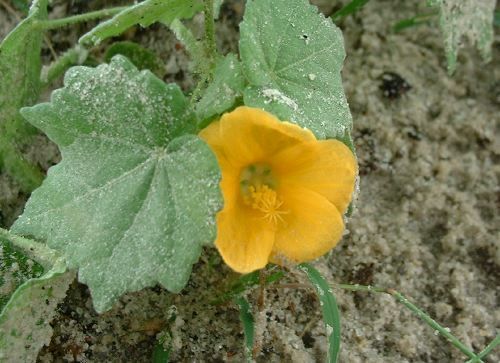
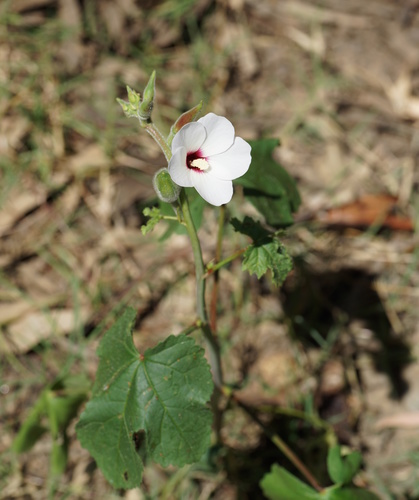
Hibiscus micranthus
Linn. f.
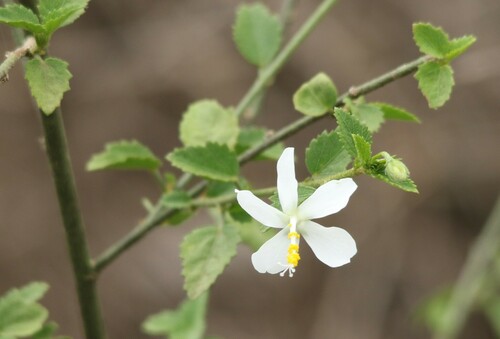
(c) Sharon Louw, some rights reserved (CC BY-NC), uploaded by Sharon Louw
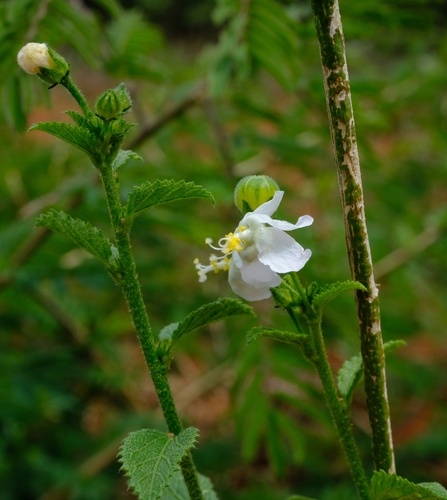
(c) Nick Helme, some rights reserved (CC BY-NC), uploaded by Nick Helme
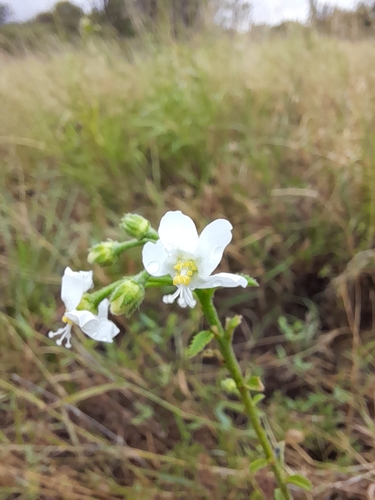
(c) Brenden Pienaar, some rights reserved (CC BY-NC), uploaded by Brenden Pienaar
What to Eat
Edible parts: Fruit, Leaves, Seeds, Vegetable
The green capsules are edible raw. The fruit, leaves, and seeds are also edible.
Where to Find It
It is a tropical plant. It grows in hot arid areas with a marked dry season. It grows in well-drained rocky and sandy soils. It grows between 70-2,900 m above sea level. It can grow in arid places.
Africa, Arabia, Asia, Botswana, Burkina Faso, Central Africa, Chad, Comoros, East Africa, Eswatini, Ethiopia, Ghana, India, Iran, Kenya, Madagascar, Malawi, Mali, Mauritania, Middle East, Mozambique, Myanmar, Namibia, Niger, Oman, Pakistan, Sahel, Saudi Arabia, SE Asia, Senegal, Seychelles, Socotra, Somalia, South Africa, Southern Africa, Sri Lanka, Sudan, Swaziland, Tanzania, Togo, Uganda, West Africa, Yemen, Zambia, Zimbabwe,
How to Identify
An annual herb or shrub. It grows 70-300 cm tall. It can keep growing for a few years. The branches are straight. The stems are hairy. The leaf stalk is 5-20 mm long. The leaf blade is 20-45 mm long by 15-40 mm wide. The flowers are 1 cm across and white, pink or purple. They occur singly in the axils of leaves.
How to Grow
Often found as a weed of cultivated crops within its native range, it has the potential to spread as a weed in other, suitable areas. The flowers only open when the plant is growing in direct sunlight.
Propagation: Seed - sow in situ or in containers. Germination is usually fairly rapid and no special pretreatment is needed, although germination will be faster if the seed is abraded or soaked prior to sowing. Prick out container-grown seedlings into individual pots when they are large enough to handle and plant them out into their permanent positions when they are 10cm or more tall. Cuttings of half-ripe wood in a frame. They generally strike readily, particularly if cuttings are taken on an angle through a node and rooting hormone is applied to their ends.
Medicinal Uses
The leaves are diuretic, febrifuge, stomachic. The leaves are used to treat ear problems, venomous stings, bites etc. The root is used in the treatment of pulmonary problems, stomach troubles and venereal diseases.
Other Uses
Both the peeled and unpeeled twigs are used as chewing sticks in order to clean the teeth and maintain oral hygiene. The bark contains compounds with antimicrobial activity and is best left on the stem when chewing. A fibre is obtained from the stems.
Wikipedia
Source ↗Hibiscus micranthus, the tiny flower hibiscus, is a widespread species of flowering plant in the family Malvaceae. A shrub, it is native to seasonally dry tropical areas of Africa, Madagascar, the Arabian Peninsula, Iran, the Indian Subcontinent, and Myanmar. It is used in traditional medicines.
Notes
There are about 220 Hibiscus species.
Names & Synonyms
Akilehena, Khusiyat, Klondonya, Mburi, Mchachando, Mfagio, Mhurusha-mbuzi, Msase, Okda, Ol egogia
References (15)
- Ambasta, S.P. (Ed.), 2000, The Useful Plants of India. CSIR India. p 266
- Bahru, T., et al, 2013, Wild Edible Plants: Sustainable Use and Management by Indigenous Communities in and the Buffer Area of Awah National Park, Ethiopia. Ethiop. J. Sci., 36(2): 93-108
- Burkill, H. M., 1985, The useful plants of west tropical Africa, Vol. 4. Kew.
- East African Herbarium records, 1981,
- Flora of Pakistan. www.eFloras.org
- Fowler, D. G., 2007, Zambian Plants: Their Vernacular Names and Uses. Kew. p 45
- Grubben, G. J. H. and Denton, O. A. (eds), 2004, Plant Resources of Tropical Africa 2. Vegetables. PROTA, Wageningen, Netherlands. p 562
- Hedrick, U.P., 1919, (Ed.), Sturtevant's edible plants of the world. p 345
- Mutie, F. M., et al, 2023, Important Medicinal and Food Taxa (Orders and Families) in Kenya, Based on Three Quantitative Approaches. Plants 2023, 12, 1145
- Peters, C. R., O'Brien, E. M., and Drummond, R.B., 1992, Edible Wild plants of Sub-saharan Africa. Kew. p 144
- Royal Botanic Gardens, Kew (1999). Survey of Economic Plants for Arid and Semi-Arid Lands (SEPASAL) database. Published on the Internet; http://www.rbgkew.org.uk/ceb/sepasal/internet [Accessed 3rd May 2011]
- Ruffo, C. K., Birnie, A. & Tengnas, B., 2002, Edible Wild Plants of Tanzania. RELMA p 380
- Suppl. pl. 308. 1782 ("1781")
- Swaziland's Flora Database http://www.sntc.org.sz/flora
- World Checklist of Useful Plant Species 2020. Royal Botanic Gardens, Kew