Latania commersonii
J. F. Gmelin
Commerson's latania, Red Latan palm
ArecaceaeFruit

iNaturalist · cc-by
(c) Jacek Pietruszewski, some rights reserved (CC BY)
(c) Jacek Pietruszewski, some rights reserved (CC BY)

iNaturalist · cc-by
(c) Jacek Pietruszewski, some rights reserved (CC BY)
(c) Jacek Pietruszewski, some rights reserved (CC BY)

iNaturalist · cc-by
(c) Jacek Pietruszewski, some rights reserved (CC BY)
(c) Jacek Pietruszewski, some rights reserved (CC BY)
What to Eat
Edible parts: Fruit
The fruit are eaten, though they have a notably unpleasant smell.
Where to Find It
A tropical plant. They need full sun and well-drained soil.
Asia, Australia, East Africa, India, Madagascar,
Countries: United Arab Emirates, Afghanistan, Armenia, Australia, Azerbaijan, Bangladesh, Bahrain, Burundi, Brunei, Bhutan, China, Djibouti, Eritrea, Ethiopia, Georgia, Indonesia, Israel, India, Iraq, Iran, Jordan, Japan, Kenya, Kyrgyzstan, Cambodia, Comoros, North Korea, South Korea, Kuwait, Kazakhstan, Laos, Lebanon, Sri Lanka, Madagascar, Myanmar, Mongolia, Mauritius, Maldives, Malawi, Malaysia, Mozambique, Nepal, Oman, Philippines, Pakistan, Qatar, Rwanda, Saudi Arabia, Seychelles, Singapore, Somalia, South Sudan, Syria, Thailand, Tajikistan, Timor-Leste, Turkmenistan, Turkey, Taiwan, Tanzania, Uganda, Uzbekistan, Vietnam, Yemen
How to Identify
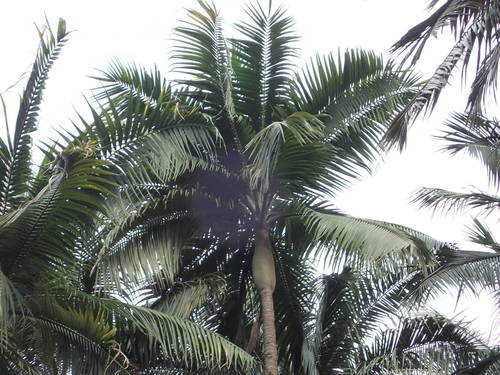
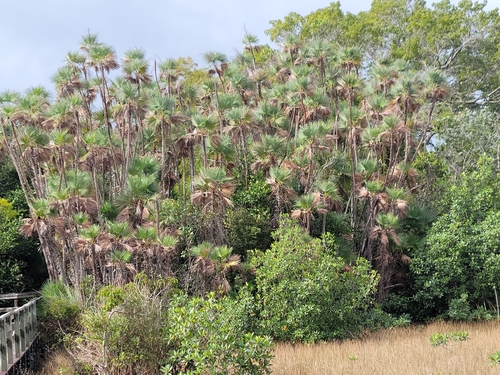
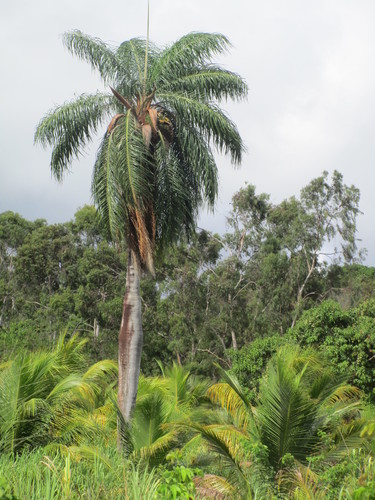
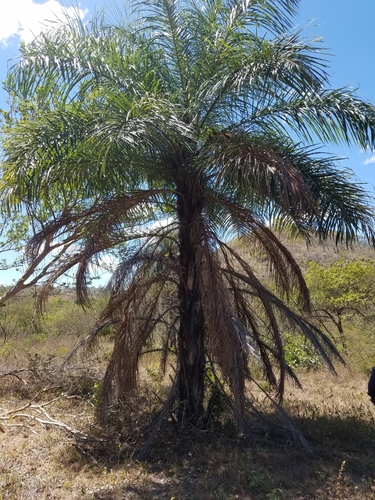
A tall, single stemmed palm. The leaves are large and fan shaped. Male and female flowers are on separate plants.
How to Grow
The plants can be grown from fresh seed. The seed may take 4 months to germinate.
Other Information
It is not popular.
Notes
There are 3 Latania species. They grow in the Mascarenes near Madagascar.
Names & Synonyms
Latania rubra Jacq.
References (4)
- Ambasta, S.P. (Ed.), 2000, The Useful Plants of India. CSIR India. p 317
- Cundall, P., (ed.), 2004, Gardening Australia: flora: the gardener's bible. ABC Books. p 798 (Genus)
- Hedrick, U.P., 1919, (Ed.), Sturtevant's edible plants of the world. p 371
- Syst. nat. 2(2):1035. 1792