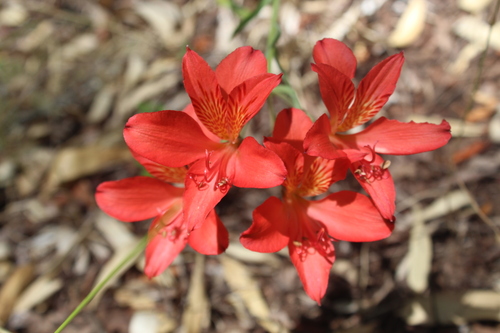
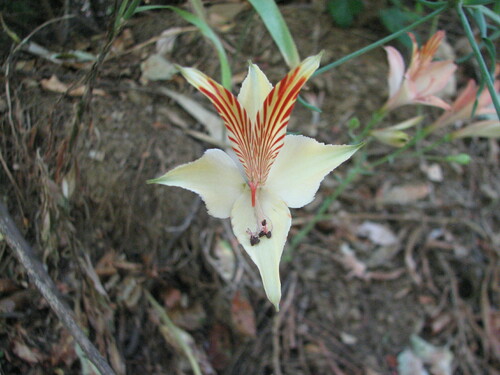
Bomarea glaucescens
Baker

(c) fishy21, some rights reserved (CC BY-NC), uploaded by fishy21

(c) pablo_coronado1997, some rights reserved (CC BY-NC), uploaded by pablo_coronado1997
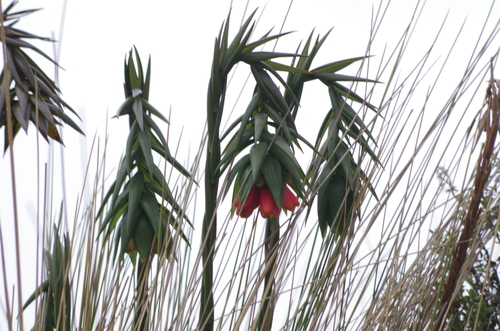
(c) David Torres, some rights reserved (CC BY-NC), uploaded by David Torres
What to Eat
Edible parts: Fruit, Root, Tubers
The fruits are eaten fresh, especially by children. The roots and tubers are also edible portions of the plant.
Known Hazards
Where to Find It
A tropical plant. It grows in wet montane areas. It can be on rocky slopes, grassland areas and near lakes. It occurs between 3,000-4,500 m above sea level.
Bolivia, Ecuador, Peru, South America,
How to Identify
A small herb growing to 50 cm tall in the family Alstroemeriaceae, native to tropical wet montane areas of the Andes in Central and South America. It grows on rocky slopes, grasslands, and near lakes at elevations between 3,000–4,500 m. The plant produces fruits with seeds embedded in sweet pulp.
How to Grow
Plants can be grown from seeds.
Propagation: Seed - best sown as soon as it is ripe - it will germinate in a few weeks. Stratify stored seed for 3 weeks at 20°c, then 3 weeks at 5°c. It usually germinates in 1 - 2 months at 20°c. Prick out the seedlings into individual pots when they are large enough to handle and plant out when large enough. Division when the plants are dormant. Be careful since the roots are brittle. Each portion must have some roots and a growth bud. Pot up the divisions, grow them on until they are well established and then plant them out into their permanent positions
Wikipedia
Source ↗Bomarea glaucescens is a species of flowering plant in the family Alstroemeriaceae. It is native to Peru, Bolivia and Ecuador. It grows in wet páramo habitat among Polylepis and next to lakes, as well as grassy páramo and Andean forests. It is not a threatened species but some populations are vulnerable to habitat destruction as the páramo is converted to pasture and pine and eucalyptus plantations.
Other Information
The fruit are eaten especially by children.
Notes
There are 100-200 Bomarea species. They are climbers in the Andes cloudforest in Central and South America.
References (5)
- Bircher, A. G. & Bircher, W. H., 2000, Encyclopedia of Fruit Trees and Edible Flowering Plants in Egypt and the Subtropics. AUC Press. p 61
- Fern, K., 2012, Tropical Species Database http://theferns.info/tropical/
- Hedrick, U.P., 1919, (Ed.), Sturtevant's edible plants of the world. p 108
- Kermath, B. M., et al, 2014, Food Plants in the Americas: A survey of the domesticated, cultivated and wild plants used for Human food in North, Central and South America and the Caribbean. On line draft. p 136
- Van den Eynden, V., et al, 2003, Wild Foods from South Ecuador. Economic Botany 57(4): 576-603 (As Bomarea sp.) - tuber