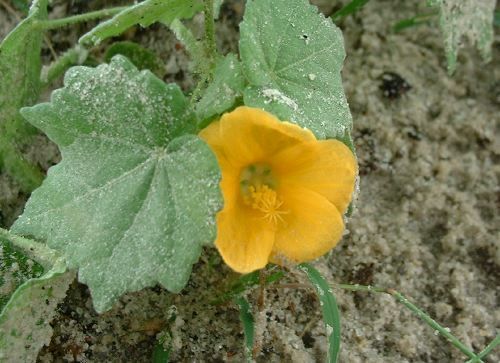
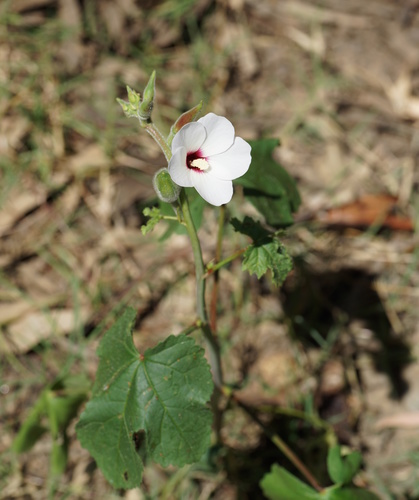
Hibiscus hirtus
Linn.
Lesser mallow.
MalvaceaeLeaves

iNaturalist · cc-by-nc
(c) Anil Kumar Verma, some rights reserved (CC BY-NC), uploaded by Anil Kumar Verma
(c) Anil Kumar Verma, some rights reserved (CC BY-NC), uploaded by Anil Kumar Verma
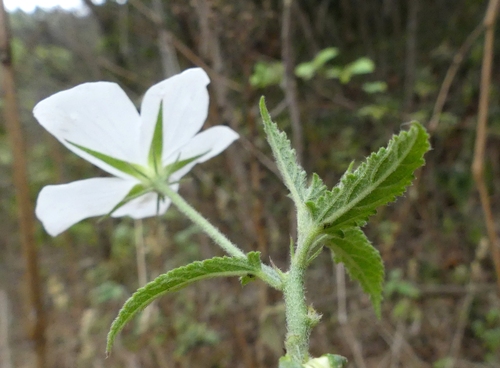
iNaturalist · cc-by-nc
(c) Radha Veach, some rights reserved (CC BY-NC), uploaded by Radha Veach
(c) Radha Veach, some rights reserved (CC BY-NC), uploaded by Radha Veach
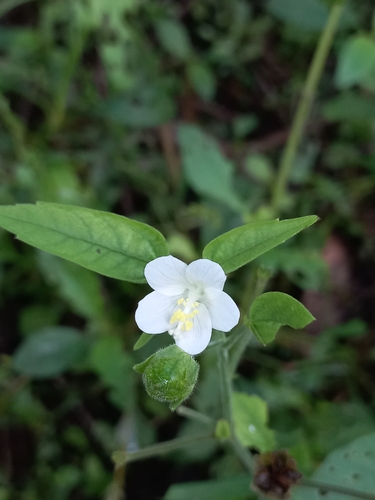
iNaturalist · cc-by-nc
(c) Paul Antony Mangaly, some rights reserved (CC BY-NC), uploaded by Paul Antony Mangaly
(c) Paul Antony Mangaly, some rights reserved (CC BY-NC), uploaded by Paul Antony Mangaly
What to Eat
Edible parts: Leaves
The leaves are eaten as a vegetable.
Where to Find It
A tropical plant.
Asia, East Timor, Fiji, India, Malaysia, Pacific, SE Asia, Timor-Leste,
Countries: United Arab Emirates, Afghanistan, Armenia, Australia, Azerbaijan, Bangladesh, Bahrain, Brunei, Bhutan, China, Fiji, Micronesia, Georgia, Indonesia, Israel, India, Iraq, Iran, Jordan, Japan, Kyrgyzstan, Cambodia, Kiribati, North Korea, South Korea, Kuwait, Kazakhstan, Laos, Lebanon, Sri Lanka, Marshall Islands, Myanmar, Mongolia, Maldives, Malaysia, Nepal, Nauru, New Zealand, Oman, Papua New Guinea, Philippines, Pakistan, Palau, Qatar, Saudi Arabia, Solomon Islands, Singapore, Syria, Thailand, Tajikistan, Timor-Leste, Turkmenistan, Tonga, Turkey, Tuvalu, Taiwan, Uzbekistan, Vietnam, Vanuatu, Samoa, Yemen
How to Identify
A herb or small shrub. It grows 1.5 m tall. The leaves have teeth along the edge. The flowers are pink or orange and smaller than most Hibiscus. They are 3 cm across. The flowers open at midday. The pods has about 12-15 seeds.
How to Grow
Plants are grown from seed.
Wikipedia
Source ↗Hibiscus hirtus, commonly known as the lesser mallow, is a species of Hibiscus found in India. It is a perennial deciduous shrub with a maximum height of about 1 meter.
Names & Synonyms
Dupari, Lal-surgumini, Nareri, Suamani, Suryamani
Hibiscus rosa-malabarica Ker Gawl.
References (3)
- Cowie, I, 2006, A Survey of Flora and vegetation of the proposed Jaco-Tutuala-Lore National Park. Timor-Lests (East Timor) www.territorystories.nt/gov.au p 50
- Hedrick, U.P., 1919, (Ed.), Sturtevant's edible plants of the world. p 345
- Smith, A.C., 1981, Flora Vitiensis Nova, Lawaii, Kuai, Hawaii, Volume 2 p 421