Abutilon indicum
(L.) Sweet
Plains Lanternflower

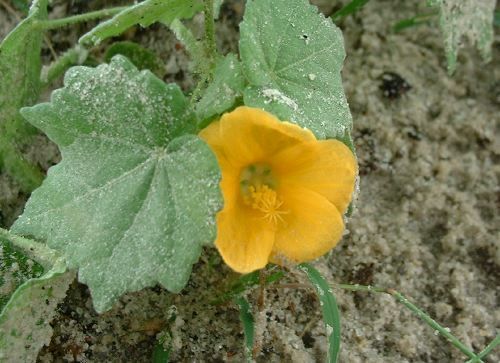
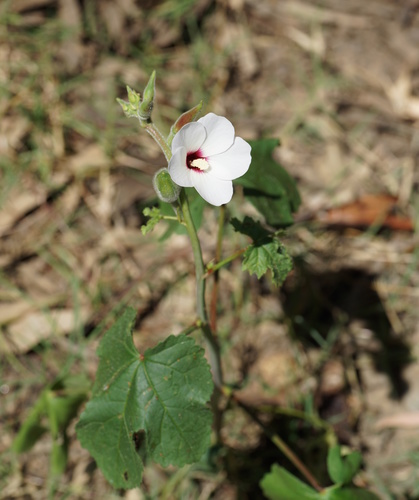
(c) Harshjeet Singh Bal, some rights reserved (CC BY-NC)
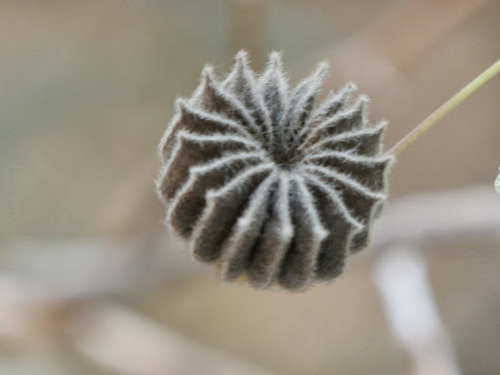
(c) 106611639464075912591, some rights reserved (CC BY-NC-SA), uploaded by 106611639464075912591
What to Eat
Edible parts: Leaves, Seeds, Vegetable, Flowers, Seeds - oil, Leaves - tea
The roasted seeds are eaten in Nepal and ground into flour, while the seeds also yield an edible oil. The leaves and flowers are cooked and eaten, and the flowers can also be eaten raw or fried. Leaves are also brewed as tea.
Where to Find It
It is a tropical and subtropical plant. It suits warm tropical places. It requires well drained soil and does best in a sunny position. It can grow in arid places. It occurs in Asia and Australia. It grows on atolls. In China it grows below 600 m in S China. It suits hardiness zones 10-12. In Sichuan and Yunnan.
Afghanistan, Africa, Asia, Australia, Bangladesh, Bhutan, British Indian Ocean Terr., BIOT, Burkina Faso, Cambodia, Central Africa, China, Colombia, Comoros, Congo DR, Cuba, Dominica, East Timor, Fiji, French Guiana, Guianas, Guyana, Haiti, Himalayas, India, Indochina, Indonesia, Iraq, Israel, Jordan, Kiribati, Laos, Malaysia, Maldives, Mauritius, Mediterranean, Middle East, Myanmar, Nepal, New Caledonia, Niue, Northeastern India, Oman, Pacific, Pakistan, Papua New Guinea, PNG, Peru, Philippines, Puerto Rico, Reunion, Samoa, Saudi Arabia, SE Asia, Seychelles, Sikkim, South America, Sri Lanka, Suriname, Taiwan, Thailand, Timor-Leste, Tuvalu, Vanuatu, Vietnam, West Africa, West Indies, Yemen,
How to Identify
A shrub or small tree. It grows 5 m tall. There are prickles along the stem. The leaves are twice divided and there are 8-18 pairs of pinnae. There are up to 50 pairs of pinnules on each pinnae. The flowers are yellow. They are in large clusters at the ends of branches. The pods are flattened.
Nutrition Score: 30/100
| Part | Moisture | kJ | kcal | Protein | Vit A | Vit C | Iron | Zinc |
|---|---|---|---|---|---|---|---|---|
| Seed flour | 5.9 | — | — | 22.4 | — | — | — | — |
| Leaves | — | — | — | 126 | — | — | — | — |
| Flowers | — | — | — | — | — | — | — | — |
| Seed - oil | — | — | — | — | — | — | — | — |
How to Grow
It can be grown from seed or cuttings. It can be pruned.
Propagation: Seed - germination should take place within a few weeks. Once the seedlings are large enough to handle, prick them out into individual pots and grow them on until large enough to plant out. Cuttings of young shoots. Cuttings of half-ripe wood.
Medicinal Uses
In traditional medicine, A. indicum various parts of the plant are used as a demulcent, aphrodisiac, laxative, diuretic, sedative, astringent, expectorant, tonic, anti-convulsant, anti-inflammatory, anthelmintic, and analgesic and to treat leprosy, ulcers, headaches, gonorrhea, and bladder infection. The whole plant is uprooted, dried and is powdered. In ancient days, maidens were made to consume a spoonful of this powder with a spoonful of honey, once in a day, for 6 months until the day of marriage, for a safe and quick pregnancy. The plant is commonly used in Siddha medicines. The root, bark, flowers, leaves and seeds are all used for medicinal purposes by Tamils. The leaves are used as adjunct to medicines used for pile complaints. The flowers are used to increase semen in men.
Other Uses
A strong white fibre is obtained from the stem bark. Fibre from mature stems is suitable for making cordage, twine and rope, whilst that from younger stems can be woven into fabrics. The fibre takes dyes readily. The stems are easy to ret.
Wikipedia
Source ↗Abutilon indicum (Indian abutilon, Indian mallow) is a small shrub in the family Malvaceae, native to tropical and subtropical regions. This plant is a valuable medicinal and ornamental plant, its roots and leaves being used for curing fevers. It has been widely introduced outside of its native range, and is considered invasive on certain tropical islands.
Other Information
It is sold in local markets.
Notes
There are about 100-160 Abutilon species. This one is used in medicine.
Names & Synonyms
Atibala, Bauk-gale, Bauk-khway, Bauk-khway-gale, Bellpaku, Bunga kisar, Coi-xay, Country mallow, Fansi, Helencha, Indian abutilon, Indian lanternflower, Kambang sore, Kanghi, Kanska, Krawp chak krawan, Maabbelhau, Mamanh, Mamaruk, Mó lòng cǎo, Nhihuong, Paniyarattutti, Petari, Pong pang, Potari, Thami-chyok, Tutti, Tuttura-benda, Velluram
References (39)
- Ambasta S.P. (Ed.), 2000, The Useful Plants of India. CSIR India. p 4
- Bandyopadhyay, S. et al, 2009, Wild edible plants of Koch Bihar district, West Bengal. Natural Products Radiance 8(1) 64-72
- Bandyopadhyay, S., et al, 2012, A Census of Wild Edible Plants from Howrah District, West Bengal, India. Proceedings of UGC sponsored National Seminar 2012
- Bhaskarachary, K., et al, 1995, Carotene content of some common and less familiar foods of plant origin. Food Chemistry 54: 189-193
- Biocyclopedia Edible Plant Species
- Bircher, A. G. & Bircher, W. H., 2000, Encyclopedia of Fruit Trees and Edible Flowering Plants in Egypt and the Subtropics. AUC Press. p 3
- Burkill, I.H., 1966, A Dictionary of the Economic Products of the Malay Peninsula. Ministry of Agriculture and Cooperatives, Kuala Lumpur, Malaysia. Vol 1 (A-H) p 10
- Cooper, W. and Cooper, W., 2004, Fruits of the Australian Tropical Rainforest. Nokomis Editions, Victoria, Australia. p 276
- Cowie, I, 2006, A Survey of Flora and vegetation of the proposed Jaco-Tutuala-Lore National Park. Timor-Lests (East Timor) www.territorystories.nt/gov.au p 50 (subsp. albescens)
- Dalziel, J. M., 1937, The Useful plants of west tropical Africa. Crown Agents for the Colonies London. (As Abutilon asiaticum)
- Elliot, W.R., & Jones, D.L., 1982, Encyclopedia of Australian Plants suitable for cultivation. Vol 2. Lothian. p 7
- Etherington, K., & Imwold, D., (Eds), 2001, Botanica's Trees & Shrubs. The illustrated A-Z of over 8500 trees and shrubs. Random House, Australia. p 44
- Facciola, S., 1998, Cornucopia 2: a Source Book of Edible Plants. Kampong Publications, p 146 (Probably as Abutilon guineense)
- Hedrick, U.P., 1919, (Ed.), Sturtevant's edible plants of the world. p 17
- Hort. brit. ed. 1:54. 1826
- Kar, A., & Borthakur, S. K., 2008, Wild vegetables of Karbi - Anglong district, Assam, Natural Product Radiance, Vol. 7(5), pp 448-460
- Lazarides, M. & Hince, B., 1993, Handbook of Economic Plants of Australia, CSIRO. p 1
- Levitt, D., 1981, Plants and people. Aboriginal uses of plants on Groote Eylandt. Australian Institute of Aboriginal Studies, Canberra. p 99
- Li, D. et al, 2017, Ethnobotanical survey of herbal tea plants from the traditional markets in Chaoshan, China. Journal of Ethnopharmacology. 205 (2017) 195-206
- Manandhar, N.P., 2002, Plants and People of Nepal. Timber Press. Portland, Oregon. p 65
- Martin, F.W. & Ruberte, R.M., 1979, Edible Leaves of the Tropics. Antillian College Press, Mayaguez, Puerto Rico. p 203
- McMakin, P.D., 2000, Flowering Plants of Thailand. A Field Guide. White Lotus. p 98
- Paczkowska, G. & Chapman, A.R., 2000, The Western Australian Flora. A Descriptive Catalogue. Western Australian Herbarium. p 285
- Pham-Hoang Ho, 1999, An Illustrated Flora of Vietnam. Nha Xuat Ban Tre. p 519
- Plants of Haiti Smithsonian Institute http://botany.si.edu/antilles/West Indies
- Plant Resources Of South East Asia PROSEA Vol 8 p 311
- Rajasab, A. H. et al, 2004, Documentation of folk knowledge on edible wild plants of North Karnataka. Indian Journal of Traditional Knowledge. Vol 3(4) pp 419-429
- Reddy, K. N., et al, 2006, Traditional knowledge on wild food plants in Andhra Pradesh. Indian Journal of Traditional Knowledge 6(1) pp 223-229
- Royal Botanic Gardens, Kew (1999). Survey of Economic Plants for Arid and Semi-Arid Lands (SEPASAL) database. Published on the Internet; http://www.rbgkew.org.uk/ceb/sepasal/internet [Accessed 3rd May 2011]
- Savita, et al, 2006, Studies on wild edible plants of ethnic people in east Sikkim. Asian J. of Bio Sci. (2006) Vol. 1 No. 2 : 117-125
- Singh, H.B., Arora R.K.,1978, Wild edible Plants of India. Indian Council of Agricultural Research, New Delhi. p 83
- Sujanapal, P., & Sankaran, K. V., 2016, Common Plants of Maldives. FAO & Kerala FRI, p 17
- Tang ya, Malvaceae. Flora of China. p
- Thaman, R. R., 1987, Plants of Kiribati: A listing and analysis of vernacular names. Atoll Research Bulletin No. 296
- Thaman, R. R, 2016, The flora of Tuvalu. Atoll Research Bulletin No. 611. Smithsonian Institute p 97
- Topp, J. M. W., 1988, An Annotated Check List of the Flora of Diego Garcia, British Ocean Territory. Atoll Research Bulletin No. 313 (Rare)
- Townsend, K., 1994, Across the Top. Gardening with Australian Plants in the tropics. Society for Growing Australian Plants, Townsville Branch Inc. p 46
- Williams, K.A.W., 1999, Native Plants of Queensland Volume 4. Keith A.W. Williams North Ipswich, Australia. p 2
- World Checklist of Useful Plant Species 2020. Royal Botanic Gardens, Kew