Melothria pendula
Linn.
Creeping cucumber
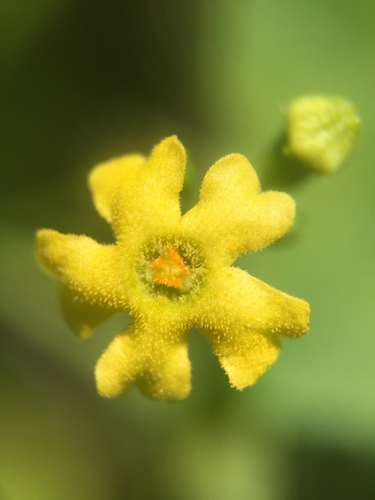
(c) John Brush, some rights reserved (CC BY-NC)

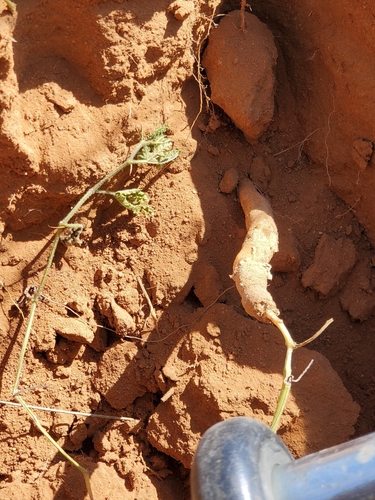
(c) Sam Kieschnick, some rights reserved (CC BY), uploaded by Sam Kieschnick

(c) Starr Whitten, some rights reserved (CC BY-NC), uploaded by Starr Whitten
What to Eat
Edible parts: Fruit, Leaves
The fruit are pickled when green or eaten when ripe. The leaves are also edible.
Known Hazards
Where to Find It
A tropical plant. In Argentina it grows from sea level to 1,000 m above sea level.
Antilles, Asia, Argentina, Bahamas, Belize, Brazil*, Central America, Colombia, Dominican Republic, Ecuador, Guiana, Guianas, Guyana, Haiti, Jamaica, Mexico, North America, Paraguay, Peru, Puerto Rico, South America*, Suriname, Taiwan, USA, Venezuela, West Indies,
How to Identify
A pumpkin family herb. It is a vine. The leaves are almost heart shaped and have 5 angles or lobes. They are 3-7 cm long by 3-7 cm wide. There are teeth along the edge. The fruit are smooth and black. They are 1 cm long. They have small white seeds.
Wikipedia
Source ↗Melothria pendula (commonly known as the creeping cucumber, Guadalupe cucumber, mouse melon, and meloncito) is a plant in the Benincaseae tribe. The plant is especially prominent in the Southeastern United States. The plant resembles the cultivated cucumber, possessing miniature yellow flowers, similar leaf shape, same leaf patterns, as well as similar growth patterns. The unripe berries strongly resemble minuscule watermelons.
Names & Synonyms
Ano ta'pe, Bebo kinto, Chilacayotito, Chimu shili, Chinchinkas, Guadeloupe cucumber, Mina na, Mini pepininho, Pepiniculo, Pepinillo cimarron, Pepino-do-mato, Remedyu mishmu tape, Sandia de raton, Sandia montes, Sandia silvestre, Sandiatulub, Sandi-ita, Xtuulub
References (18)
- Alimenticias - FloraSBS
- Anguilar-Stoen, M, et al, 2009, Home Gardens Sustain Crop Diversity and Improve Farm Resilience in Candelaria Loxicha, Oaxaca, Mexico. Human Ecology, 37:55-77
- Brack, P., et al, 2020, Frutas nativas do Rio Grande do Sul, Brasil: riqueza e potencial alimentício. Native fruits of Rio Grande do Sul, Brazil: richness and potential as food. Rodriguésia 71: e03102018.
- Casas, A., et al, 1996, Plant Management Among the Nahua and the Mixtec in the Balsas River Basin, Mexico: An Ethnobotanical Approach to the Study of Plant Domestication. Human Ecology, Vol. 24, No. 4 pp. 455-478
- Cruz, I. M., et al, 2015, Edible fruits and seeds in the State of Mexico. Revista Mexicana de Ciencias Agricolas. Vol. 6. Num. 2 pp 331-346
- FMNH Botany Collections Database - Mesoamerican Ethnobotany emuweb.field museum.org
- Hedrick, U.P., 1919, (Ed.), Sturtevant's edible plants of the world. p 410
- Hunter, D., et al, 2019, The potential of neglected and underutilized species for improving diets and nutrition. Planta (2019) 250:709-729
- Kermath, B. M., et al, 2014, Food Plants in the Americas: A survey of the domesticated, cultivated and wild plants used for Human food in North, Central and South America and the Caribbean. On line draft. p 529
- Kinupp, V. F., 2007, Plantas alimenticias nao-convencionais da regiao metropolitana de Porto Alegre, RS, Brazil p 75 (As Melothria fluminensis)
- Lira, R. & Caballero, J., 2002, Ethnobotany of the Wild Mexican Cucurbitaceae. Economic Botany 56(4) pp. 380-398
- Piedra-Malagón, E. M. et al, 2022, Edible native plants of the Gulf of Mexico Province. Biodiversity Data Journal 10: e80565 p 17
- Plants of Haiti Smithsonian Institute http://botany.si.edu/antilles/West Indies
- Roa, J. A. G. & Boada, D. S. G., 2018, Fundación para el Fortalecimiento de la Fruticultura y Plantas Alimenticias no Convencionales en Colombia.
- Segura, S., et al, 2018, The edible fruit species in Mexico. Genet Resour Crop Evol (2018) 65:1767–1793
- Sp. pl. 1:35. 1753
- Torre, de la, L., et al, 2008, Enciclopedia de las Plantas Útiles del Ecuador. Herbario QCA. Pontificia Universidad Católica del Ecuador. p 300
- Vasquez, R. and Gentry, A. H., 1989, Use and Misuse of Forest-harvested Fruits in the Iquitos Area. Conservation Biology 3(4): 350f