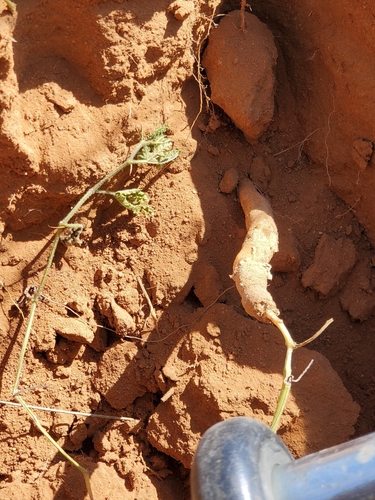
Melothria scabra
Naudin
Mexican sour gherkin
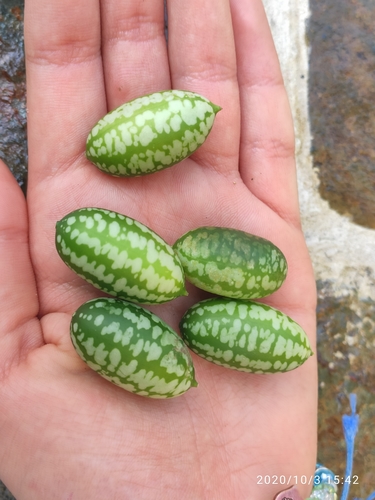
(c) Claudia, some rights reserved (CC BY-NC), uploaded by Claudia
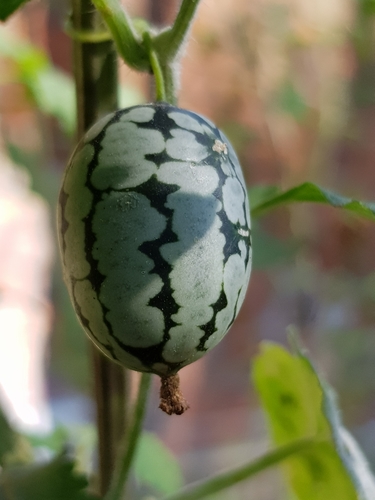
(c) Ignacio Torres-García, some rights reserved (CC BY-NC), uploaded by Ignacio Torres-García

(c) Kristen Taylor, some rights reserved (CC BY)
What to Eat
Edible parts: Fruit
The fruit are pickled and eaten raw.
Where to Find It
It is a tropical plant.
Australia, Central America*, Colombia, El Salvador, Guatemala, Honduras, Mexico, Nicaragua, North America, South America, Venezuela,
How to Identify
A pumpkin family plant. The vines can be 3 m long. Male and female flowers are on the same plant. Flowers are small and yellow. The fruit are 2-3 cm long.
How to Grow
Plants are grown from seeds.
Wikipedia
Source ↗Melothria scabra, commonly known as the cucamelon, Mexican miniature watermelon, Mexican sour cucumber, Mexican sour gherkin, mouse melon, or pepquino, is a species of flowering plant in the cucurbit family grown for its edible fruit. Its native range spans Mexico to Venezuela. Fruits are about the size of grapes and taste like cucumbers with a tinge of sourness. It may have been eaten by indigenous peoples before the European colonization of the Americas began.
Names & Synonyms
Cucamelon
References (5)
- Ann. Sci. Nat., Ser. V. 6:10. 1866
- Hedrick, U.P., 1919, (Ed.), Sturtevant's edible plants of the world. p 410
- Kermath, B. M., et al, 2014, Food Plants in the Americas: A survey of the domesticated, cultivated and wild plants used for Human food in North, Central and South America and the Caribbean. On line draft. p 529
- Kew Plants of the World Online
- Roa, J. A. G. & Boada, D. S. G., 2018, Fundación para el Fortalecimiento de la Fruticultura y Plantas Alimenticias no Convencionales en Colombia.