Nitraria schoberi
Linn.
Nitre-bush, Dillon bush

(c) Сергей, some rights reserved (CC BY-NC), uploaded by Сергей
(c) Svyatoslav Knyazev, some rights reserved (CC BY)

(c) Богданович Светлана, some rights reserved (CC BY-NC)
What to Eat
Edible parts: Fruit
The fruit can be eaten raw or cooked. It has a pleasant, slightly salty flavour, though can be somewhat insipid. Fruit can also be cooked and preserved for winter use.
Where to Find It
It is a temperate plant.
Australia, Caspian, Central Asia, Europe, Mongolia, Russia, Tajikistan, Tibet,
How to Identify
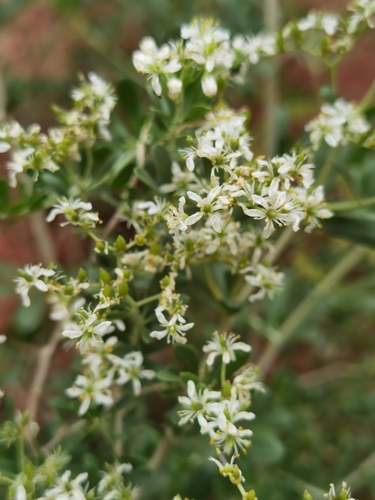
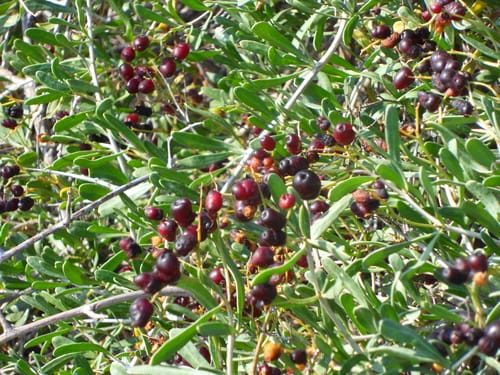
A spreading shrub. It grows 1-2 m tall. The small branches can have spines. The leaves are thick and oblong to wedge shaped. They are 1-4 cm long. The flowers are small and white. The fruit are like olives. They are 1-2 cm long. They are red or purple and slightly salty.
How to Grow
Not known 193
Propagation: Seed.
Medicinal Uses
None known
Other Uses
None known
Wikipedia
Source ↗Nitraria schoberi, the nitrebush (a name it shares with other members of its genus), is a species of flowering plant in the family Nitrariaceae. It has an Irano-Turanian distribution. Its fruit, edible and salty-sweet, are collected by local peoples and eaten fresh or preserved. Archeological evidence shows that people have been eating the fruit since Epipalaeolithic times.
Names & Synonyms
References (5)
- Black, J. M., 1924, Flora of South Australia. Part 11. Casuarinaceae-Euphorbiaceae,
- Facciola, S., 1998, Cornucopia 2: a Source Book of Edible Plants. Kampong Publications, p 249
- Hedrick, U.P., 1919, (Ed.), Sturtevant's edible plants of the world. p 442
- Plants for a Future.
- Syst. nat. ed. 10, 2:1044. 1759