Nitraria tangutorum
Bobrov.
Desert cherry
NitrariaceaeFruit
iNaturalist · cc-by-nc
(c) 豳风, some rights reserved (CC BY-NC), uploaded by 豳风
(c) 豳风, some rights reserved (CC BY-NC), uploaded by 豳风

iNaturalist · cc-by-nc
(c) zdk0812, some rights reserved (CC BY-NC)
(c) zdk0812, some rights reserved (CC BY-NC)
What to Eat
Edible parts: Fruit
The fruit is eaten.
Where to Find It
It is a temperate plant. It tends to grow in sandy area around lakes. It occurs in semi-desert sandy areas around lakes. It occurs between 1,900-3,500 m above sea level.
Asia, Central Asia, China,
Countries: United Arab Emirates, Afghanistan, Armenia, Azerbaijan, Bangladesh, Bahrain, Brunei, Bhutan, China, Georgia, Indonesia, Israel, India, Iraq, Iran, Jordan, Japan, Kyrgyzstan, Cambodia, North Korea, South Korea, Kuwait, Kazakhstan, Laos, Lebanon, Sri Lanka, Myanmar, Mongolia, Maldives, Malaysia, Nepal, Oman, Philippines, Pakistan, Qatar, Saudi Arabia, Singapore, Syria, Thailand, Tajikistan, Timor-Leste, Turkmenistan, Turkey, Taiwan, Uzbekistan, Vietnam, Yemen
How to Identify
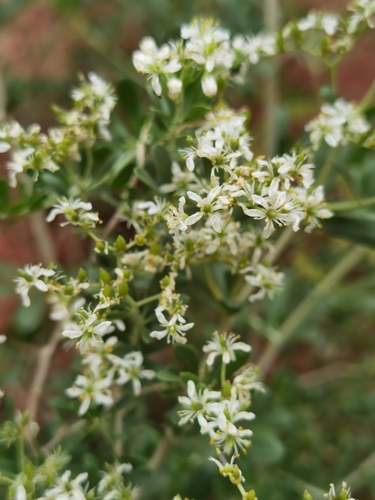
A shrub. It tends to lie along the ground and be spreading. It grows 1-2 m tall. Young branches are white and the branches tend to arch over. They are spiny at the tip. The leaves are in groups of 2 or 3. The leaves are broadly sword shaped and 1.8-3 cm long by 6-8 mm wide. The base is wedge shaped. The flowers are dark red.
References (1)
- Zhang, Y. et al, 2020, Characteristics and utilization of plant diversity and resources in Central Asia. Regional Sustainability. Elsevier. p 6


