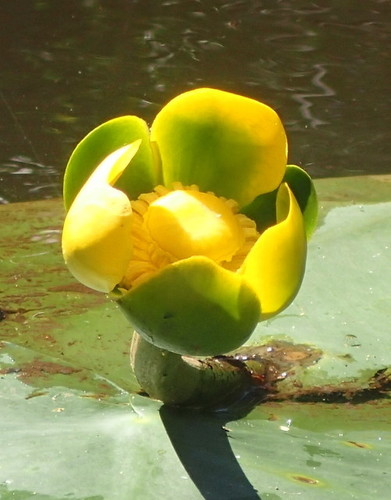
Nymphaea ampla
(Salisbury) DC.

(c) Eblyn Saenz Garcia, some rights reserved (CC BY-NC), uploaded by Eblyn Saenz Garcia

(c) Seig, some rights reserved (CC BY), uploaded by Seig
(c) Sebastián de Jesús Herrera Buenfil, some rights reserved (CC BY)
What to Eat
Edible parts: Roots, Seeds
The roots and seeds are edible.
Where to Find It
A tropical plant.
Antilles, Bahamas, Brazil, Central America*, Cuba, Dominican Republic*, Guianas, Guyana, Haiti, Lesser Antilles, Mexico*, North America, Puerto Rico, South America*, Suriname, USA, West Indies*,
How to Identify
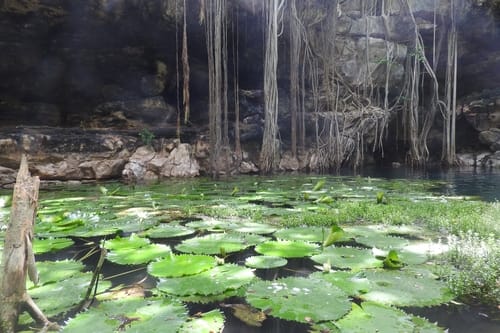
A waterlily. The leaves are usually slightly longer than wide. They emerge reddish then turn green. They are reddish purple underneath. The veins are easy to see. The leaves have small black specks. The edge of the leaf is wavy and there are teeth. The leaves are 38-50 cm across. The leaves and stalks spread out 2.5 m wide. It flowers in daytime. The petals are white with a yellowish green flush. The flowers are 10-14 cm across.
Wikipedia
Source ↗Nymphaea ampla, also known as the dotleaf waterlily, is a species of flowering plant in the family Nymphaeaceae. It is native to Texas, Florida, Mexico, Central America, the Caribbean, and northern and western South America. It is depicted in Mayan art alongside jaguars and kings, held cultural significance as a symbol of life, fertility, and birth, with its opiate-like effects used for calming and inducing mild trances.
Names & Synonyms
Flor de agua, Loto azul
References (9)
- Ann. Bot. (Koenig & Sims) 2:73. 1805 Jun? (Parad. lond. 1(1): sub t. 14. 1805 Oct)
- Beckstrom-Sternberg, Stephen M., and James A. Duke. "The Foodplant Database." http://probe.nalusda.gov:8300/cgi-bin/browse/foodplantdb.(ACEDB version 4.0 - data version July 1994) (As Castalia ampla)
- Hedrick, U.P., 1919, (Ed.), Sturtevant's edible plants of the world. p 443
- Hellmuth, N. M., 2011, Maya Ethnobotany. Complete Inventory of plants. Associacion FLAAR Mesoamerica. Tenth edition.
- http://research.famsi.org/botanyworking_plant_list.php
- Kermath, B. M., et al, 2014, Food Plants in the Americas: A survey of the domesticated, cultivated and wild plants used for Human food in North, Central and South America and the Caribbean. On line draft. p 571
- Plants of Haiti Smithsonian Institute http://botany.si.edu/antilles/West Indies
- Slocum, P.D. & Robinson, P., 1999, Water Gardening. Water Lilies and Lotuses. Timber Press. p 163, 170
- Syst. nat. 2:54. 1821