Papaver orientale
Linn.
Oriental poppy
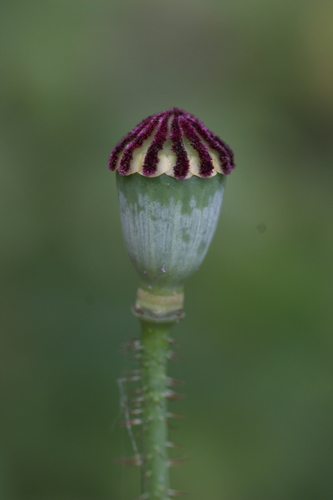
(c) caroline45p, some rights reserved (CC BY-NC-SA), uploaded by caroline45p
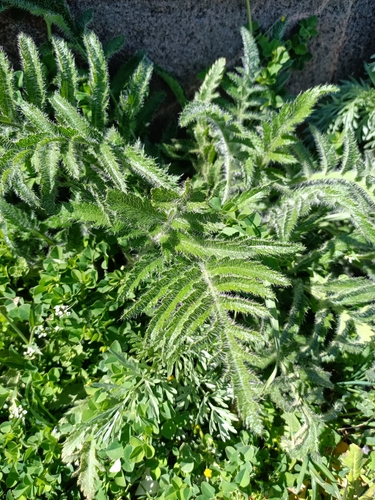
(c) Nikita Tiunov, some rights reserved (CC BY-NC-SA), uploaded by Nikita Tiunov
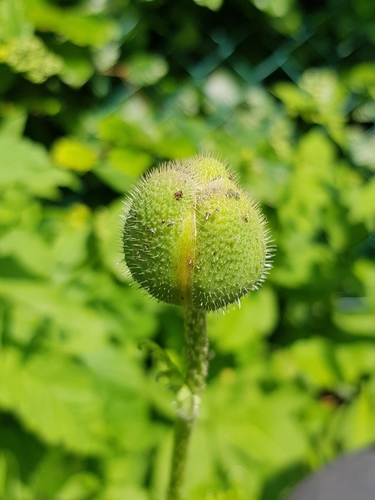
(c) Teresa Burdich, some rights reserved (CC BY-NC), uploaded by Teresa Burdich
What to Eat
Edible parts: Fruit, Heads, Flowers
The young seed heads are used as a condiment; they are hot and acrid. Caution is advised — see notes on toxicity.
Known Hazards
Where to Find It
It is a temperate plant. It suits hardiness zones 3-9.
Armenia, Australia, Canada, Caucasus, Central Asia, Iran, Mediterranean, Middle East, North America, Slovenia, Taiwan, Tajikistan, Tasmania, Turkey*,
How to Identify
A poppy which keeps growing from year to year. It grows 60-100 cm high and spreads 30-50 cm wide. It forms a clump. The leaves are blue-green and bristly. They have leaflets along the stalk and the leaves are 25 cm long. The flower stems have leaves on the lower half. The flowers occur singly and are 10 cm across. They can be red, orange or pink and often have darker blotches.
How to Grow
Prefers a well-drained sandy loam in a sunny position. Succeeds in an ordinary good soil and in dry soils, tolerating drought when established. Plants prefer a deep soil that is poor and dry rather than rich, they dislike moist conditions. Plants can be grown in quite coarse grass, which can be cut annually in the autumn. A deep-rooting and almost indestructible plant, every scrap of the running root system that is left in the ground can grow into a new plant. There are many named varieties selected for their ornamental value. Members of this genus are rarely if ever troubled by browsing deer or rabbits. A good bee plant.
Propagation: Sow seed in June in an outdoor seedbed and plant into permanent positions in September. Seed can also be sown in spring and may flower in late summer. Division in March or October should be done with care, though one account suggests division is very simple. Larger divisions can go directly into permanent positions; smaller divisions are better potted up and grown on in light shade in a cold frame until well established before planting out in late spring or early summer. Root cuttings 10cm long can be taken in November or December and kept in a cold frame.
Medicinal Uses
The petals are sudorific.
Other Uses
None known.
Wikipedia
Source ↗Papaver orientale, the Oriental poppy, is a perennial flowering plant native to the Caucasus, northeastern Turkey, and northern Iran. Oriental poppies grow a mound of leaves that are hairy and finely dissected in spring. They gather energy and bloom in mid-summer. After flowering, the foliage dies away entirely, a property that allows their survival in the summer drought of Central Asia. Gardeners can place late-developing plants nearby to fill the developing gap.
Names & Synonyms
Ala hashas
References (10)
- Cakir, E. A., 2017, Traditional knowledge of wild edible plants of Iğdır Province (East Anatolia, Turkey). Acta Soc Bot Pol. 2017;86(4):3568. (As var. parviflora)
- Cundall, P., (ed.), 2004, Gardening Australia: flora: the gardener's bible. ABC Books. p 980
- Ertug, F, Yenen Bitkiler. Resimli Türkiye Florası -I- Flora of Turkey - Ethnobotany supplement
- Facciola, S., 1998, Cornucopia 2: a Source Book of Edible Plants. Kampong Publications, p 166
- Hedrick, U.P., 1919, (Ed.), Sturtevant's edible plants of the world. p 462
- Hibbert, M., 2002, The Aussie Plant Finder 2002, Florilegium. p 218
- http://www.botanic-gardens-ljubljana.com/en/plants
- Rivera, D. et al, 2006, Gathered Mediterranean Food Plants - Ethnobotanical Investigations and Historical Development, in Heinrich M, Müller WE, Galli C (eds): Local Mediterranean Food Plants and Nutraceuticals. Forum Nutr. Basel, Karger, 2006, vol 59, pp 18–74
- Sp. pl. 1:508. 1753
- Tanaka,