Itaya amicorum
H. E. Moore
Xila, Marimiipa
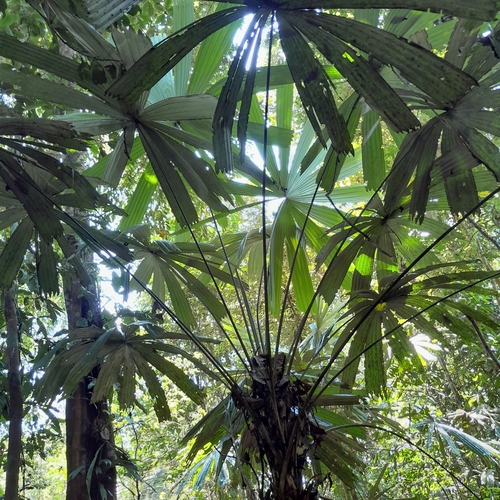
(c) Thibaut Foch, some rights reserved (CC BY-NC), uploaded by Thibaut Foch
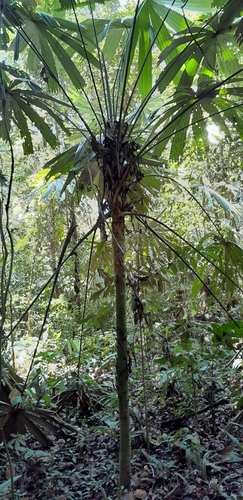
(c) Thibaut Foch, some rights reserved (CC BY-NC), uploaded by Thibaut Foch
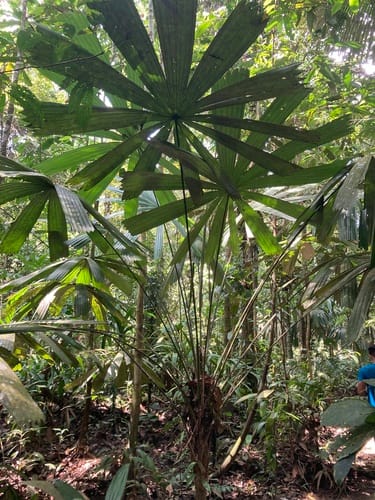
(c) Riley Fortier, some rights reserved (CC BY-NC)
What to Eat
Edible parts: Ash - salt, Fruit
The Miraña, an indigenous Amerindian group in the Amazon, reportedly burn the trunks of Itaya amicorum in order to extract salt from them. The leaves are used for thatch.
Where to Find It
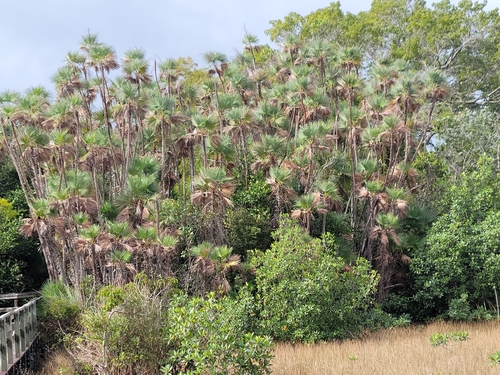
A tropical plant. It grows as an understory plant. It grows in wet areas along rivers in the Amazon. It grows below 300 m altitude. In Townsville Palmetum.
Amazon, Australia, Brazil, Colombia, Peru, South America,
How to Identify
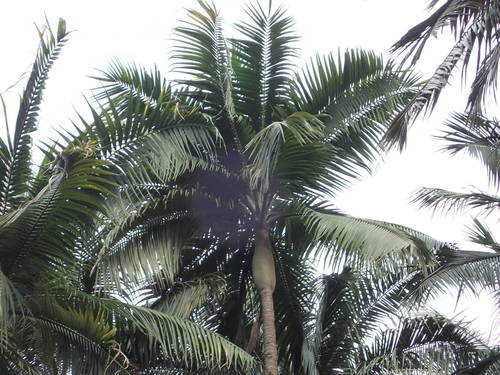
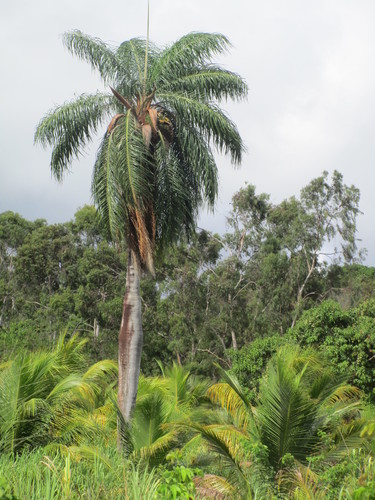
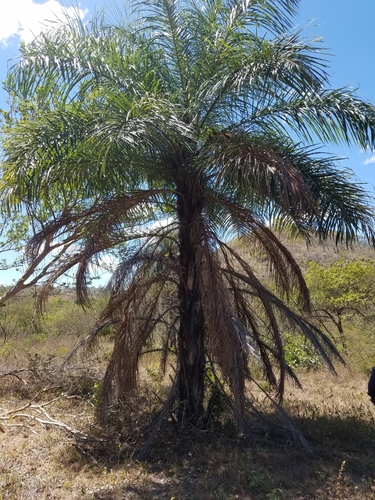
A palm. It has a single stem. It grows 4 m high and the trunk is 9-10 cm across. The leaves form a wide crown. The leaf stalks are long. The blade is round. It is about 2 m across. It is split to the base into 10-16 equally broad leaflets. The leaves are silvery grey and white underneath. The flowering stalk has several flowering branches. These can be 10 cm long. The fruit are almost round.
How to Grow
Prefers a warm, sheltered, and moist position. Likes a heavy, loamy soil.
Other Uses
The leaves are used to thatch temporary shelters.
References (3)
- Henderson, A., Galeano, G and Bernal, R., 1995, Field Guide to the Palms of the Americas. Princeton. p 42
- Kermath, B. M., et al, 2014, Food Plants in the Americas: A survey of the domesticated, cultivated and wild plants used for Human food in North, Central and South America and the Caribbean. On line draft. p 452
- World Checklist of Useful Plant Species 2020. Royal Botanic Gardens, Kew