Socratea rostrata
Burret
Crespa

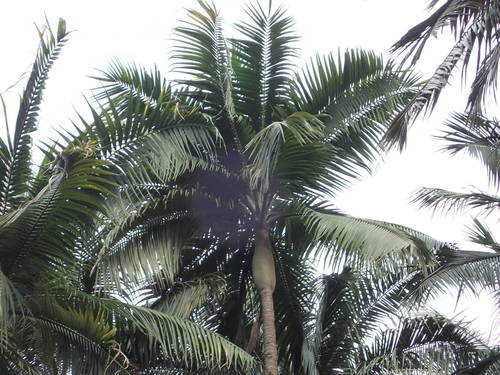
(c) Bitty A. Roy, some rights reserved (CC BY-NC)
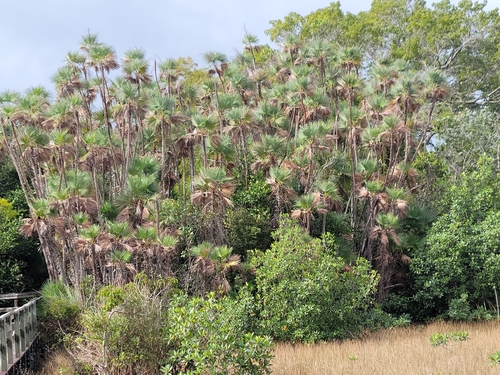
(c) nicolapeel, some rights reserved (CC BY-NC)
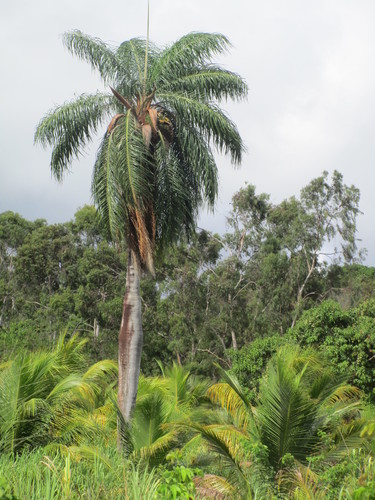
(c) ishpingo, some rights reserved (CC BY-NC)
What to Eat
Edible parts: Cabbage, Palm heart, Seeds, Fruit
Leaves - cooked. The apical bud, often called the 'palm heart', is eaten as a vegetable. Eating this bud leads to the death of the tree because it is unable to make any side branches or new growth. Immature seeds are sometimes eaten.
Where to Find It
A tropical plant. It grows in mountain forest between 1,000-1,400 m altitude.
Amazon, Andes, Central America, Colombia, Costa Rica, Ecuador, Peru, South America,
How to Identify
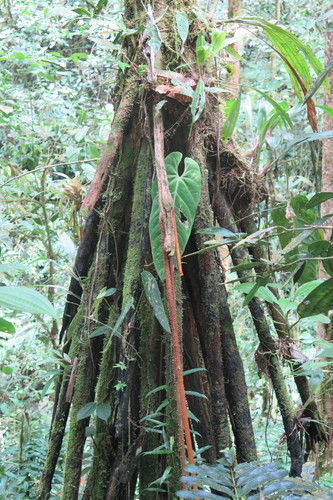
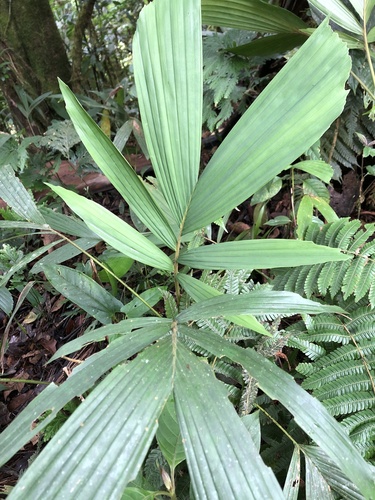
A solitary palm. It grows 25 m tall. The trunk is 13 cm across. There is a cone of 15-26 stilt roots around the base of the palm. There are 4-7 leaves. They have a feather-like appearance. The leaflets are divided and the tips hang down. The flower stalk has 4 bracts. There are 8-11 flowering branches. These can be 60 cm long and 5 mm across. The fruit is oval and has a beak at the tip. The fruit are 3.5 cm long by 2.5 cm wide. They are yellowish-brown.
Names & Synonyms
Buro, Chingu, Chinku, Chonta cade, Chonta, Crespa, Gualte, Huagrachanga, Kasha puna, Kupat, Naquenque, Pambil, Patudo, Tssatssavo'jin
References (7)
- Grandtner, M. M. & Chevrette, J., 2013, Dictionary of Trees, Volume 2: South America: Nomenclature, Taxonomy and Ecology. Academic Press p 613
- Henderson, A., Galeano, G and Bernal, R., 1995, Field Guide to the Palms of the Americas. Princeton. p 111
- Kermath, B. M., et al, 2014, Food Plants in the Americas: A survey of the domesticated, cultivated and wild plants used for Human food in North, Central and South America and the Caribbean. On line draft. p 813
- Marcia, M. J., et al, 2011, Palm Uses in Northwestern South America: A Quantitative Review. Bot. Rev. (2011) 77:462-570
- Roa, J. A. G. & Boada, D. S. G., 2018, Fundación para el Fortalecimiento de la Fruticultura y Plantas Alimenticias no Convencionales en Colombia.
- Torre, de la L., et al, 2008, Enciclopedia de las Plantas Útiles del Ecuador. Herbario QCA. Pontificia Universidad Católica del Ecuador. p 209
- World Checklist of Useful Plant Species 2020. Royal Botanic Gardens, Kew