Euterpe broadwayi
Becc. ex Broadway
Manicol

(c) Eric Knight, some rights reserved (CC BY)

(c) Nils Servientis - Bivouac Naturaliste, some rights reserved (CC BY-NC)
What to Eat
Edible parts: Cabbage, Palm heart
The palm heart can be eaten raw or boiled. The trunks may contain the edible palm beetle (Calandra palmarum).
Where to Find It
A tropical plant. It grows in forest on mountain ridges. It grows between 600-1,000 m altitude.
Central America, Dominica, Dominican Republic, Grenada, Haiti, Lesser Antilles, St. Vincent and Grenadines, Trinidad and Tobago, West Indies,
How to Identify
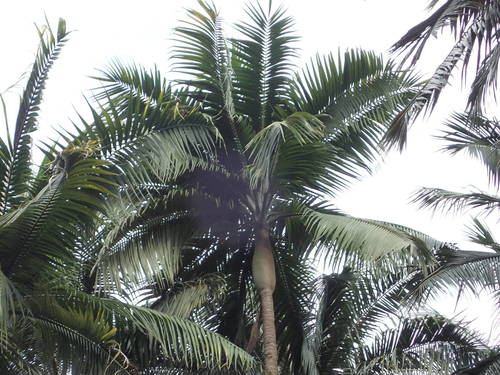
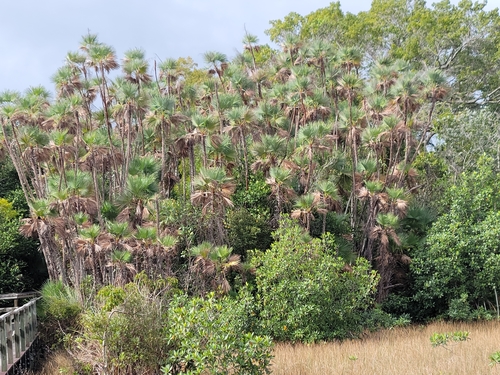
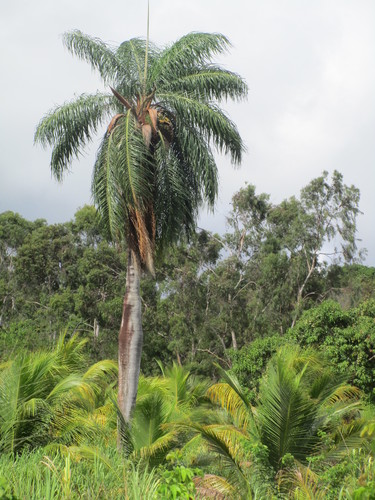
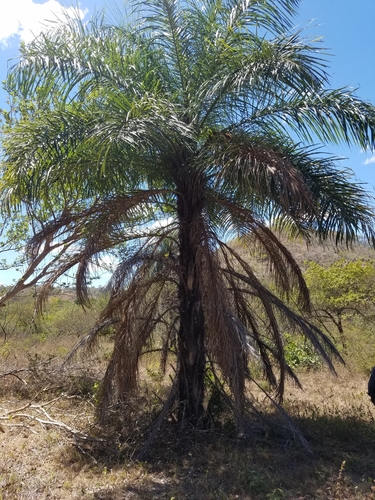
A clustered palm. It grows 8-20 m tall. The trunks are 20-25 cm across. They are grey. There is often a cone of roots at the base. There are 10-16 leaves. The crown-shaft is green but can have reddish tinges. The leaflets tend to hang down. The flowering branches are 0.7-1 cm across. They are covered with whitish brown hairs. The fruit are round and purple-black. They are 1-1.4 cm across.
Wikipedia
Source ↗Euterpe broadwayi, the manac, or manicol, is a tall, slender-stemmed, pinnate-leaved palm native to Trinidad and Tobago, Grenada, Saint Vincent and the Grenadines and Dominica. Stems usually grow in a cluster and are 8–20 metres tall and 20–25 centimetres in diameter and bear 10–16 leaves. It is sometimes harvested for palm heart.
Notes
There are 7 Euterpe species. (There were originally 30 species listed)
Names & Synonyms
Manac, Palmiste
References (5)
- Grandtner, M. M., 2008, World Dictionary of Trees. Wood and Forest Science Department. Laval University, Quebec, Qc Canada. (Internet database http://www.wdt.qc.ca)
- Grandtner, M. M. & Chevrette, J., 2013, Dictionary of Trees, Volume 2: South America: Nomenclature, Taxonomy and Ecology. Academic Press p 245
- Henderson, A., Galeano, G and Bernal, R., 1995, Field Guide to the Palms of the Americas. Princeton. p 122, 295 (As Euterpe dominica),
- James, A., 2009, Notes on the Uses of Dominica's Native Palms. Palms, Vol. 53(2): p 64
- Kermath, B. M., et al, 2014, Food Plants in the Americas: A survey of the domesticated, cultivated and wild plants used for Human food in North, Central and South America and the Caribbean. On line draft. p 361