Ammandra decasperma
O. F. Cook
Ten seed ammandra
(c) desertnaturalist, some rights reserved (CC BY), uploaded by desertnaturalist

Wikimedia Commons - (c) desertnaturalist, some rights reserved (CC BY)
What to Eat
Edible parts: Fruit, Seeds
The immature layer of the fruit is eaten, and both fruit and seeds are consumed.
Where to Find It
It is a tropical plant. They grow in lowland rainforest below 200 m altitude.
Colombia, Ecuador, South America,
How to Identify
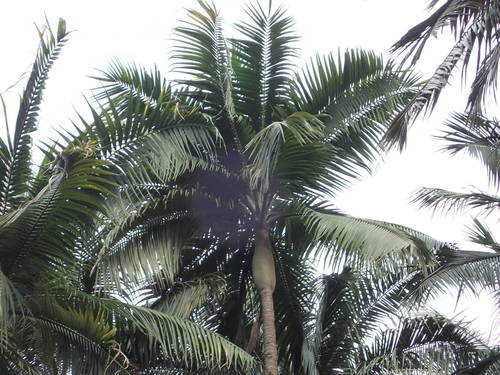
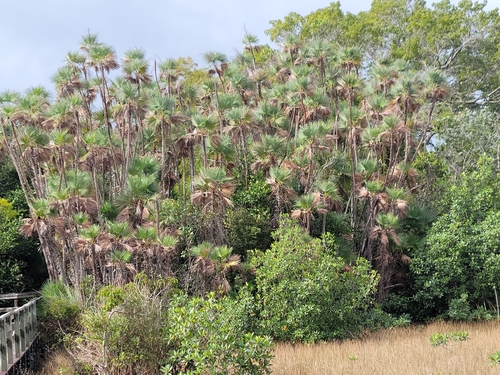
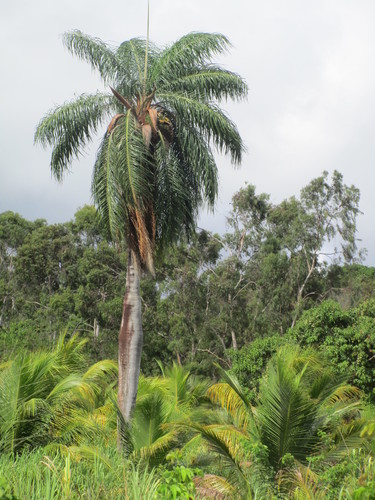
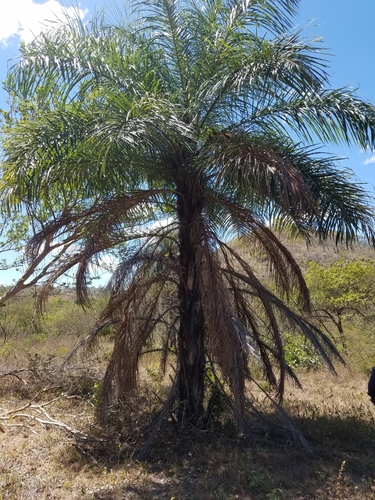
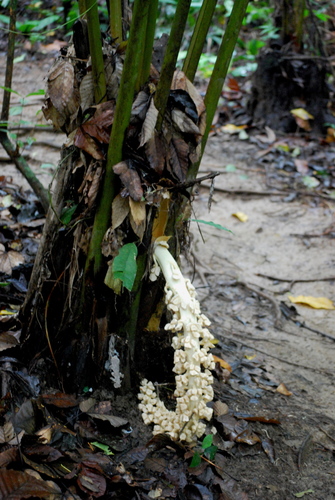
A palm. It has short stems. They can be underground or above ground. They can be creeping. The palm can be solitary or in clusters of up to 6. There are 6-10 leaves. They are erect. The leaf stalk is 3.5 m long. The axis of the leaf is also about 3.5 m long. There are 40-58 leaflets on each side. They are arranged regularly and spread in the same plane. The flowering stalk is at ground level. It is often covered with litter. The fruiting heads are 25 cm across. There are 3-10 fruit. They have woody projections.
How to Grow
A dioecious species, both male and female forms need to be grown if fruit and seed are required.
Other Uses
A very strong fibre is obtained from the leaf stalks. It is used in weaving baskets and fans.
Notes
There are 2 Ammandra species.
Names & Synonyms
Cabecillo, Cabecita, Chili muyo, Tobewe, Tubeta, Yarina, Yumal, Yume
References (8)
- Grandtner, M. M. & Chevrette, J., 2013, Dictionary of Trees, Volume 2: South America: Nomenclature, Taxonomy and Ecology. Academic Press p 28
- Henderson, A., Galeano, G and Bernal, R., 1995, Field Guide to the Palms of the Americas. Princeton. p 239
- Kermath, B. M., et al, 2014, Food Plants in the Americas: A survey of the domesticated, cultivated and wild plants used for Human food in North, Central and South America and the Caribbean. On line draft. p 57 (Also as Ammandra dasyneura)
- Kew Plants of the World Online
- Marcia, M. J., et al, 2011, Palm Uses in Northwestern South America: A Quantitative Review. Bot. Rev. (2011) 77:462-570
- Roa, J. A. G. & Boada, D. S. G., 2018, Fundación para el Fortalecimiento de la Fruticultura y Plantas Alimenticias no Convencionales en Colombia.
- Torre, de la L., et al, 2008, Enciclopedia de las Plantas Útiles del Ecuador. Herbario QCA. Pontificia Universidad Católica del Ecuador. p 193 (As Ammandra dasyneura)
- World Checklist of Useful Plant Species 2020. Royal Botanic Gardens, Kew