Attalea insignis
(Mart.) Drude
Yagua palm, Contillo palm

(c) Riley Fortier, some rights reserved (CC BY-NC)

(c) Riley Fortier, some rights reserved (CC BY-NC)

(c) Mayk Oliveira, some rights reserved (CC BY-NC)
What to Eat
Edible parts: Fruit, Shoots - salt, Vegetable, Seeds
The fruit and seeds are eaten, and the shoots are burnt to produce a vegetable salt.
Where to Find It
A tropical plant. It grows in lowland rainforests and up to 600 m above sea level.
Amazon, Asia, Brazil, Colombia*, Ecuador, Indonesia, Peru, SE Asia, South America,
How to Identify
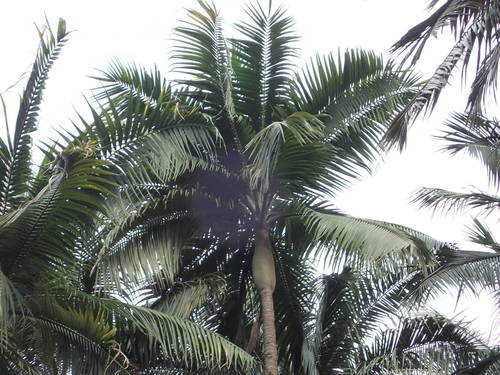
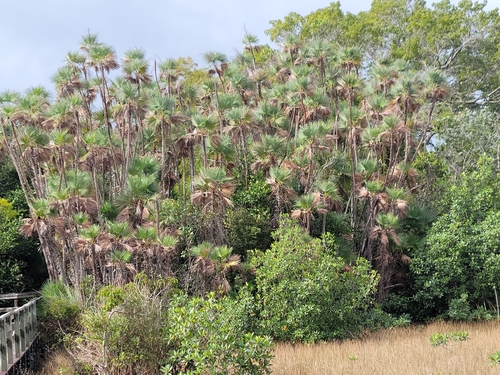
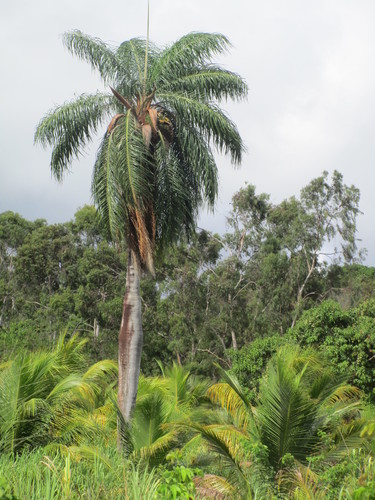
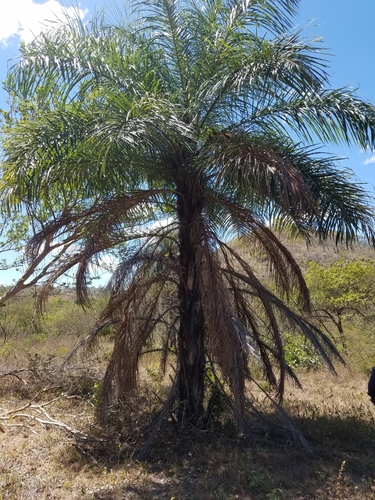
A solitary palm. The stem is short or underground. There are 9-11 leaves in the crown. They have leaflets along the stalk. The leaf stalks are long. They can be 1.6-3.3 m long. The leaflets are arranged irregularly in clusters. They spread in different planes. The flowering shoot is from among the leaves. It is erect and on a long stalk. The fruit is oval to oblong and 7-7.5 cm long by 3.5-4 cm wide. They are brownish and have 2-3 seeds.
How to Grow
Plants can be grown from seeds.
Names & Synonyms
Barikai, Edi ni, Genka yapa, Gomankowe, Inajuga, Ocohua'jo, Palem yagua, Palma de ramo, Shapaja, Urcuri, Urkusi
References (9)
- Balick, M.J. and Beck, H.T., (Ed.), 1990, Useful palms of the World. A Synoptic Bibliography. Colombia p 50 (As Scheelea attaleoides)
- Gilmore, M. P., et al, 2013, The socio-cultural importance of Mauritia flexuosa palm swamps (aguajales) and implications for multi-use management in two Maijuna communities of the Peruvian Amazon. Journal of Ethnobiology and Ethnomedicine 2013, 9:29
- Kermath, B. M., et al, 2014, Food Plants in the Americas: A survey of the domesticated, cultivated and wild plants used for Human food in North, Central and South America and the Caribbean. On line draft. p 108
- Lopez-Diago, D. & Garcia, N., 2021, Wild edible fruits of Colombia. Biota ColomBiana 22 (2) p 30
- Marcia, M. J., et al, 2011, Palm Uses in Northwestern South America: A Quantitative Review. Bot. Rev. (2011) 77:462-570
- Roa, J. A. G. & Boada, D. S. G., 2018, Fundación para el Fortalecimiento de la Fruticultura y Plantas Alimenticias no Convencionales en Colombia.
- Sukarya, D. G., (Ed.) 2013, 3,500 Plant Species of the Botanic Gardens of Indonesia. LIPI p 757
- Torre, de la L., et al, 2008, Enciclopedia de las Plantas Útiles del Ecuador. Herbario QCA. Pontificia Universidad Católica del Ecuador. p 194
- World Checklist of Useful Plant Species 2020. Royal Botanic Gardens, Kew