Sabal uresana
Trelease
Palma blanca, Sonora palmetto

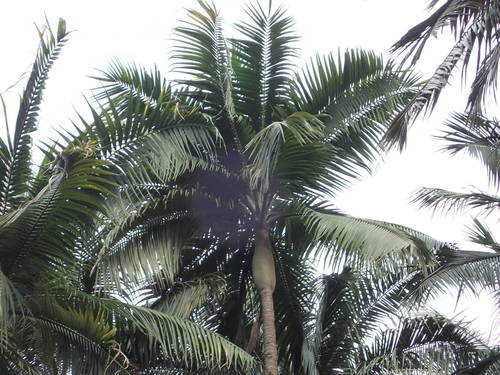
(c) Eric Hough, some rights reserved (CC BY-NC), uploaded by Eric Hough

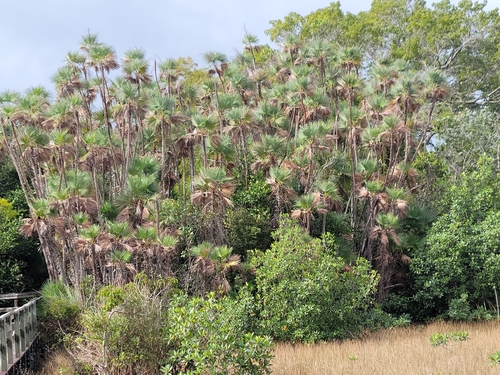
(c) Pablo Vinuesa, some rights reserved (CC BY-NC)

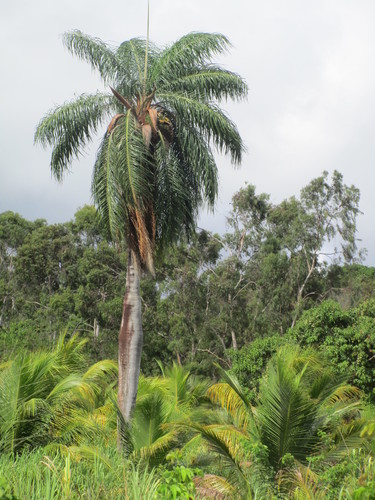
(c) itazura, some rights reserved (CC BY-NC)
What to Eat
Edible parts: Palm hearts, Cabbage
The palm hearts and cabbage are eaten.
Where to Find It
It is a warm temperate plant. It grows in thorny forest and oak forest in Mexico. It is along streams and in valleys. It grows from sea level to 1,500 m altitude.
Mexico, North America,
How to Identify
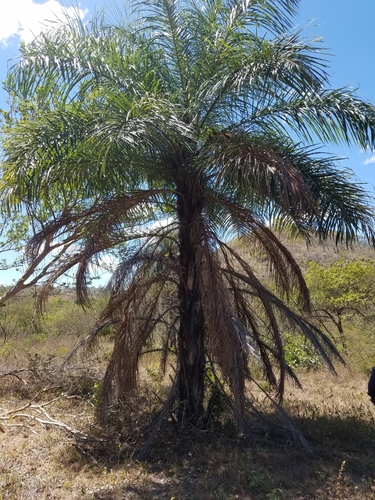
A palm. The stems are single and stout. They can be 20 m tall. They are 20-30 cm across. There are 15-35 leaves. These have a bluish bloom on them. There are 60-75 leaflets with are rigid and point upwards. The flowering branch has 3 orders of branches. It is as long as the leaves and arches over. The fruit are round or pear shaped and 1.6 cm long by 1.3 cm across. They are brown or black.
Wikipedia
Source ↗Sabal uresana, commonly known as the Sonoran palmetto, is a species of palm tree that is native to the foothills of the Sierra Madre Occidental in northwestern Mexico (states of Chihuahua and Sonora). The specific epithet, "uresana", refers to Ures, Sonora, a town within its range. It is threatened by habitat loss. It is known to be the only known host plant for Hemipeplus pollocki.
Names & Synonyms
Palmarillo, Palmarira
References (6)
- Balick, M.J. and Beck, H.T., (Ed.), 1990, Useful palms of the World. A Synoptic Bibliography. Colombia p 482, 556,
- Grandtner, M. M., 2008, World Dictionary of Trees. Wood and Forest Science Department. Laval University, Quebec, Qc Canada. (Internet database http://www.wdt.qc.ca)
- Henderson, A., Galeano, G and Bernal, R., 1995, Field Guide to the Palms of the Americas. Princeton. p 67
- Kermath, B. M., et al, 2014, Food Plants in the Americas: A survey of the domesticated, cultivated and wild plants used for Human food in North, Central and South America and the Caribbean. On line draft. p 772
- Segura, S. et al, 2018, The edible fruit species in Mexico. Genet Resour Crop Evol (2018) 65:1767–1793
- World Checklist of Useful Plant Species 2020. Royal Botanic Gardens, Kew