Sabal rosei
(O. F. Cook) Becc.
Palma de llano
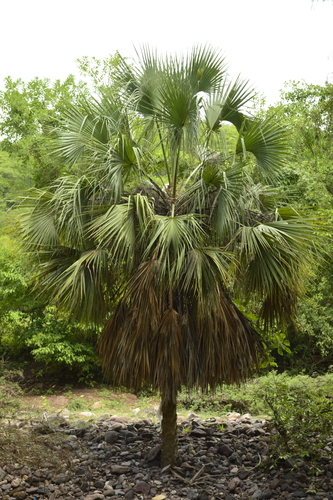
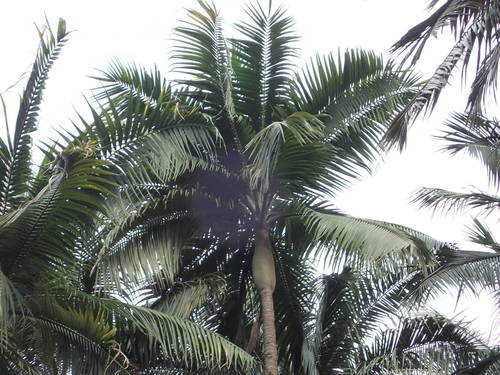
(c) Manuel Guillermo Millán Otero, some rights reserved (CC BY-NC), uploaded by Manuel Guillermo Millán Otero
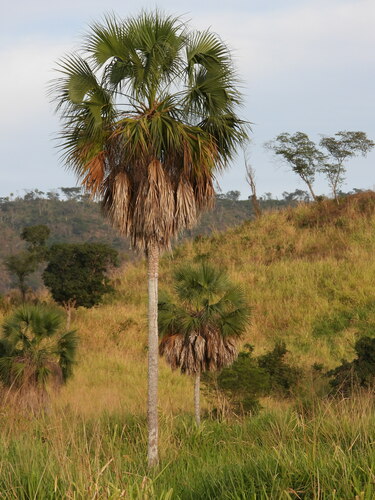
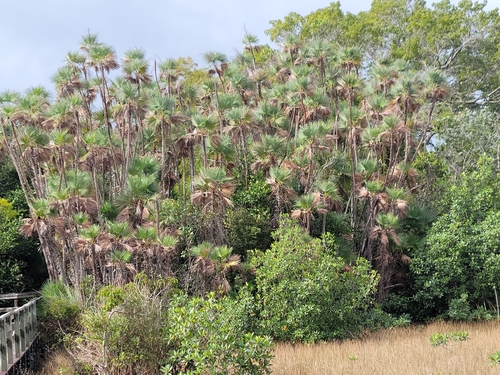
no rights reserved, uploaded by Sinaloa Silvestre

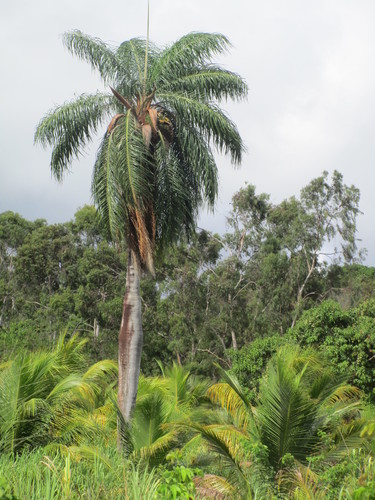
(c) Cesar Yael Murillo, some rights reserved (CC BY-NC)
What to Eat
Edible parts: Palm hearts, Cabbage
Palm hearts and cabbage are harvested from this species.
Where to Find It
It grows in deciduous forest in Mexico. It grows in disturbed areas below 1,000 m altitude.
Mexico, North America,
How to Identify
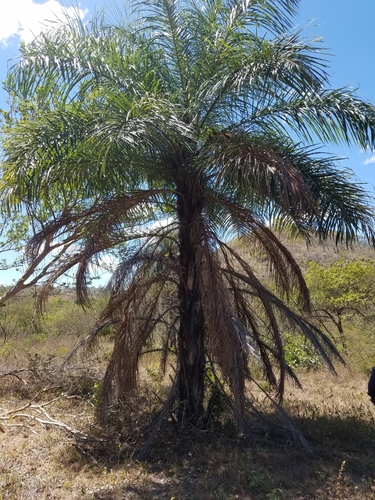
A palm. It has a single stem. It is stout and 20 m tall. The trunk is 30-40 cm across. There are 15-35 leaves and they have a bluish bloom on them. The midrib is strong and arches over. There are 60-80 leaflets that are rigid and point upwards. On each side of the midrib the leaflets are arranged in one plane. The flowering stalks are as long as the leaves. They arch over and have 3 orders of branches. The fruit are slightly broader than long. They are 1.5-2.2 cm long by 1.3-2 cm wide. They are a greenish brown-black.
Wikipedia
Source ↗Sabal rosei, the Llanos palmetto or Savannah palmetto, is a species of flowering plant in the palm family Arecaceae, native to the Pacific coast of Mexico, from Sinaloa to Jalisco. Hardy to USDA zone 8a, it tolerates both flooding and drought, although it is typically found in dry areas.
Names & Synonyms
References (3)
- Balick, M.J. and Beck, H.T., (Ed.), 1990, Useful palms of the World. A Synoptic Bibliography. Colombia p 556
- Henderson, A., Galeano, G and Bernal, R., 1995, Field Guide to the Palms of the Americas. Princeton. p 67
- World Checklist of Useful Plant Species 2020. Royal Botanic Gardens, Kew