Daemonorops draco
(Willd.) Blume
Dragon's blood palm
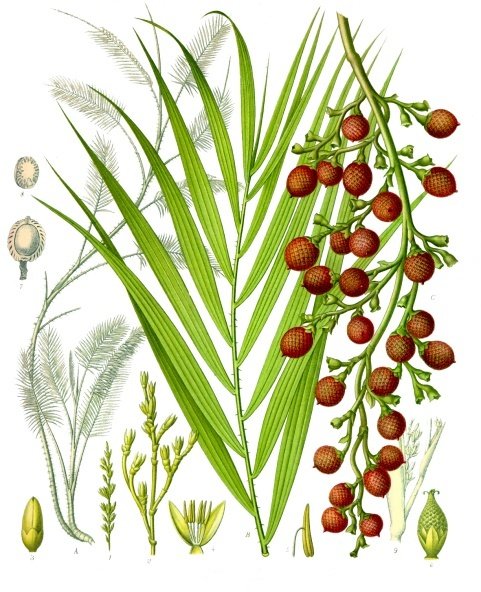
Wikimedia Commons - Franz Eugen Köhler, Köhler's Medizinal-Pflanzen

Wikimedia Commons - Andy Dingley
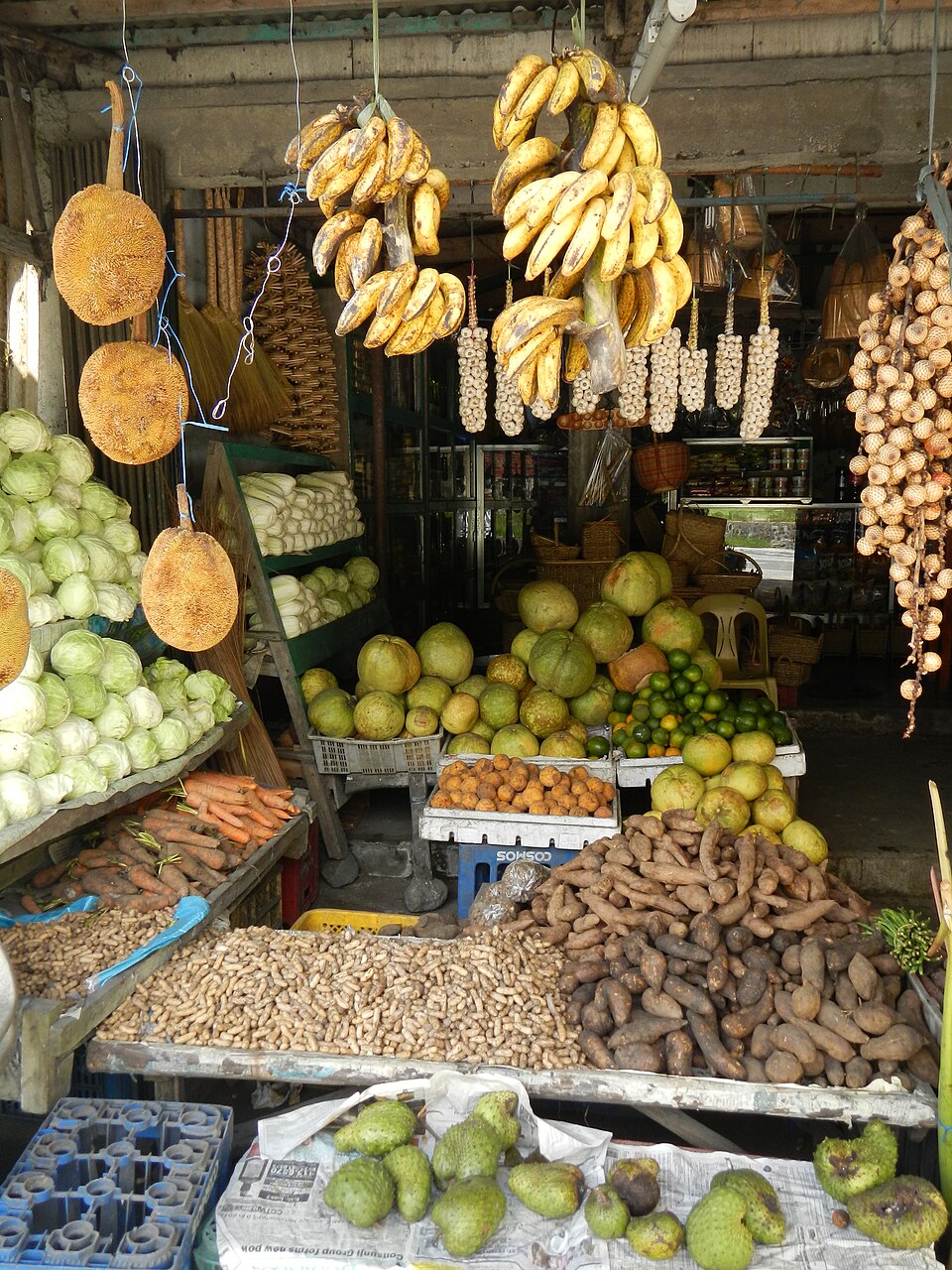
Wikimedia Commons - Ramon FVelasquez
What to Eat
Edible parts: Fruit - colouring, Palm heart
The palm heart is cooked and eaten, often prepared with coconut milk and fish. The resin from the fruit is used to flavor and color drinks.
Where to Find It
A tropical plant. It is best in moist, sandy, humus-rich soil. It needs a protected, partly shaded position. It is damaged by frost and drought.
Asia, Australia, Indonesia, Malaysia, Philippines, SE Asia,
How to Identify
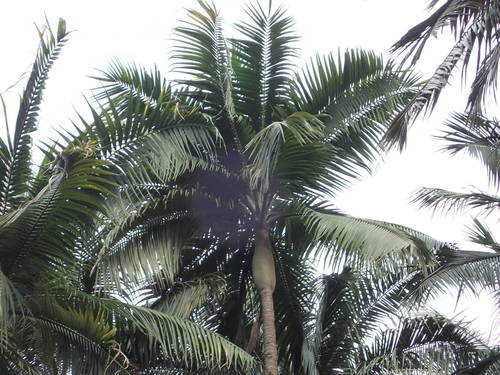
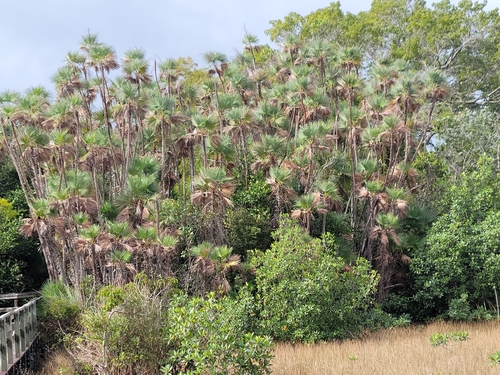
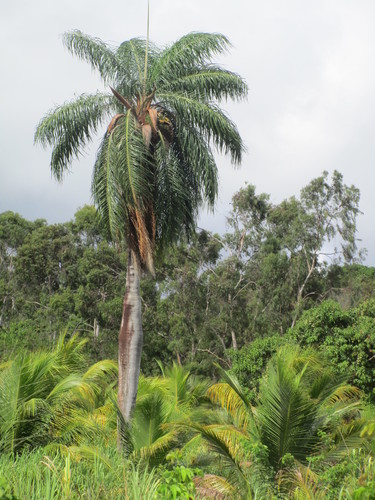
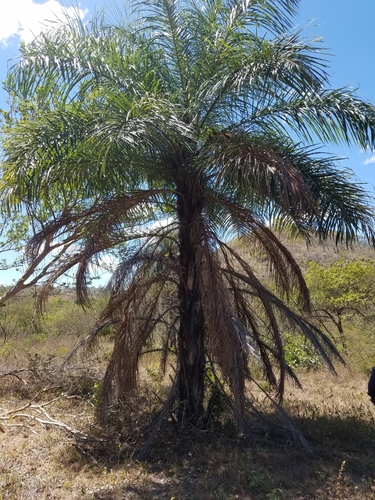
An evergreen tree. It grows 10 m high and spreads 4 m wide. The stems are long and slender. The leaves are palm like. They have prickly leaf stalks. The flowers are white and occur along the branches. The fruit are tapering berries.
How to Grow
A plant of moist lowland tropical areas. Most species in this genus are more or less vigorous climbing plants in rainforests. In general, they are likely to grow best with their roots in the shade but with enough gap in the canopy to encourage their stems to grow up towards the light. They are also likely to grow best in a humus-rich soil. This species is one of several that supply a red resin from their stem. This resin, often known as 'Dragon's Blood' is often used as an external application to treat a range of skin problems and injuries. Dragon's Blood can be obtained from several species in this genus, as well as from three other distinct genera - Dracaena species, Croton species and Pterocarpus species Harvesting is done by climbing a tree near the plant and hand picking the fruits. Old fruits contain more resin. A clump of the plant produces around 50 kilos of dragon blood fruits. A dioecious species, both male and female forms need to be grown if fruit and seed are required.
Medicinal Uses
The resin was formerly valued as a medicine in Europe because of its astringent properties, though it is little used there at present. The resin is astringent and stimulant. Internally, it is used to alleviate chest pains, post-partum bleeding, internal traumas, and menstrual irregularities. The resin is used externally as a wash to further healing and stop bleeding. It has been used in dentifrices and as a mouth wash. Dragon’s blood is brittle, feebly sweetish or almost tasteless and odourless.
Other Uses
An orange to red resin, known as 'dragon's blood', is extracted from the fruit scales and leaf sheaths. It is used as dye for textiles, baskets, varnishes, toothpastes, tinctures, and plasters for dyeing horns to imitate tortoise shells. It is also used in varnishes and lacquers, especially on violins, where it gives a mahogany-like stain; and in photo engraving on zinc, where it protects the metal parts that are not to be etched. Extraction of the resin can be by dry or wet methods. Dry extraction is done by sun-drying the collected fruits and then crushing them. The resulting resin is screened and flushed with hot water to form a batter. The resin is turned into granules, sticks and powder. Alternatively, the fruits are first dried and the resin then removed by rubbing the fruit with cockle shells. The resin so collected is processed by wrapping in a cloth, dampening in hot water and then being squeezed. The best dragon blood comes in cylinder form of 30 - 35cm in length and 20 - 25mm in thickness and when dissolved in alcohol the residue content is below 9%. For wet-extraction, the crushed fruits are boiled in water, but the dyes extracted in this way are of inferior quality. The cane appears to be of good quality for use in basketry etc. The long and slender stems of rattan are put to various uses according to their size, length, flexibility, elasticity and toughness. The most slender canes are employed entire for binding purposes, and in making chairs, blinds, mats, wicker or basketwork, fishing implements, etc. Twisted together, they make very strong cables. The largest and more resistent canes are used entire as cables, the framework of wicker chairs etc. Usually, however, for many purposes the stems are split throughout their length into 2 - 4 or more strips from which the inner soft brittle and spongy portion is removed by means of a knife or same other instrument, so as to leave the external portion, which is hard, tough, flexible, elastic and has its outer surface very clean and smooth as if it had been varnished. Strips vary in width according to the use to which they are to be put. Those for delicate work, such as the network of furniture, small bags, hats, etc, are from 1 - 3mm wide; those employed as lashings in native housebuilding or in fastening the removable head of the Malay axe to its handle are from 5-6 mm wide. Collecting and preparing the stems is very simple. The stem is cut near the ground and detached from the trees by taking a strong hold of its base and thus pulling down the entire plant with its leaves. The most recent growth at the top of the plant is removed and then, handling it from the upper end, the stem is forcibly drawn in the opposite direction between two pieces of wood, thus removing the spiny coverings. It is then cut into lengths of about 5 metres, each piece is bent into two equal parts and the stems are fastened into bundles ready for market. The most valued stems are not thicker than a man's little finger and have a fine polished straw-yellow glassy surface.
Names & Synonyms
Uway, Yantok
References (4)
- Bodkin, F., 1991, Encyclopedia Botanica. Cornstalk publishing, p 320
- Facciola, S., 1998, Cornucopia 2: a Source Book of Edible Plants. Kampong Publications, p 28
- Maghirang, R. G., et al, 2018. Ethnobotanical Studies of Some Plants Commonly Used as Vegetables in Selected Provinces of the Philippines. Journal of Nature Studies. 17(2), 30-43.
- Rumphia 3:8. 1849