Citronella mucronata
(Ruiz & Pav.) D. Don
Gongonha verdadeira
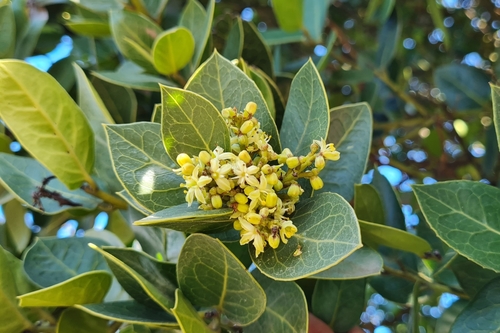
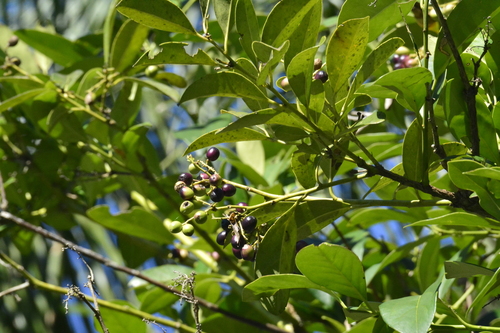
(c) Bernardita Navarrete, some rights reserved (CC BY-NC), uploaded by Bernardita Navarrete

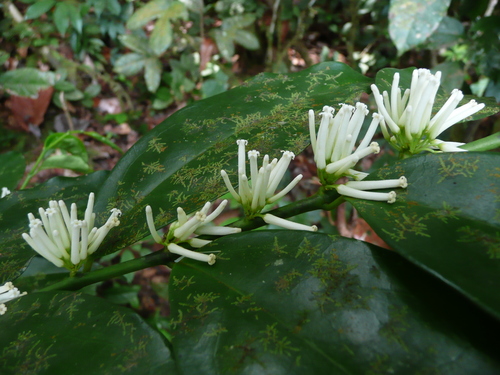
(c) eduardotamayo, some rights reserved (CC BY-NC)

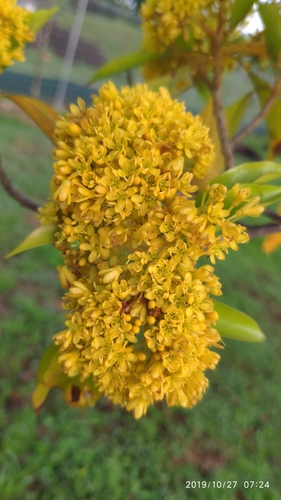
(c) Eric Rojas-Abarca, some rights reserved (CC BY-NC), uploaded by Eric Rojas-Abarca
What to Eat
Edible parts: Leaves - tea, Fruit
The dried leaves are occasionally used as a tea. The fruit is eaten.
Where to Find It
A tropical plant.
Brazil, Chile, South America,
How to Identify
A tree. It grows 10 m tall. The bark is dark grey and rough. The leaves are alternate and leathery. They are oval or oblong and end in a sharp tip. They can have teeth along the edge. The leaves are 5-6 cm long and 3-4 cm wide. The flowers are white to yellow and in groups 4-8 cm long at the end of branches. The fruit is round and 1-1.2 cm across. They are purple when ripe.
How to Grow
They can be grown from seed. Seed need to be sown fresh.
Medicinal Uses
The dried leaves are traditionally used as a tea.
Wikipedia
Source ↗Citronella mucronata, the huillipatagua (Spanish pronunciation: [wiʝipaˈtaɣwa]), naranjillo, or Chilean citronella tree, is an evergreen tree in the family Cardiopteridaceae. It is endemic to Chile and grows in the Chilean matorral region of central Chile from 30º to 40° south latitude.
Notes
Also put in the family Icacinaceae.
Names & Synonyms
Huillipatagua
References (7)
- Edinburgh New Philos. J. 13:243. 1832
- Facciola, S., 1998, Cornucopia 2: a Source Book of Edible Plants. Kampong Publications, p 122
- Hedrick, U.P., 1919, (Ed.), Sturtevant's edible plants of the world. p 680 (As Villaresia congonha)
- Morley, B.D., & Toelken, H.R., (Eds), 1983, Flowering Plants in Australia. Rigby. p 222 (As Citronella gongonha)
- Saez, F. A., et al, 2017, Physiochemical and antibacterial characterization of fruits of Citronella mucronata (Cardiopteridaceae), Pitavia punctata (Rutaceae) and Beilschmiedia berteroana (Lauraceae), three endemic and threatened Chilean trees. Fruits 72 (2) 87-96
- Uphof,
- Wikipedia,