Abutilon megapotamicum
(A. Spreng.) A. St.-Hil. & Naudin
Brazilian mallow
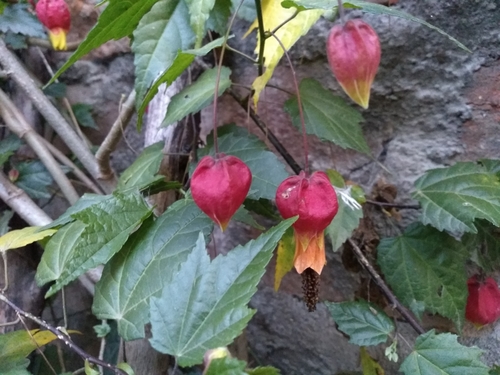
(c) Duanne, some rights reserved (CC BY-NC)
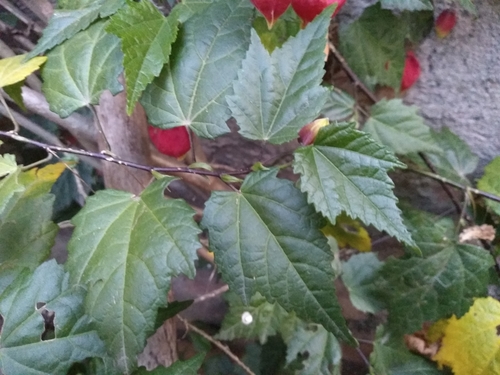
(c) Duanne, some rights reserved (CC BY-NC)
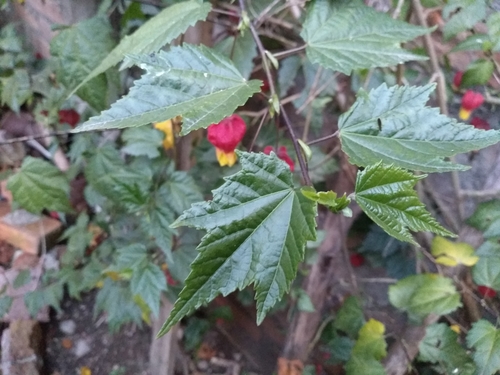
(c) Duanne, some rights reserved (CC BY-NC)
What to Eat
Edible parts: Flowers, Vegetable
The flowers are edible cooked and used as a vegetable, though they have a pleasant sweet flavor and are also delicious eaten raw. Flowers are produced from mid-spring through autumn, and because they continuously produce nectar while open, those grown indoors away from pollinating insects become progressively sweeter the longer each flower remains open.
Where to Find It
It is a tropical plant. It is damaged by drought and frost. It needs moist soil and a sunny position.
Australia, Brazil, Slovenia, South America, Uruguay,
How to Identify
A shrub or small tree. It grows 5 m tall. There are prickles along the stem. The leaves are twice divided and there are 8-18 pairs of pinnae. There are up to 50 pairs of pinnules on each pinnae. The flowers are yellow. They are in large clusters at the ends of branches. The pods are flattened.
How to Grow
Plants are grown using cuttings.
Propagation: Sow seed in spring in a greenhouse; germination should occur within a few weeks. Once large enough to handle, prick seedlings out into individual pots and grow on for at least the first winter under glass before planting out in late spring or early summer after the last expected frosts. Cuttings of young shoots can be taken in June in a frame, grown on through the first winter in a greenhouse, and planted out the following spring after frosts have passed. Cuttings of half-ripe wood taken in July or August in a frame can be treated the same way.
Medicinal Uses
None known.
Other Uses
None known.
Wikipedia
Source ↗Abutilon megapotamicum or Callianthe megapotamica (trailing abutilon) is a species of Abutilon native to Argentina, Brazil and Uruguay. It is a shrub growing to 2.5 metres (8 ft 2 in) tall, with leaves 5–8 centimetres (2.0–3.1 in) long, ovate to shallowly three-lobed. The flowers are orange-yellow with a red base, with five petals about 4 centimetres (1.6 in) long. It is a popular ornamental plant in subtropical gardens or temperate gardens that experience mild winters. They bloom for months from summer to frost, and they decorate the plant with a profusion of blossoms resembling Chinese lanterns. It has gained the Royal Horticultural Society's Award of Garden Merit. They are also known as flowering maple, Chinese lantern and parlour maple, in addition to trailing abutilon.
Notes
There are about 100-160 Abutilon species.
Names & Synonyms
Bencao-de-deus, Brazilian lantern flower, Brazilski slezinec, Sininho
References (4)
- Ann. Sci. Nat. Bot. ser. 2, 18:49. 1842
- Facciola, S., 1998, Cornucopia 2: a Source Book of Edible Plants. Kampong Publications, p 147
- Kinupp, V. F., 2007, Plantas alimenticias nao-convencionais da regiao metropolitana de Porto Alegre, RS, Brazil p 80
- Ryan, S., 2008, Dicksonia. Rare Plants Manual. Hyland House. p