Home / Malvaceae / Modiola caroliniana
Modiola caroliniana (L.) G. Don
Mauve, Cheeses, Red-flowered mallow, Bristly mallow
iNaturalist · cc-by-nc
iNaturalist · cc-by-nc
iNaturalist · cc-by-sa
What to Eat
Edible parts: Leaves - drink
A few leaves are soaked for 2-3 hours in water to make a drink.
Where to Find It
It is a temperate to tropical plant. In Argentina it grows from sea level to 2,100 m above sea level.
Africa, Andes, Antilles, Argentina, Asia, Australia, Bolivia, Brazil, Central America*, Chile, Colombia, Dominican Republic, Europe, Haiti, Jamaica, Korea, Mexico, New Zealand, North America, Paraguay, Slovenia, South America*, Tasmania, Uruguay, USA, West Indies*,
Countries: Andorra , United Arab Emirates , Afghanistan , Antigua & Barbuda , Albania , Armenia , Angola , Argentina , Austria , Australia , Azerbaijan , Bosnia & Herzegovina , Barbados , Bangladesh , Belgium , Burkina Faso , Bulgaria , Bahrain , Burundi , Benin , Brunei , Bolivia , Brazil , Bahamas , Bhutan , Botswana , Belarus , Belize , Canada , Congo (DRC) , Central African Republic , Congo (Republic) , Switzerland , Cote d'Ivoire , Chile , Cameroon , China , Colombia , Costa Rica , Cuba , Cape Verde , Cyprus , Czechia , Germany , Djibouti , Denmark , Dominica , Dominican Republic , Algeria , Ecuador , Estonia , Egypt , Eritrea , Spain , Ethiopia , Finland , France , Gabon , United Kingdom , Grenada , Georgia , French Guiana , Ghana , Gambia , Guinea , Equatorial Guinea , Greece , Guatemala , Guinea-Bissau , Guyana , Honduras , Croatia , Haiti , Hungary , Indonesia , Ireland , Israel , India , Iraq , Iran , Iceland , Italy , Jamaica , Jordan , Japan , Kenya , Kyrgyzstan , Cambodia , Comoros , St Kitts & Nevis , North Korea , South Korea , Kuwait , Kazakhstan , Laos , Lebanon , St Lucia , Liechtenstein , Sri Lanka , Liberia , Lesotho , Lithuania , Luxembourg , Latvia , Libya , Morocco , Monaco , Moldova , Montenegro , Madagascar , North Macedonia , Mali , Myanmar , Mongolia , Mauritania , Malta , Mauritius , Maldives , Malawi , Mexico , Malaysia , Mozambique , Namibia , Niger , Nigeria , Nicaragua , Netherlands , Norway , Nepal , Oman , Panama , Peru , Philippines , Pakistan , Poland , Puerto Rico , Portugal , Paraguay , Qatar , Romania , Serbia , Russia , Rwanda , Saudi Arabia , Seychelles , Sudan , Sweden , Singapore , Slovenia , Slovakia , Sierra Leone , San Marino , Senegal , Somalia , Suriname , South Sudan , Sao Tome & Principe , El Salvador , Syria , Eswatini , Chad , Togo , Thailand , Tajikistan , Timor-Leste , Turkmenistan , Tunisia , Turkey , Trinidad & Tobago , Taiwan , Tanzania , Ukraine , Uganda , United States , Uruguay , Uzbekistan , St Vincent , Venezuela , Vietnam , Yemen , South Africa , Zambia , Zimbabwe How to Identify
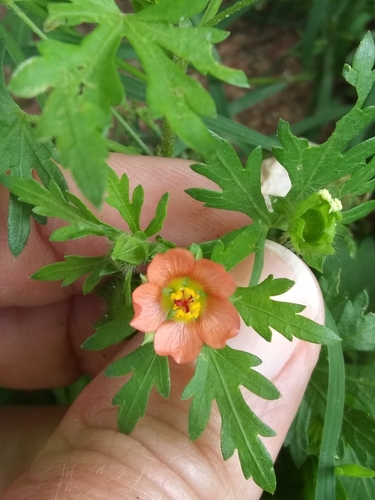
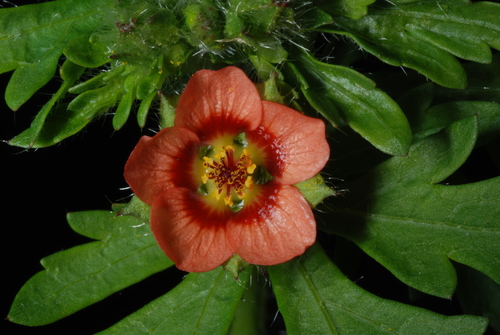
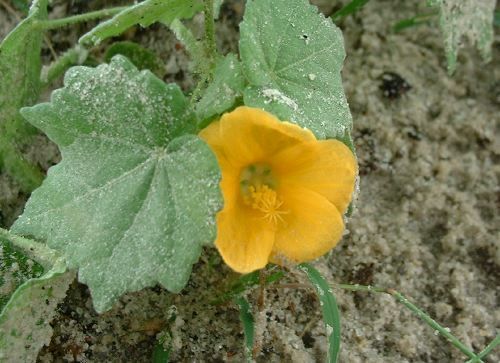
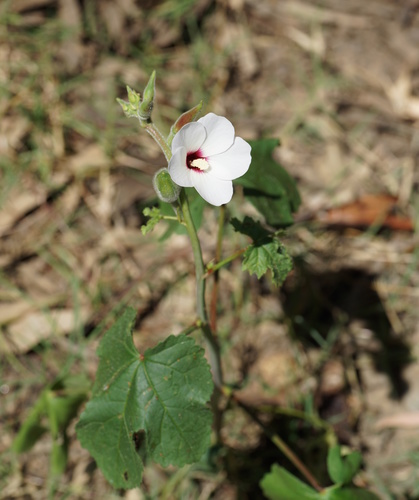
A herb. It can grow each year from seed or last for a few years. It forms roots at the nodes. It grows about 25 cm tall. The leaves are broadly oval and 3-4 cm long by 2-3 cm wide. There are 3-7 lobes. These have teeth. The flowers are red of orange. The fruit is a capsule 7-9 mm across.
Names & Synonyms Malva del campo, Malva del potro, Mercurio, Palapala, Pila pila, Sana todo
Malva caroliniana L. Malva eriocarpa DC. Malva malvifolia Griseb. and others
References (7)
Facciola, S., 1998, Cornucopia 2: a Source Book of Edible Plants. Kampong Publications, p 148 Gen. hist. 1:466. 1831 http://www.botanic-gardens-ljubljana.com/en/plants Kermath, B. M., et al, 2014, Food Plants in the Americas: A survey of the domesticated, cultivated and wild plants used for Human food in North, Central and South America and the Caribbean. On line draft. p 542 Malezas Comestibles del Cono Sur, INTA, 2009, Buernos Aires Plants of Haiti Smithsonian Institute http://botany.si.edu/antilles/West Indies Tasmanian Herbarium Vascular Plants list p 37