Bomarea edulis
(Tussac) Herb.
White Jerusalem artichoke

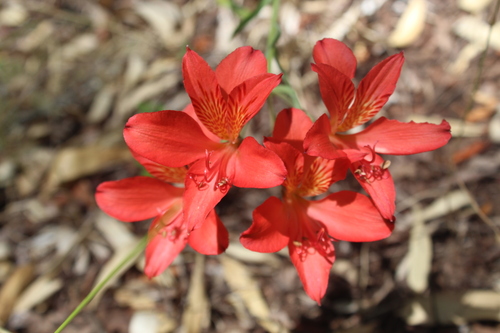
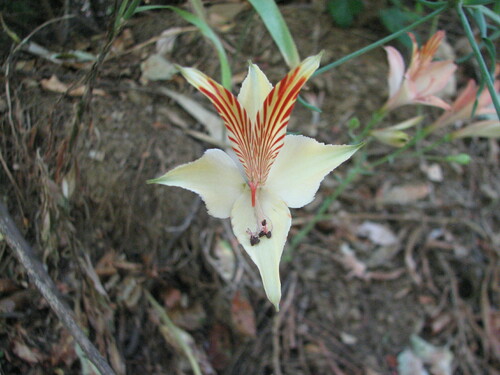
(c) Diego Monsores, some rights reserved (CC BY-NC), uploaded by Diego Monsores
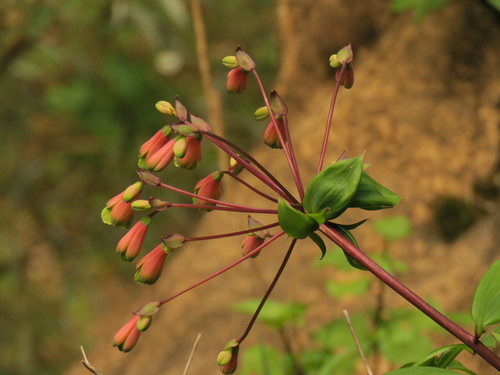
(c) Leticia Soriano Flores, some rights reserved (CC BY-NC), uploaded by Leticia Soriano Flores
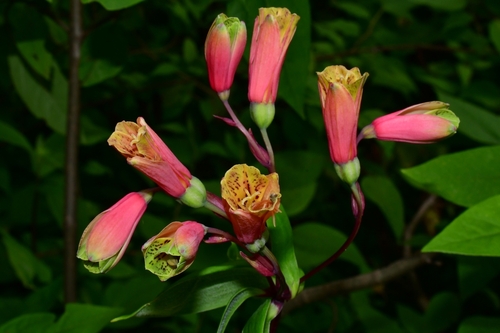
(c) Joey Santore, some rights reserved (CC BY-NC), uploaded by Joey Santore
What to Eat
Edible parts: Root, Tubers
Edible Parts: Root Edible Uses: Tuber - cooked. When boiled the roots make a light and delicate food. Rich in starch, a cream made from this farinaceous matter is wholesome and very agreeable to the taste.
Known Hazards
Where to Find It
A tropical plant. It grows in tropical America. It occurs at low altitudes. In Costa Rica it grows below 1,000 m altitude. It needs well drained soil. It does best with a night temperature above 10°C. It is damaged by drought and frost. In Argentina it grows from sea level to 3,000 m above sea level.
Argentina, Australia, Bolivia, Brazil, Central America, Costa Rica, Cuba, Dominican Republic, Guatemala, Guianas, Guyana, Haiti, Hispaniola, Mexico, North America, Paraguay, Peru, South America, Suriname, Venezuela, West Indies,
How to Identify
A herb. It is a climber that keeps growing from year to year. It grows 3 m tall. The stems are slender and supple. They are branching. The leaves are alternate and sword shaped. They are 5-18 cm long by 2-5 cm wide. The flowers are pink and hang down. They have purple spots. The seeds are 5 mm long by 4 mm wide.
How to Grow
Plants are grown from tubers. They are planted 15 cm deep. Plants can be grown from seed. Fresh seed will germinate in a few weeks.
Propagation: Seed - best sown as soon as it is ripe in a warm greenhouse, it will germinate in a few weeks. Stratify stored seed for 3 weeks at 20°c, then 3 weeks at 5°c. It usually germinates in 1 - 2 months at 20°c. Prick out the seedlings into individual pots when they are large enough to handle and grow them on in the greenhouse for at least their first winter. Plant them out into their permanent positions in early summer. Division in spring, with care since the roots are brittle. Each portion must have some roots and a growth bud. Pot up the divisions, grow them on in the greenhouse until they are well established and then plant them out into their permanent positions in the summer or late spring of the following year.
Medicinal Uses
None known
Other Uses
None known Special Uses
Wikipedia
Source ↗Bomarea edulis, common name salsilla, is a species of flowering plant in the alstroemeria family Alstroemeriaceae, that is native to the tropics of Mexico and the United States. A deciduous climber growing to 2.5 metres (8.2 ft) tall and wide, it has lanceolate leaves and clusters of trumpet-shaped flowers in shades of pink, yellow and green, with variable spotting, that are produced throughout the summer.
Other Information
It is a cultivated plant. Tubers are sold in markets.
Notes
There are 100-200 Bomarea species. They are climbers in the Andes cloudforest in Central and South America.
Names & Synonyms
Cara-de-caboclo, Coyolxochitl
References (16)
- Bircher, A. G. & Bircher, W. H., 2000, Encyclopedia of Fruit Trees and Edible Flowering Plants in Egypt and the Subtropics. AUC Press. p 61
- Bodkin, F., 1991, Encyclopedia Botanica. Cornstalk publishing, p 153
- Cundall, P., (ed.), 2004, Gardening Australia: flora: the gardener's bible. ABC Books. p 241 (Genus)
- Ekman Herbarium records Haiti
- Harter, J.(Ed.), 1988, Plants. 2400 copyright free illustrations. Dover p 18.3
- Hedrick, U.P., 1919, (Ed.), Sturtevant's edible plants of the world. p 108
- Heywood, V.H., Brummitt, R.K., Culham, A., and Seberg, O. 2007, Flowering Plant Families of the World. Royal Botanical Gardens, Kew. p 341
- INFOODSUpdatedFGU-list.xls
- Kermath, B. M., et al, 2014, Food Plants in the Americas: A survey of the domesticated, cultivated and wild plants used for Human food in North, Central and South America and the Caribbean. On line draft. p 136
- Kinupp, V. F. & Bergman, I., 2008, Protein and minerals of native species, potential vegetables and fruits. Cienc.Tecnol. Aliment. Vol. 28 No. 4 Campinas Oct/Dec.
- Kinupp, V. F., 2007, Plantas alimenticias nao-convencionais da regiao metropolitana de Porto Alegre, RS, Brazil p 56
- Plants for a Future database, The Field, Penpol, Lostwithiel, Cornwall, PL22 0NG, UK. http://www.scs.leeds.ac.uk/pfaf/
- Plants of Haiti Smithsonian Institute http://botany.si.edu
- Smith, N., Mori, S.A., et al, 2004, Flowering Plants of the Neotropics. Princeton. p 410
- www.mobot.org
- Zuchowski W., 2007, Tropical Plants of Costa Rica. A Zona Tropical Publication, Comstock Publishing. p 300