Porcelia macrocarpa
(Warm.) R. E. Fr.
Big fruit porcelia
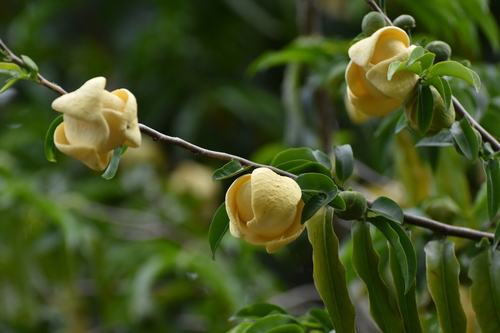
(c) Christopher H Graves, some rights reserved (CC BY-NC), uploaded by Christopher H Graves
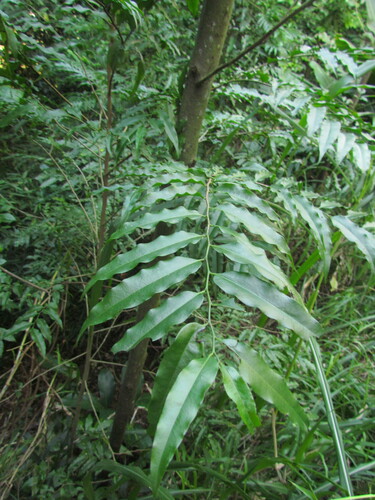
(c) Luís A. Funez, some rights reserved (CC BY-NC), uploaded by Luís A. Funez

(c) Luís A. Funez, some rights reserved (CC BY-NC), uploaded by Luís A. Funez
What to Eat
Edible parts: Fruit
Fruit - raw. The yellow pulp is sweet, succulent and very tasty, but there are a lot of seeds and very little pulp. The ovoid to elongate-ovoid, greenish fruit is about 25 - 85mm long and 30 - 42nm wide.
Where to Find It
It is a tropical plant. It grows in Brazil in forests near the Atlantic coast.
Brazil*, South America,
How to Identify
A tree. It grows 10-20 m high. The crown is round or pyramid shape. The trunk is 60-80 cm across. The bark is smooth and light coloured, but fibrous. The leaves are simple and alternate. They are 7-12 cm long by 2-3 cm wide. The flowers occur singly at the ends of stalks. They are large and showy and have a smell. The fruit are long berries. They occur in bunches. There is a small amount of soft sweet flesh and many seeds.
How to Grow
The plants are grown from seed. The ripe fruit are harvested and the seeds removed. They are washed in running water and dried in the shade. The seeds have a hard seed coat so must be scratched or treated with acid to improve their germination. They also have a long dormancy.
Propagation: Seed - it has a hard seedcoat and may benefit from scarification before sowing to speed up germination. This can usually be done by pouring a small amount of nearly boiling water on the seeds (being careful not to cook them!) and then soaking them for 12 - 24 hours in warm water. By this time they should have imbibed moisture and swollen - if they have not, then carefully make a nick in the seedcoat (being careful not to damage the embryo) and soak for a further 12 hours before sowing. Sow the seed in a partially shaded position in a nursery seedbed. A germination rate in excess of 50% can be expected. Seedlings grow away fairly slowly.
Other Uses
A fibre obtained from the trunk can be used for making ropes. The wood is of medium-texture, cross-grained, moderately heavy, with poor mechanical properties and not durable. It is only used for low value items such as boards, boxes and toys. The tree can be used in reforestation projects.
Production
Plants develop slowly.
Names & Synonyms
Banana-de-macaco, Louro-branco, Monkey banana, Pau-de-zinga, Pindaiva-do-mato, Pixirixum
References (4)
- Grandtner, M. M. & Chevrette, J., 2013, Dictionary of Trees, Volume 2: South America: Nomenclature, Taxonomy and Ecology. Academic Press p 518
- Lorenzi, H., 2002, Brazilian Trees. A Guide to the Identification and Cultivation of Brazilian Native Trees. Vol. 02 Nova Odessa, SP, Instituto Plantarum p 30
- Lorenzi, H., Bacher, L., Lacerda, M. & Sartori, S., 2006, Brazilian Fruits & Cultivated Exotics. Sao Paulo, Instituto Plantarum de Estuados da Flora Ltda. p 51
- www.colecionandofrutas.org


