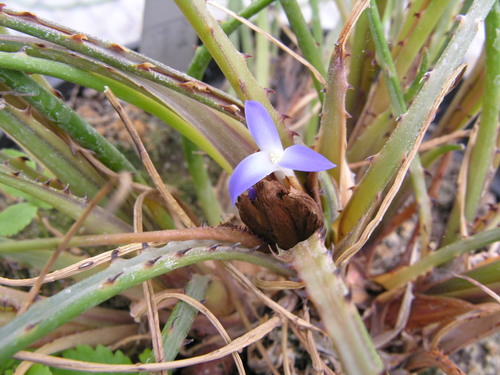
Bromelia antiacantha
Bertol.
Gravata, Banana-do-mato
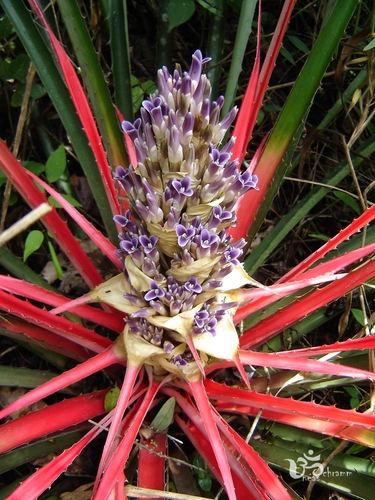
(c) eneaschr, some rights reserved (CC BY-NC)

(c) Diego Monsores, some rights reserved (CC BY-NC), uploaded by Diego Monsores
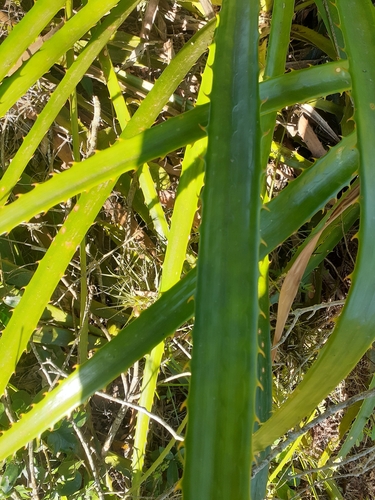
(c) Pablo Vaz Canosa, some rights reserved (CC BY-NC), uploaded by Pablo Vaz Canosa
What to Eat
Edible parts: Fruit, Flowers
The fruit can be eaten fresh and are commonly used to make jellies. The flowers are also edible.
Where to Find It
A tropical plant. It grows in coastal regions in forests and forest covered sand dunes in Brazil. It is best with a humus-rich, moist, well-drained soil. It is damaged by drought and frost.
Australia, Brazil*, Peru, South America*, Uruguay,
How to Identify
A small evergreen plant. It is almost without a stem. It forms a ring. It can be 2 m tall. The leaves are erect and have spines on the edges. They are 1 m long. The flowering stalk arises from the centre. It has 7 distinct flower bracts. The fruit are berries. They are 4-5 cm across. The have juicy flesh.
How to Grow
Plants can be grown from seed or from sprouts near the base.
Propagation: Seed - Suckers.
Other Uses
The fibres from the leaves are used for cordage.
Wikipedia
Source ↗Bromelia antiacantha is a plant species in the genus Bromelia. This species is native to Brazil and Uruguay.
Notes
There are 47 Bromelia species.
Names & Synonyms
Bananinha-do-mato, Caraguata
References (8)
- Bodkin, F., 1991, Encyclopedia Botanica. Cornstalk publishing, p 171
- Brack, P., et al, 2020, Frutas nativas do Rio Grande do Sul, Brasil: riqueza e potencial alimentício. Native fruits of Rio Grande do Sul, Brazil: richness and potential as food. Rodriguésia 71: e03102018.
- Kinupp, V. F., 2007, Plantas alimenticias nao-convencionais da regiao metropolitana de Porto Alegre, RS, Brazil p 70
- Kinupp, V. F. & Bergman, I., 2008, Protein and minerals of native species, potential vegetables and fruits. Cienc.Tecnol. Aliment. Vol. 28 No. 4 Campinas Oct/Dec.
- Lorenzi, H., Bacher, L., Lacerda, M. & Sartori, S., 2006, Brazilian Fruits & Cultivated Exotics. Sao Paulo, Instituto Plantarum de Estuados da Flora Ltda. p 99
- Mello, A. J. M., 2015, Cultural landscapes of the Araucaria Forests in the northern plateau of Santa Catarina, Brazil. Journal of Ethnobiology and Ethnomedicine 11:51
- Silva, S y H. Tassara.1996. Frutas no Brasil. Empresa das Artes. São Paulo
- www.colecionandofrutas.org