Licania salzmannii
(Hook.f.) Fritsch
Oita-da-bahia

(c) Geovane Siqueira, some rights reserved (CC BY-NC)

(c) Geovane Siqueira, some rights reserved (CC BY-NC)

Wikimedia Commons - Alex Popovkin, Bahia, Brazil from Brazil
What to Eat
Edible parts: Fruit
Fruit - raw. A fibrous, aromatic pulp with a sweet, pleasant flavour. The fruit is about 11cm long and 8cm wide, containing a single large seed.
Where to Find It
A tropical plant. It grows naturally in the rainforest near the Atlantic coast in Brazil.
Brazil*, South America,
How to Identify
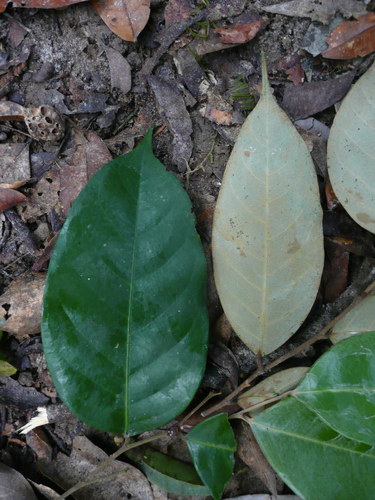
An evergreen tree. It grows 15-25 m tall. The trunk is angular. It is 50-70 cm across. The crown is feathery. The leaves are papery and smooth and shiny on both surfaces. They are 8-16 cm long. The flowers are small. They are in groups in the axils of leaves. The fruit are oval and fleshy. The outer surface is irregular. The pulp has fibrous but a sweet smell and taste.
How to Grow
Plants are grown from seed. The seeds are collected from ripe fruit that fall. They are stored in plastic bags to make it easier to remove the pulp. They are washed in running water and planted fresh. Seeds emerge in 50-60 days.
Propagation: Seed - best sown as soon as it is ripe. Sow the seed in individual containers, placing them in a semi-shaded position. Germination rates are usually in excess of 80%, with the seed sprouting within 50 - 60 days.
Other Uses
The wood is irregular-grained, heavy, moderately resistant to wood eating organisms. Of average quality, it can be used in carpentry.
Production
Plants grow at a moderate rate.
Other Information
The fruit are popular. The fruit are sold in local markets.
Names & Synonyms
Oita-da-baia, Oiti, Guaiti, Oiti-coro
References (2)
- Lorenzi, H., Bacher, L., Lacerda, M. & Sartori, S., 2006, Brazilian Fruits & Cultivated Exotics. Sao Paulo, Instituto Plantarum de Estuados da Flora Ltda. p 123
- Lorenzi, H., 2009, Brazilian Trees. A Guide to the Identification and Cultivation of Brazilian Native Trees. Instituto Plantarum de Estuados da Flora Ltda. Vol. 3 p 84