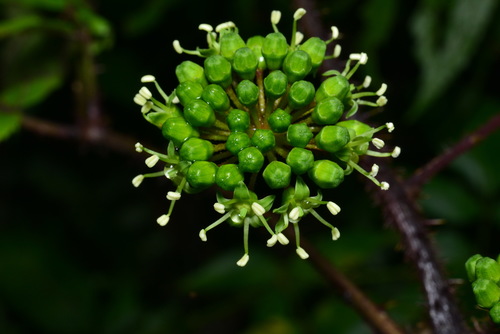
Polyscias samoensis
(A. Gray) Harms
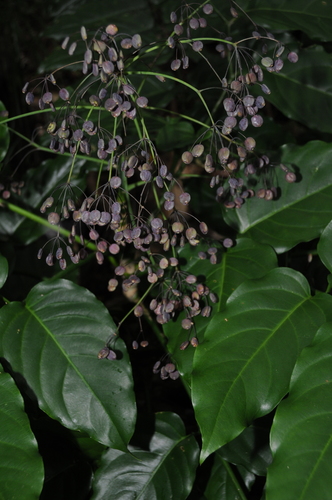
(c) tavita_togia2016, some rights reserved (CC BY-NC), uploaded by tavita_togia2016
What to Eat
Edible parts: Leaves
The leaves are eaten.
Where to Find It
It is a tropical plant. It grows in lowland forest.
American Samoa, Micronesia, Pacific, Pohnpei, Samoa, Tokelau, Tonga, Vanuatu,
How to Identify
A shrub. It can grow up to 7 m tall. The leaves are compound with an odd number of leaflets. The leaflets are arranged along the stalk. The leaf stalk can be 1 m long and has a sheath at the base and is swollen at the nodes. There are 11-17 leaflets opposite each other. The leaflets are narrowly oval and 9-22 cm long. They are almost heart shaped at the base and taper to the tip. The edges are wavy. The flowering shoots are in the axils of leaves or at the top of the branches. They are 50 cm long and have branches in rings. The flowers are small and greenish.
Names & Synonyms
Afia, Tagitagi
References (3)
- Lebot, V. & Sam, C., Green desert or ‘all you can eat’? How diverse and edible was the flora of Vanuatu before human introductions?. Terra australis 52 p 410
- Vanuatu Herbarium
- Walter, A. & Lebot, V., 2007, Gardens of Oceania. ACIAR Monograph No. 122. p 171