Cavendishia bracteata
(Ruiz & Pav. ex J. St.-Hil.) Hoerold
Bracteate cavendishia

(c) Manuel Ortiz, some rights reserved (CC BY-NC), uploaded by Manuel Ortiz
(c) Juan Andrés leyva, some rights reserved (CC BY-NC), uploaded by Juan Andrés leyva
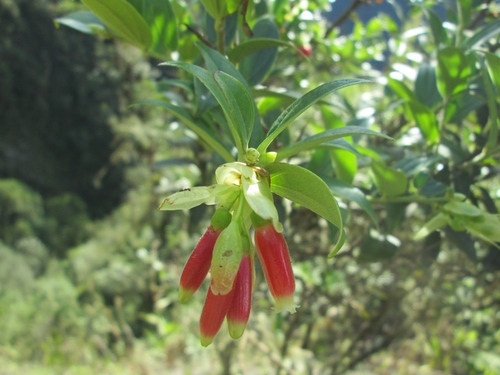
(c) Alfredo Gutierrez Dipaz, some rights reserved (CC BY)
What to Eat
Edible parts: Fruit
The berries are eaten raw and used in jams.
Where to Find It
It is a tropical plant. In Costa Rica it grows between about 800-3,000 m altitude. In Hobart Botanical gardens (As Cavendishia acuminata)
Andes, Australia, Bolivia, Central America, Colombia, Costa Rica, Ecuador, El Salvador, Guatemala, Honduras, Mexico, Nicaragua, North America, Panama, Peru, South America, Tasmania, Venezuela,
How to Identify
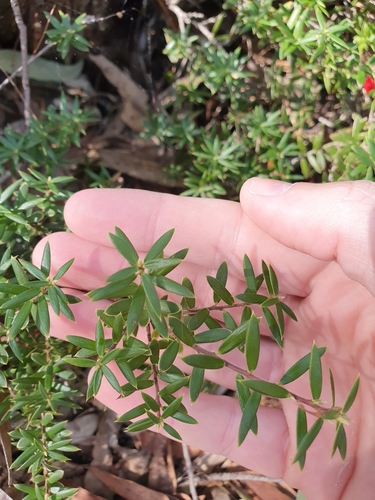
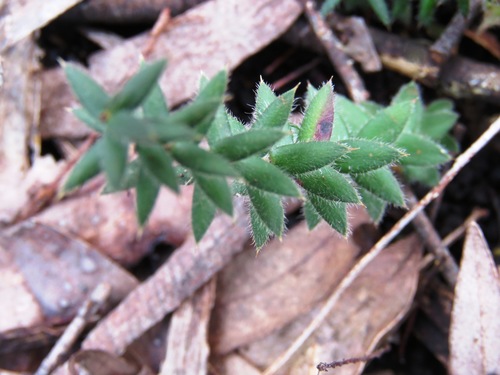
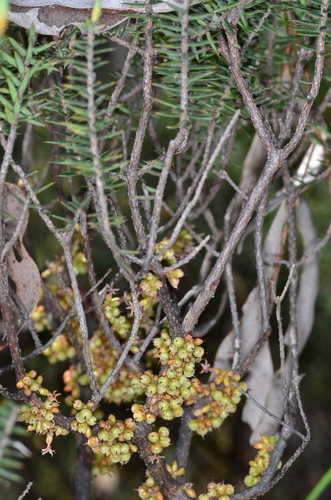
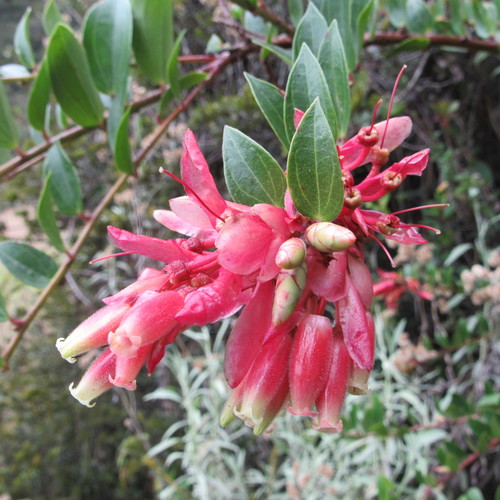
A shrub. It may grow in the soil or can grow attached to other plants. It grows 3 m tall. It can be a climber. The leaf blades are 12 cm long. They narrow to the tip. There are usually 5-7 major veins from the base. The young leaves are coppery purple. They become green and leathery. There are about 20 flowers in a cluster. They are tube shaped. They have a pink bract about 3.5 cm long around them. The fruit is a berry about 1 cm across. The fruit are edible.
Production
Flowers form at any time of the year.
Names & Synonyms
Anizo, Arrayan, Boton-boton, Cacaguito, Chaki lulun, Clavel georgino, Cobetilla, Colmillo, Flora de montana, Gaulicon, Hualicon, Iquilan, Joyapa, Loco lucuna, Madra selva, Maichcha, Maycha, Motilon, Mozgal Mununo, Muyana, Pipino-ccora, Puchato, Pucsato, Salapa, Shash, Uvo, Yew-ya-may, Zagala, Zagalita, Zagalito, Zarcillejo
References (13)
- Bot. Jahrb. Syst. 42:280. 1909
- Fouqué, A. 1972. Espèces fruitières d'Amérique tropicale. Institut français de recherches fruitierès outre-mer (As Cavendishia cordifolia)
- Grandtner, M. M. & Chevrette, J., 2013, Dictionary of Trees, Volume 2: South America: Nomenclature, Taxonomy and Ecology. Academic Press p 110
- Kermath, B. M., et al, 2014, Food Plants in the Americas: A survey of the domesticated, cultivated and wild plants used for Human food in North, Central and South America and the Caribbean. On line draft. p 200
- Lopez-Diago, D. & Garcia, N., 2021, Wild edible fruits of Colombia. Biota ColomBiana 22 (2) p 35
- Luteyn, J. L., 1983, Ericaceae: Part I. Cavendishia: Flora Neotropica, Vol. 35, Ericaceae: Part I. Cavendishia. pp. 1-289
- Martin, F. W., et al, 1987, Perennial Edible Fruits of the Tropics. USDA Handbook 642 p 93 (As Cavendishia cordifolia)
- Ramirez, D. L. A., 2010, Las Ericaceas Con Frutos Comestibles del Altiplano Cundiboyacense. Pontificia Univerisidad Javeriana, Bogota.
- Roa, J. A. G. & Boada, D. S. G., 2018, Fundación para el Fortalecimiento de la Fruticultura y Plantas Alimenticias no Convencionales en Colombia. (Also as Cavendishia tubiflora)
- Torre, de la, L., et al, 2008, Enciclopedia de las Plantas Útiles del Ecuador. Herbario QCA. Pontificia Universidad Católica del Ecuador. p 311
- Van den Eynden, V., et al, 2003, Wild Foods from South Ecuador. Economic Botany 57(4): 576-603
- Van den Eynden, V., & Cueva, E., 2008, Las plantas en la alimentacion. Enciclopedia de las Plantas Utiles del Ecuador. Herbario QCA & Herbario AAU. Quito & Aarhus. 2008: 62–66
- Zuchowski W., 2007, Tropical Plants of Costa Rica. A Zona Tropical Publication, Comstock Publishing. p 321