Brachychiton australis
(Schott & Endl.) Terracino
Broad leafed bottle tree
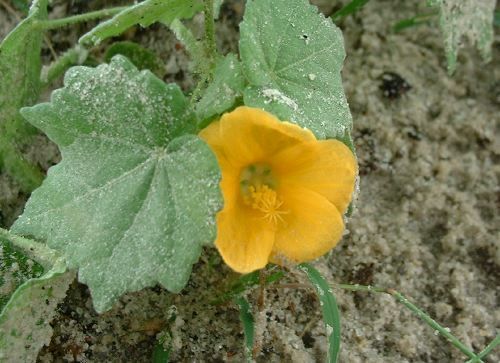
(c) Greg Tasney, some rights reserved (CC BY-SA), uploaded by Greg Tasney

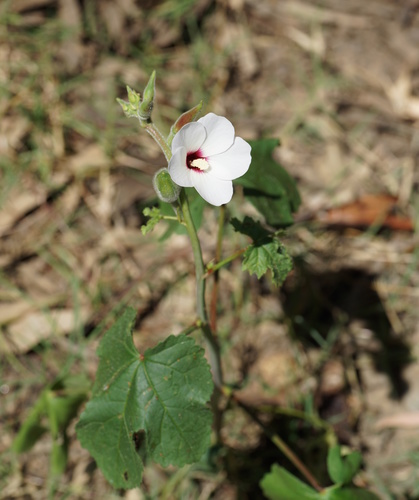
(c) Steve Dew, some rights reserved (CC BY-NC), uploaded by Steve Dew

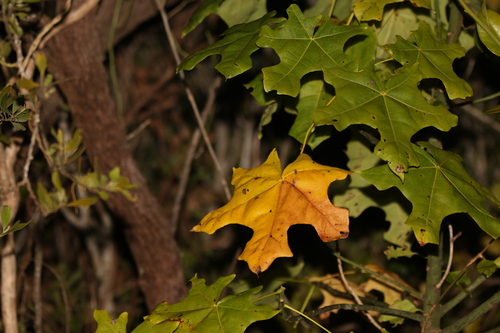
(c) darc, some rights reserved (CC BY-NC)
What to Eat
Edible parts: Root, Seeds
Seed - cooked. Roasted. Roots of young plants - raw. It is unclear whether or not the Aborigines prepared the root in any way before consumption. The yam-like tuberous root is often much broader than the stem above.
Known Hazards
Where to Find It
A tropical plant. It is native to NE Australia. It grows in scrub and vine forests in dry regions. It suits hot, dry climates. In central Queensland it grows from sea level to 800 m altitude. It requires a well drained soil and a sunny position. It suits hardiness zones 10-12. In Townsville Anderson BG.
Asia, Australia*, East Africa, India, Pakistan, Zimbabwe,
How to Identify
A small tree. It grows 7-15 m tall and spreads 3-5 m wide. The trunk is swollen. The tree loses its leaves for short periods of time. The leaves are rounded and have 5-7 pointed lobes. The leaves are 10-20 cm long. The flowers are white or green and bell shaped. They are 3 cm across. The fruit is a boat shaped follicle. It is 7.5 cm long.
Nutrition Score: 41/100
| Part | Moisture | kJ | kcal | Protein | Vit A | Vit C | Iron | Zinc |
|---|---|---|---|---|---|---|---|---|
| Nuts | 9.8 | — | — | 20.4 | — | — | 7.5 | 8.9 |
| Root | — | — | — | — | — | — | — | — |
How to Grow
Plants can be grown from seed or cuttings. Young plants transplant easily.
Propagation: Seed - pre-soak for 12 - 24 hours in warm water.
Wikipedia
Source ↗Brachychiton australis, commonly known as the broad-leaved bottle tree, is a small tree of the genus Brachychiton found in eastern Australia. It was originally classified in the family Sterculiaceae, which is now within Malvaceae.
Notes
There are about 30 Brachychiton species. Most are in Australia. Also put in the family Sterculiaceae.
Names & Synonyms
References (22)
- Bailey, F. M., 1913, Comprehensive Catalogue of Queensland Plants. Queensland Government. (As Sterculia trichosiphon)
- Barwick, M., 2004, Tropical and Subtropical Trees. A Worldwide Encyclopedic Guide. Thames and Hudson p 57
- Bodkin, F., 1991, Encyclopedia Botanica. Cornstalk publishing, p 163
- Boll. Reale Orto Bot. Giardino Palermo 1(2):54, 62. 1897
- Cooper, W. and Cooper, W., 2004, Fruits of the Australian Tropical Rainforest. Nokomis Editions, Victoria, Australia. p 528
- Cribb, A.B. & J.W., 1976, Wild Food in Australia, Fontana. p 138
- Elliot, W.R., & Jones, D.L., 1982, Encyclopedia of Australian Plants suitable for cultivation. Vol 2. Lothian. p 365
- Etherington, K., & Imwold, D., (Eds), 2001, Botanica's Trees & Shrubs. The illustrated A-Z of over 8500 trees and shrubs. Random House, Australia. p 139
- Fl. austral. 1:229. 1863 (As Sterculia trichosiphon)
- Flora of Pakistan. www.eFloras.org
- Krishen P., 2006, Trees of Delhi, A Field Guide. DK Books. p 154
- Lazarides, M. & Hince, B., 1993, Handbook of Economic Plants of Australia, CSIRO. p 36
- Leiper, G & Houser, J., Mutooroo. Plant Use by Australian Aboriginal People. Assembly press, Queensland.
- Lim, T. K., 2015, Edible Medicinal and Non Medicinal Plants. Volume 9, Modified Stems, Roots, Bulbs. Springer p 17
- Lord, E.E., & Willis, J.H., 1999, Shrubs and Trees for Australian gardens. Lothian. p 13
- Menninger, E.A., 1977, Edible Nuts of the World. Horticultural Books. Florida p 43 (As Sterculia trichosiphon)
- Nicholson, N & H., 2000, Australian Rainforest Plants, V. Terania Rainforest Publishing. NSW. p 15
- Recher, P, 2001, Fruit Spirit Botanical Gardens Plant Index. www.nrg.com.au/~recher/ seedlist.html p 4
- Townsend, K., 1994, Across the Top. Gardening with Australian Plants in the tropics. Society for Growing Australian Plants, Townsville Branch Inc. p 104
- Townsend, K., 1999, Field Guide to Plants of the Dry Tropics. Society for Growing Australian Plants, Townsville Branch Inc. p 25
- Wickens, G.E., 1995, Edible Nuts. FAO Non-wood forest products. FAO, Rome. p156 (As Sterculia trichosiphon)
- Williams, J.B., Harden, G.J., and McDonald, W.J.F., 1984, Trees and shrubs in rainforests of New South Wales and Southern Queensland. Univ. of New England, Armidale. p 62